First Wave of Factory Closures Sparks Labor Movement
台灣第一波關廠風潮,勞工運動風起雲湧
Source: “Forms and Mobilisation of Collective Labour Protest: A Case Study of the Shin Kong Shih-lin Factory Closure Struggle.” Date: 1993. Author: Ho Yen-t’ang
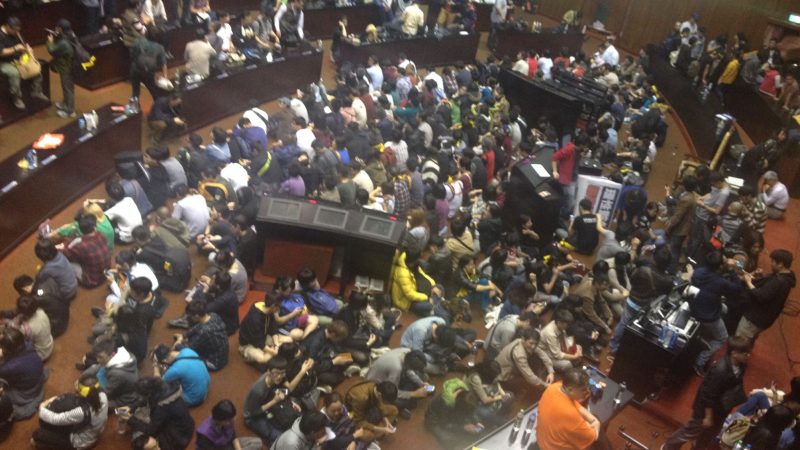
In 1988, Shin Kong Textile Co., Ltd. — the core company of the Shin Kong Group — citing “ageing machinery” and “operational losses,” announced the closure of its Shih-lin plant in Taipei’s Shih-lin District on October 30, 1988. The real reason was that the Shih-lin plant sat on prime real estate; after the closure, management redeveloped the site into Shin Kong Wu Ho-su Memorial Hospital. Approximately 400 workers were employed at the plant at the time, of whom roughly two-thirds were indigenous people from Hualien and Taitung. The workers engaged in a struggle lasting more than two months, demanding that the government enact a “Factory Closure Law” to address the legal vacuum surrounding unilateral factory closures by management. Several notable features characterised the Shin Kong workers’ protest: one was singing — indigenous young women used song to express their feelings; another was the use of indigenous songs and dances at the protest site to boost morale and reciprocate the solidarity of labour movement supporters. The struggle also gave rise to what would later become the first album of workers’ protest songs released by Blackhand Nakasi.