Karaoke Introduced to Taiwan
卡拉OK機引進台灣
Source: The KTV Warrior — Yuan Fang-hui, Chairman of U-Best
From: Shenzhou Stock Information
Date: September 16, 2010
The karaoke machine was invented in 1971 by Japanese musician Daisuke Inoue, replacing the traditional “Nakashi” (street music) tradition. The word “kara” means “empty” or “no one” in Japanese, while “oke” is an abbreviation of the English word “orchestra” — together meaning “empty orchestra.” Introduced to Taiwan in 1981, the first establishment to purchase one was the Tien-wang Western restaurant in Taipei. Due to the high price, karaoke machines were initially found mainly in Japanese-style hostess clubs for patrons’ entertainment; it was only after prices dropped dramatically in the late 1990s that karaoke entered the home market.
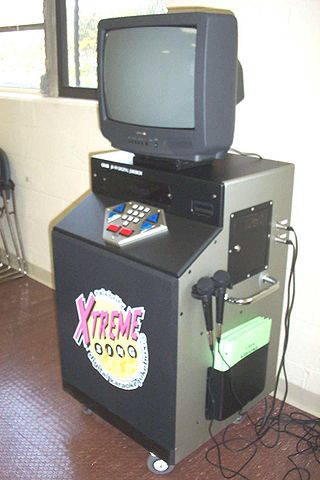
An early karaoke machine (source: Wikipedia)
External Links
- KTV and Youth Subculture Analysis: A Spatial Interpretation (National Chung Cheng University Department of Communications)
- Karaoke (Wikipedia)
- A Collected History of Audio System Development (Old Audio Database / Su-san Blog)
- Ma Shih-fang: Returning to the Era of Eight and a Half (The Initium)