May Fourth Movement
五四運動
Source: May Fourth Movement
From: Wikipedia
Date: Last revised April 17, 2017
Author: Multiple contributors
During and after World War I, nationalism surged across the world. American President Woodrow Wilson’s principle of “national self-determination” held tremendous appeal for smaller, subjugated nations — and proved especially enlightening to Chinese intellectuals.
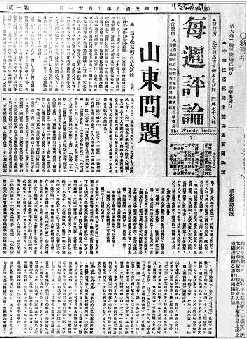
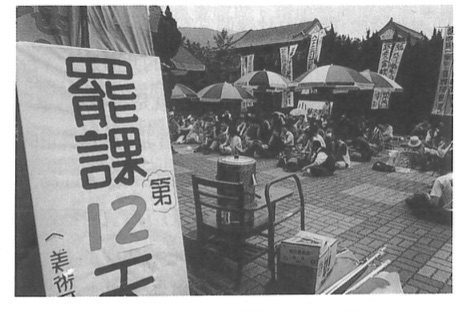
The May Fourth Movement erupted on May 4, 1919 in Beijing, then under the Beiyang Government. It was primarily a student movement, though it involved broad participation from citizens, urban residents, and merchants through demonstrations, petitions, class boycotts, strikes, and violent confrontations with the government. The immediate trigger was the Paris Peace Conference following World War I, where the major powers transferred Germany’s rights in Shandong Province to Japan. With the Beiyang Government having failed to defend China’s national interests, public outrage boiled over into street protests. Among the most famous slogans: “Reclaim national sovereignty from foreign encroachment; purge traitors who collaborate with Japan.”
In its broader sense, the May Fourth Movement refers to the New Culture Movement — stretching from China’s signing of the Twenty-One Demands with Japan in 1915 through the Northern Expedition of 1926 — during which Chinese intellectuals and young students critically reassessed Chinese traditional culture and pursued national renewal guided by “Mr. Democracy” (民主, mínzhǔ) and “Mr. Science” (科學, kēxué).