Film Cape No. 7 Breaks NT$500 Million at Box Office
電影《海角七號》票房破五億
Source: Japan Fans, Japan Lovers, Japan Romantics? The “Japan Complex” of “Peripheral East Asia”
From: Reflexion, Issue 14
Date: January 2010 · Author: Lim Chuan-tiong
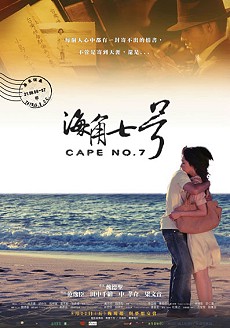
Cape No. 7 opened in 2008; its miraculous NT$500 million box office was seen as a symbol of the revival of Taiwanese cinema and sparked intense discussion. The film’s protagonists are one Taiwanese and one Japanese; a second narrative threads through the film: a Japanese teacher who left Taiwan after Japan’s WWII defeat wrote seven love letters to his Taiwanese female student before he died; his children later mailed the letters to Taiwan, addressed to the site under its Japanese colonial era name: Cape No. 7, Hengchun County. The Japanese colonial rule is not addressed directly in the film — only conveyed through scenes of sorrowful farewell.
The effects of Cape No. 7 on Taiwanese society and the related debates can be grouped into two broad categories. First, the factors behind the film’s gripping success: discussions touching on narrative tension, character construction, cinematography, music, and Japanese elements. Second, how to read the film’s “Japan complex.” The most important focal point in this debate was the controversy over whether the film was “Japan-pandering,” covering core issues that touch Taiwanese social nerves including post-colonialism, cultural identity, and Taiwanese subjectivity.
Moreover, following the box office success of Cape No. 7 — which uses a band’s formation and performances as one of its narrative threads — Taiwan also saw a wave of band-themed films and TV dramas, including A Place of One’s Own, Mixed Band, The X-Family, Purple Rose, and Even in Death.
Cape No. 7 film poster (Source: Wikipedia)