Magical Realism Emerges in Taiwanese Literature
台灣文學興起魔幻寫實主義
Source: Historical Reconstruction in Fiction: The Local Adaptation of Magical Realism in Taiwan
From: Taiwan Cultural Studies Website
Date: October 1998
Author: Chen Cheng-fang
Magical realism is generally considered to have originated in Latin American literature. Works employing its characteristic techniques expose social ills, attack the dark realities of power, and depict a lived reality that is vividly and deeply Latin American in character — at its root, an expression of a new awakening among Latin American peoples, the beginning of a national self-awareness and self-reflection.
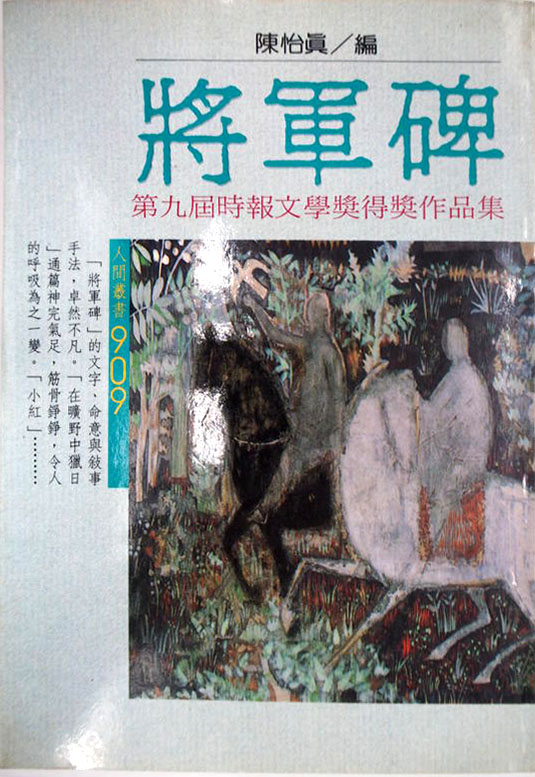
The period most representative of Taiwanese magical realism is generally considered to be the mid-1980s and beyond. Looking at exemplary novels with clearly identifiable features — such as Chang Ta-chun’s “General’s Monument” and Four Joys Worrying for the Nation, Lin Yao-te’s 1947 Takasago Lily, and Sung Tse-lai’s The City Where the Bloody Bats Descend — we find that the narratives invariably move toward historical and political threads, suggesting that these writers had a clear intent to reconstruct history. Both the poet Meng Fan and the poet Lee Chin-wen have pointed out that magical realism should not be classified as fantasy, but as a mode of confronting reality and the real.
External Links
- Magical Realism (Taiwan Wiki)
- On Magical Realism (Wu Wen-cheng)
- Magical Realism in Taiwan (Chen Cheng-fang)