New Literature Movement Under Japanese Colonial Rule
日殖時代新文學運動
Source: The New Literature Movement of Taiwan under Japanese Rule and Its Historical Context
From: One Heart
Date: October 29, 2009Author: One Heart
In the first half of the Japanese colonial period in Taiwan, armed anti-Japanese resistance was frequent. Although poetry societies existed in various localities, there was little cultural expression of note. Beginning in the 1920s, Taiwan entered a new phase: the emergence of the New Culture Movement.
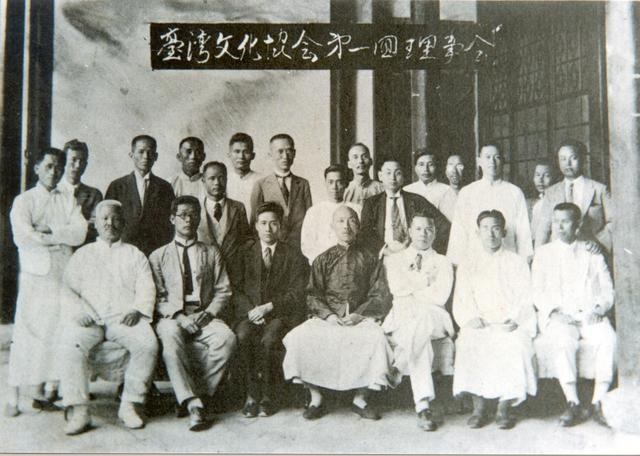
The Taiwan Cultural Association, founded by Chiang Wei-shui, was a pivotal starting point. This New Culture Movement was fundamentally a political movement rooted in anti-Japanese national liberation. It was also influenced by the New Literature Movement and May Fourth Movement sweeping mainland China, and centred on the promotion of vernacular writing and realism.
In 1924, Chang Wo-chun, returning from mainland China, published “A Letter to Taiwan’s Youth” in Taiwan Minpō, igniting a battle between proponents of the new and old literary traditions. The period from 1921 to 1925 was a germination phase, largely confined to theoretical debate with little actual creative output, marked by a strong reformist intent. 1926 to 1930 was a period of growth, with a significantly greater proportion of professional writers participating. 1931 to 1937 was Taiwan literature’s golden age, producing an abundance of outstanding fiction, drama, poetry, and prose; this period also saw debates over “Taiwanese vernacular writing” and “nativist literature.” The movement was cut off during the Japanization period from 1937 to 1945, resuming again in the 1970s.
 First Board of Directors of the Taiwan Cultural Association
Tags
External Links
- New Literature Movement (Wikipedia)
- The New Literature Movement in Taiwan under Japanese Rule (compiled by Chen Cheng-fang)
- Lai Ho and the Taiwan New Literature Movement (Lin Jui-ming, Professor of History, National Cheng Kung University)
- Literary Magazines and the Development of Taiwan’s New Literature: Observations from the Japanese Colonial Period (Hsiang Yang)
- Taiwan’s New Literature Movement Since Japanese Rule — From Modernism to Nativist Literature and Its Variations (Yidu)
- Lai Ho — Changhua’s Matsu, Father of Taiwan’s New Literature