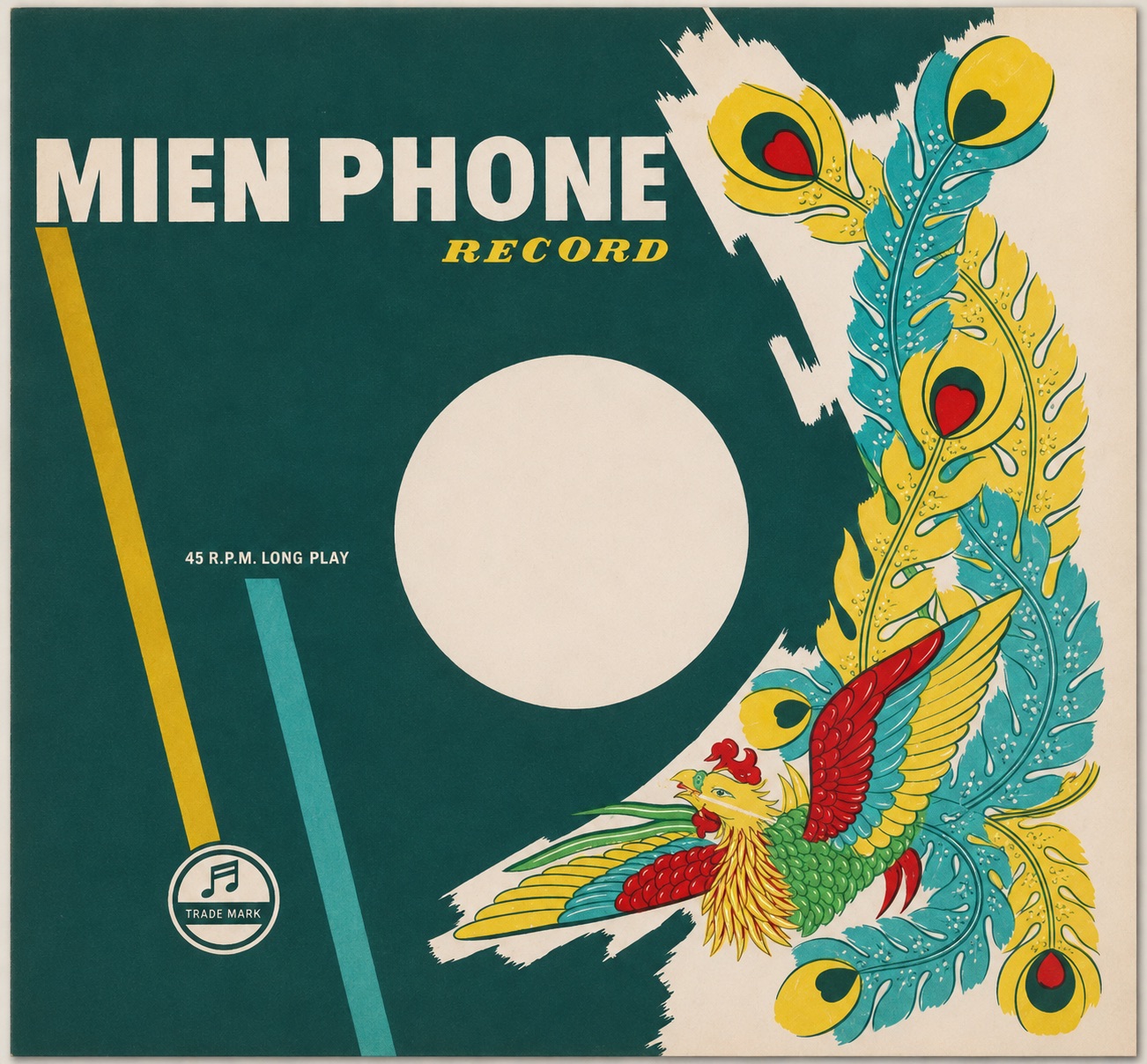
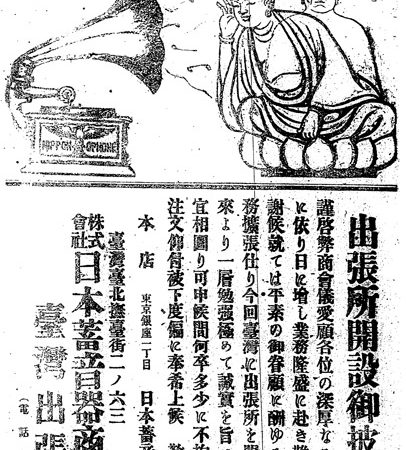
日蓄唱片公司於1910年(明治43年)率先來到台灣發展,在臺北撫臺街設立分公司。 In 1910 (Meiji 43), Nichi-Chiku Record Company became the first to establish a presence in Taiwan, opening a branch office on Futai Street in Taipei.
本資料庫建置計畫以「殘響」、「噪音」與「現代空間」作為一種隱喻以及認識論的模型,藉以考查從日殖、戒嚴、解嚴以至於當今全球化的台灣歷史。[More]
This database project takes "reverberation," "noise," and "modern space" as both metaphor and epistemological model, examining Taiwan's history from Japanese colonial rule through the periods of martial law and its lifting to today's globalization. [More]
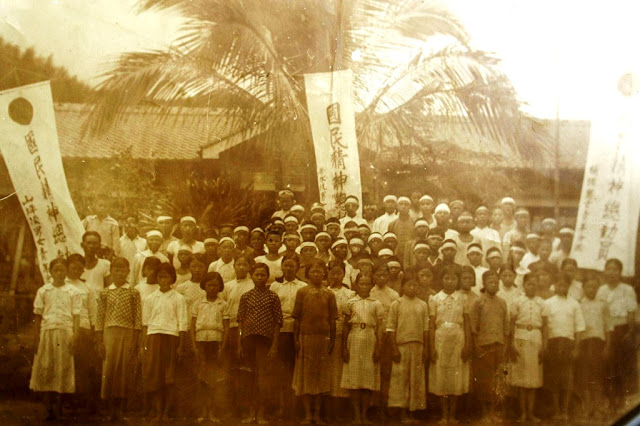
1936 年 9 月,臺灣第 17 任總督小林躋造提出了「皇民化」治台方針,1941年皇民奉公會成立後,運動的內涵從強調國民精神涵養的皇民化層次,轉為中君愛國行動實踐積極化的「奉公」層次。 In September 1936, the 17th Governor-General of Taiwan, Kobayashi Seizō, introduced the Kominka (Japanization) policy. After the Hōkōkai was established in 1941, the movement shifted from cultivating Japanese national identity toward active civic loyalty and service to the imperial cause.
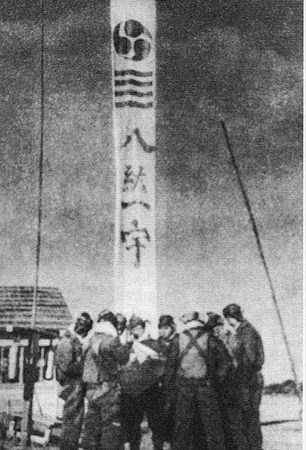
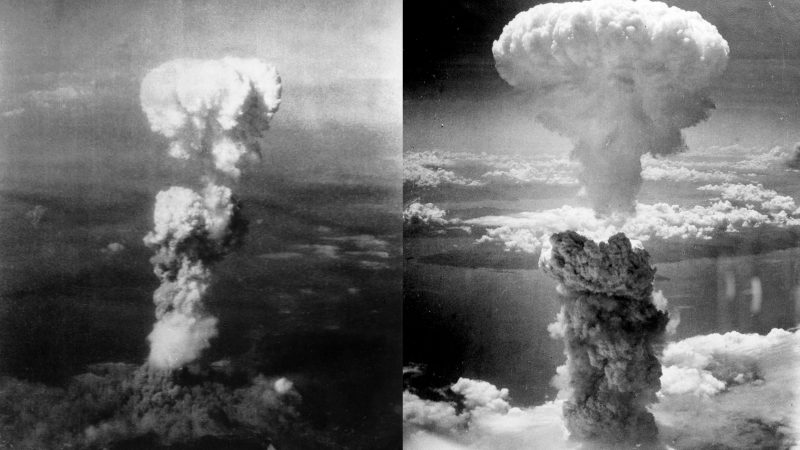
太平洋戰爭是第二次世界大戰中以大日本帝國為首的軸心國和以美國為首的同盟國於1941年12月7日至1945年9月2日期間的戰爭,自日本偷襲美國珍珠港開始,到原子彈空襲,日本宣布無條件投降為止。 The Pacific War, fought between the Axis powers led by the Empire of Japan and the Allied forces led by the United States, lasted from December 7, 1941 to September 2, 1945. It began with Japan's surprise attack on Pearl Harbor and ended with the atomic bombings and Japan's unconditional…
冷戰一般被認為起於1947年,止於1991年,可視為20世紀國家安全戰略需求所形成的一種全新的國際戰略競爭形態,文化冷戰是它最顯著的特征,冷戰的實質是對意識形態的爭奪。 The Cold War is generally considered to have begun in 1947 and ended in 1991. It represented a new form of international strategic competition driven by national security imperatives. Cultural warfare was its most defining feature, with the struggle fundamentally centered on ideological supremacy.
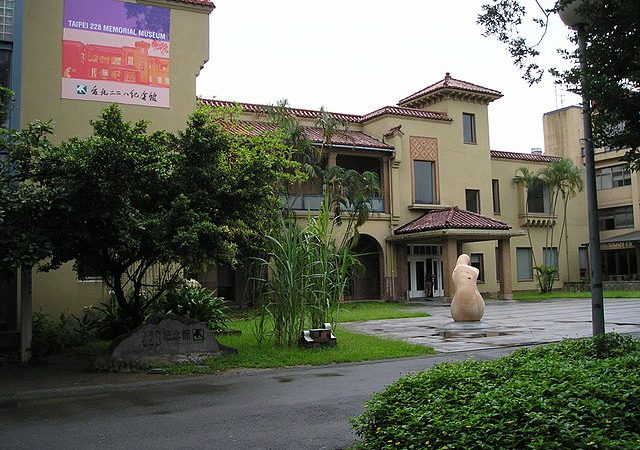
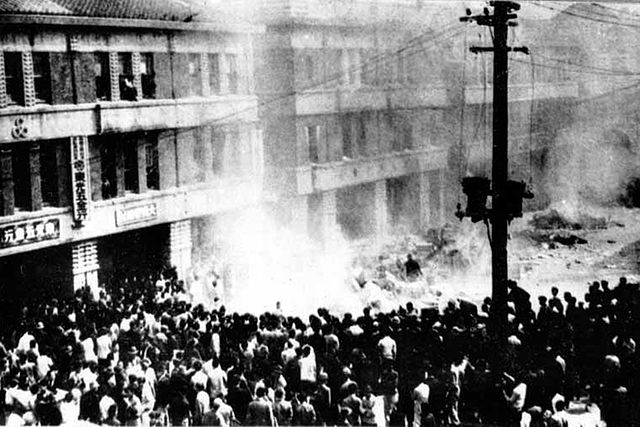
1947年2月27日晚間台北販賣私煙的婦人林江邁被查緝沒收其私煙,查緝員出手打傷林江邁又開槍擊斃一名圍觀群眾,隔日許多民眾走上街頭抗議,並與軍警爆發零星衝突,造成多人傷亡史稱「二二八事件」。 On the evening of February 27, 1947, Taipei cigarette vendor Lin Jiang-mai was beaten by Monopoly Bureau agents who seized her goods and then fired into the watching crowd, killing a bystander. The next day, mass protests erupted and clashes with military police left many dead and injured — events…
台灣1950年代,布袋戲由黃氏五洲園發展成金光戲,著名大師黃俊雄當時為求聲光特效達到刺激觀眾的效果,精研各種燈光與聲音變化,並購買錄音機錄製成黑膠唱片取代後台的敲鑼打鼓,全台大受歡迎。 In 1950s Taiwan, traditional glove puppetry evolved into the spectacular Jinguang (Golden Light) style through the Huang family troupe. Master puppeteer Huang Jun-xiong, seeking dazzling light and sound effects, acquired a recorder and pressed vinyl records to replace the traditional backstage percussion — a sensation across the island.
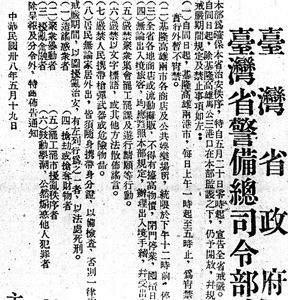
自1949年台灣戒嚴開始,國民政府以反共政府對人民生活上各層面的禁錮無所不在,而對於歌曲創作內容的直接施壓,以1950年省新聞處召集的台灣省歌曲影劇書刊審核查禁委員會第七次聯席會報最為明顯。 Following martial law in 1949, the Nationalist government exercised pervasive control over daily life. The most direct pressure on song content came in 1950, when the Taiwan Provincial Information Office convened its seventh joint session of the Committee for Song, Film, Drama, and Publication Review and Censorship.
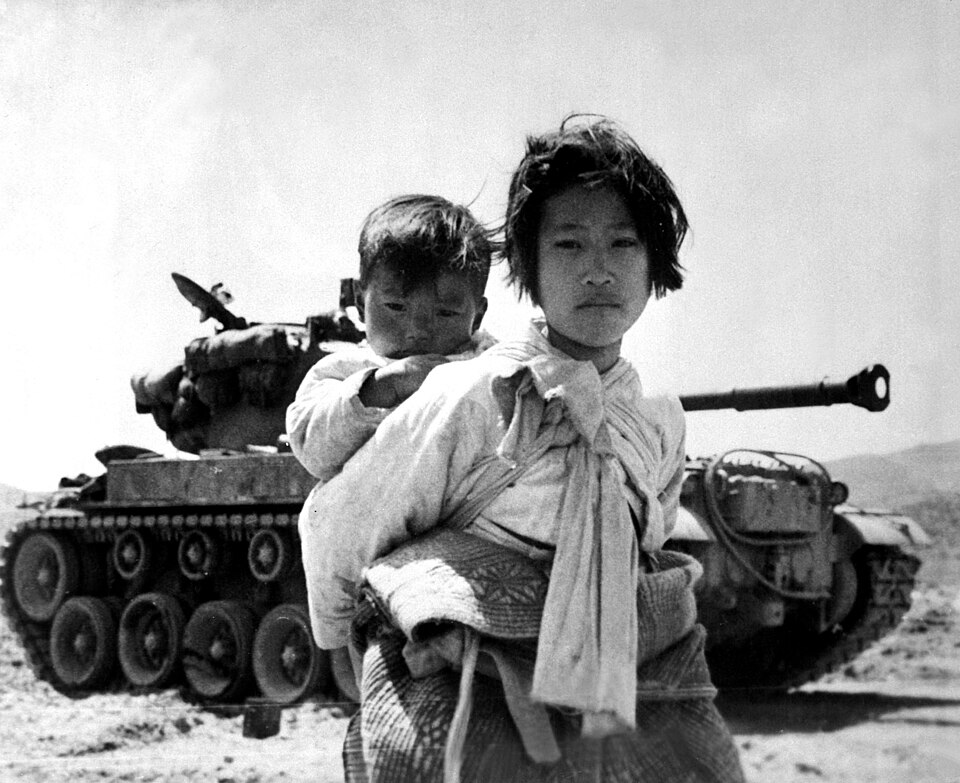
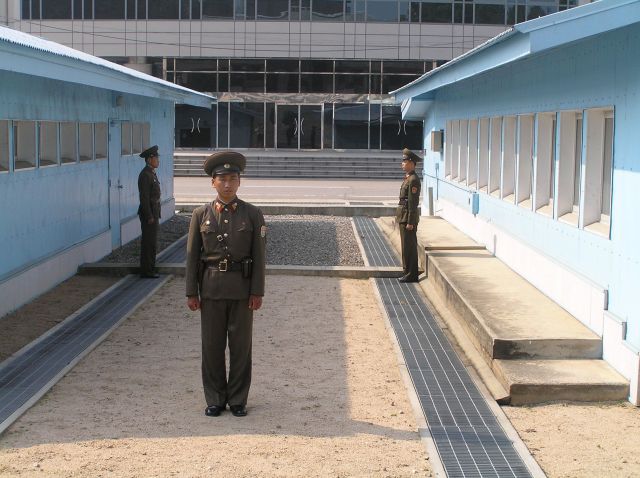
1945年8月,蘇聯對日宣戰,以北緯38度線為界分別占領朝鮮半島。在1948年南北兩分別成立了兩個政府為韓戰原因。北韓在蘇聯武裝支持和中華人民共和國的默許下,在1950年以反擊為理由入侵韓國。 In August 1945, the Soviet Union declared war on Japan and divided the Korean Peninsula along the 38th parallel. After two separate governments were established in 1948, North Korea — backed by Soviet arms and with tacit Chinese support — invaded South Korea in 1950, triggering the Korean War.
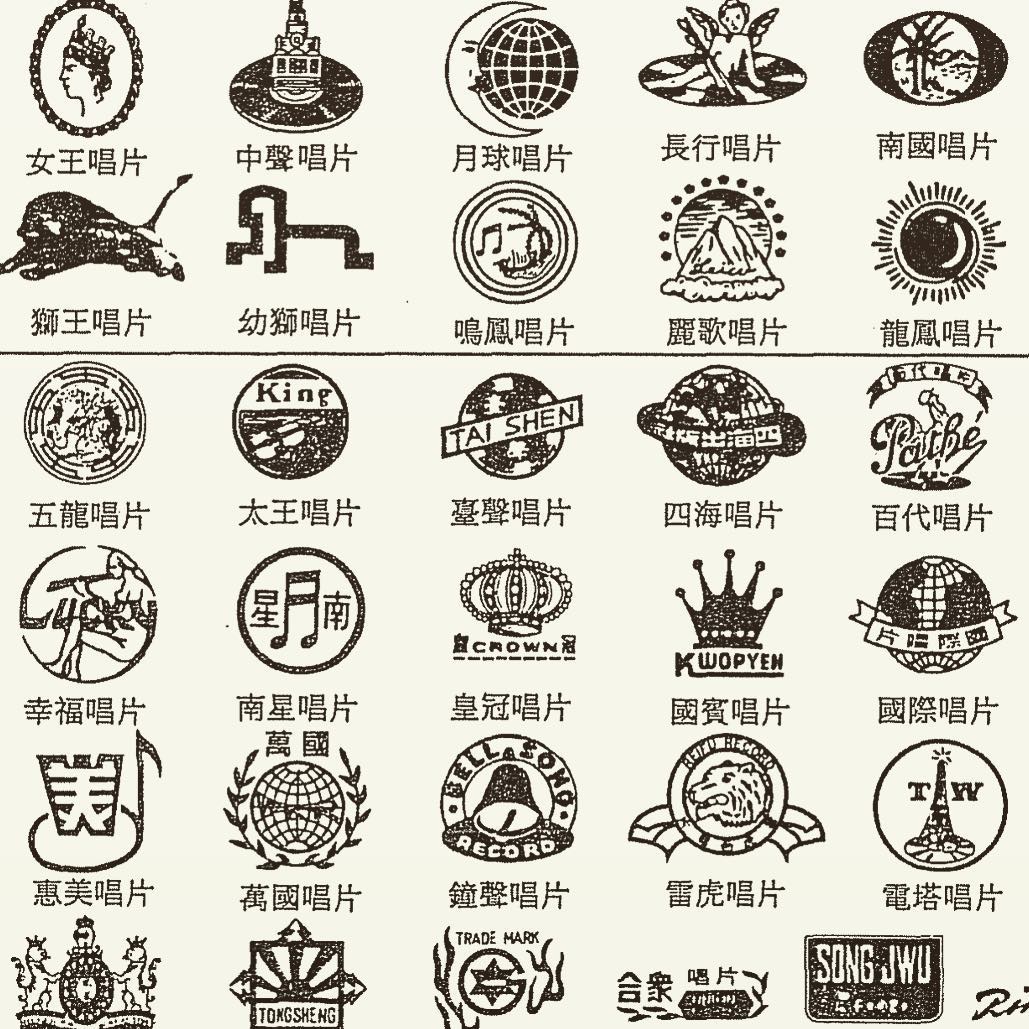
50 年代的唱片業發展以台北為中心,可概分為「翻版代工」、「自製灌製出版」以及「進口販賣」三種。1951年台灣開始出現幾家小型家庭式的唱片製作工廠,如「麗歌」、「亞洲」、「女王」、「鳳鳴」等工廠。 Taiwan's 1950s record industry, centered in Taipei, operated across three modes: bootleg manufacturing, original production, and import retail. Starting in 1951, small family-run record factories began appearing, including Lìgē, Asia, Queen, and Fengming.
從1951年到1965年的美援期間,來自華府總計共有14.8億的美援,不僅促使我國農業、工業的穩定發展,更引導經濟長期的成長。當時,美援猶如看不見的推手,援助臺灣開創經濟奇蹟。 From 1951 to 1965, a total of US$1.48 billion in American aid flowed to Taiwan, stabilizing agricultural and industrial development and guiding long-term economic growth. U.S. aid acted as an invisible hand in helping Taiwan build its economic miracle.
這一年起小型唱片工產紛紛在三重地區成立,50至60年代間約有四五十間以上的唱片工廠聚集於此。1957年起,更相繼有許多專業翻版的小型唱片工廠成立,如台北的鈴鈴、電塔、台聲、月球等十數家唱片公司。 From 1957 onward, small record-pressing factories proliferated in the Sanchong area, with forty to fifty facilities clustered there by the late 1950s and 1960s. Specialist bootleg pressing plants also emerged in Taipei, including Línglíng, Electric Tower, Taiwan Sound, Moon Globe, and more than a dozen others.
1957年,位於台南的台灣第一家唱片行「亞洲唱片」,邀請文夏推出台灣流行歌壇第一張LP唱片,包括「飄浪之女」、「夏威夷之夜」、「男性的復仇」等歌,造成全台轟動流行。 In 1957, Asia Records — Taiwan's first record store, based in Tainan — invited singer Wen Hsia to record the island's first LP, featuring tracks including 'Drifting Woman,' 'Hawaiian Night,' and 'Man's Revenge,' which became a nationwide sensation.
1950年韓戰後進駐台灣的美軍人數增多,國防部為服務在台美軍,於1955年在軍中廣播電台成立「中美軍人之聲」,1957年美軍接手開始獨立製作,成立美軍廣播電台(1979年後轉型為ICRT)。 As U.S. troop numbers in Taiwan grew after the Korean War, the Ministry of National Defense established the 'Voice of China-America' segment on military radio in 1955. In 1957, the U.S. military took over independent production, launching Armed Forces Radio Taiwan — which became ICRT after 1979.
剛回國的許常惠開始推動國內音樂創作,這段期間無論是作曲團體的誕生,或是作曲家的作品發表會,都達到空前的盛況。 Freshly returned from abroad, composer Hsu Chang-hui began championing original musical composition in Taiwan. The period saw an unprecedented flourishing of composer collectives and public premieres of new works.
戰後的台灣在50、60年代急遽的現代化,是現代主義在台灣發展的高峰期。 Taiwan's rapid postwar modernization in the 1950s and 1960s marked the height of the modernist movement on the island.
自由中國事件也稱做雷震事件,1960年6月,《自由中國》雜誌社雷震等人結合台灣本土政治菁英著手籌組新的反對黨,9月4日遭國民黨政府當局逮捕,爆發所謂的「雷震案」,反對黨胎死腹中。 In June 1960, Lei Chen of Free China magazine joined forces with Taiwanese political elites to organize a new opposition party. On September 4, they were arrested by the Kuomintang government — the so-called 'Lei Chen Affair' — ending the opposition effort before it began.
對台灣音樂影響深遠的作曲家許常惠於1961年成立了「製樂小集」團體,由多位作曲家所組成,為台灣年輕作曲家發表新作之舞台,亦時常舉辦國外重要作品首演,以期帶動本土音樂創作。 In 1961, composer Hsu Chang-hui — a figure of lasting influence on Taiwanese music — founded the Composing Ensemble, a collective that provided a platform for young Taiwanese composers to premiere new works and frequently presented first performances of major international compositions.
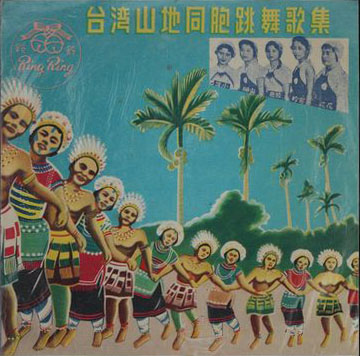
1960 年代,三重的鈴鈴唱片發行一系列臺東南王村卑南族演唱的「台灣山地民謠」唱片,1961 年南王民生康樂隊從金門勞軍回來之後,即在臺北的錄音室灌錄了二集《台灣山地同胞跳舞歌集》,由鈴鈴唱片發行。 In the 1960s, Sanchong-based Líng Líng Records released a series of recordings by the Puyuma people from Nanwang Village in Taitung. In 1961, following their goodwill tour to Kinmen, the Nanwang Minshen Troupe recorded two volumes of Taiwan Indigenous Dance Songs at a Taipei studio for the Líng Líng label.
「雷蒙」成軍於1962年,主要演唱西洋音樂,團員來來去去,除了主要靈魂人物金祖齡外,知名藝人陶大偉也曾在1965年短暫加入過。「雷蒙」曾因表演深得蔣宋美齡的喜愛,被引薦到美軍俱樂部表演。 The Reymont group was formed in 1962 to perform Western pop music. Though membership shifted over the years, the core figure was Kim Tsu-ling; entertainer Tao Da-wei also briefly joined in 1965. Their performances won the admiration of Soong Mei-ling, who introduced them to American military club circuits.
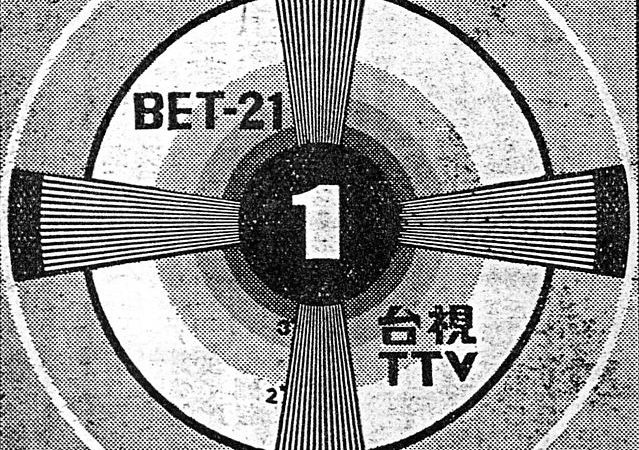
台灣的電視史,就是從1962年十月十日台灣電視公司的首播開始,英文縮寫為TTV。是由「中日電視事業研究小組」展開的前置作業開始,並由板橋林家後裔的林柏壽擔任董事長,總經理則由省新聞處長周天翔轉任。 The history of Taiwanese television begins on October 10, 1962, with the inaugural broadcast of Taiwan Television (TTV). The station grew from preliminary work by the China-Japan Television Research Group, with Lin Bo-shou of the Banqiao Lin family as chairman and Chou Tien-hsiang as general manager.
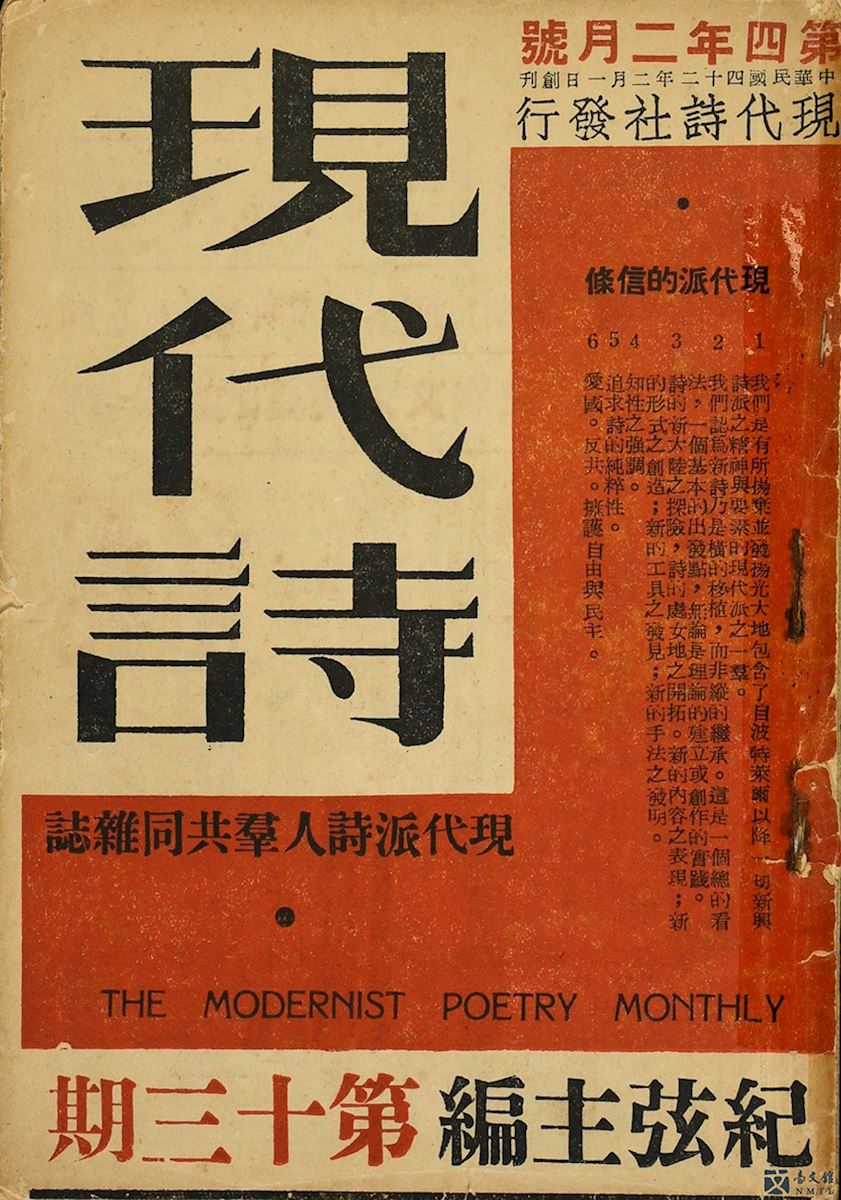
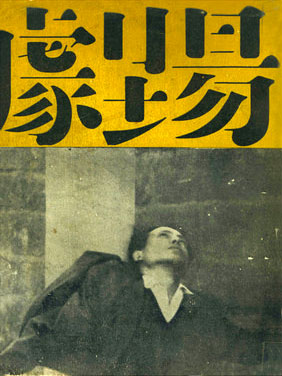
1965年1月1日《劇場》在台北創刊,是一份以當代前衛電影與戲劇為主的刊物,譯介西方當代主要戲劇和電影潮流,大量評介現代主義戲劇作品,偶有台灣本地藝文動態報導,共出刊9期。 Theatre magazine launched in Taipei on January 1, 1965, dedicated to contemporary avant-garde film and drama. It translated and introduced major Western theatrical and cinematic currents, featured substantial criticism of modernist drama, and occasionally reported on local arts events. It ran for nine issues.
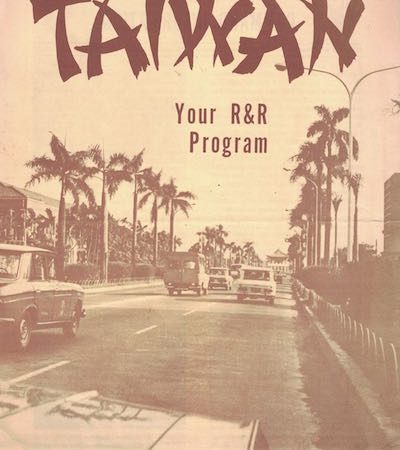
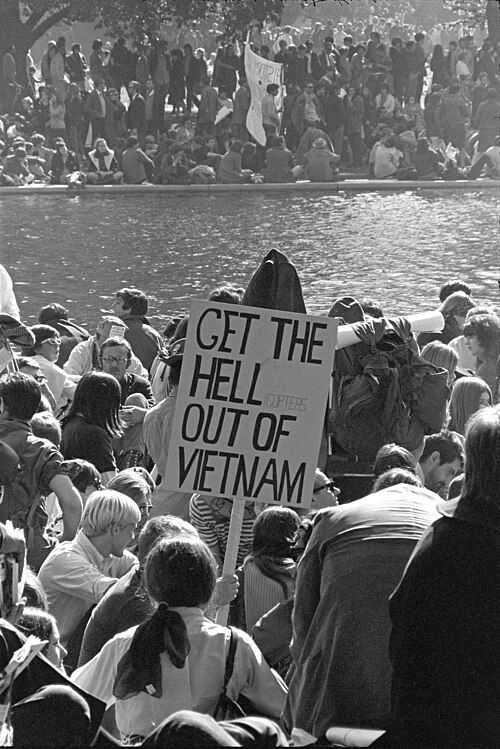
1965年美國全面介入越戰,台灣成為駐越美軍的渡假中心,酒吧與色情行業大量興起,西洋歌曲也跟隨著而來地流行起來,美式文化正式影響台灣。 In 1965, the United States escalated its full military involvement in Vietnam, and Taiwan became a rest-and-recreation hub for U.S. troops. Bars and entertainment venues proliferated, Western music followed, and American cultural influence began reshaping Taiwan in earnest.
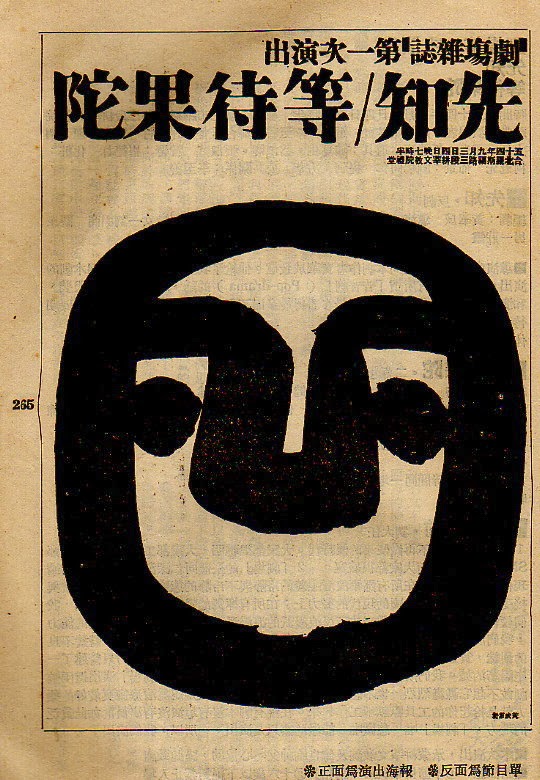
1965年9月3日與4日這兩天,位於台北市羅斯福路三段的耕莘文教院,貝克特(Samuel Beckett, 1906-1989)的劇作《等待果陀》被翻譯成中文,首次在台灣上演。 On September 3 and 4, 1965, Samuel Beckett's Waiting for Godot was performed in Chinese translation for the first time in Taiwan, at the Kuangchi Program Service in Taipei's Roosevelt Road, Section 3.
1966年5月16日,中共中央政治局擴大會議通過《中國共產黨中央委員會通知》,指稱黨內有資產階級,要求全黨高舉無產階級文化革命的大旗,批判學術權威。 On May 16, 1966, an enlarged session of the CCP Central Political Bureau passed the 'May 16 Notification,' asserting that bourgeois elements had infiltrated the Party and calling on all members to raise the banner of the proletarian cultural revolution and criticize academic authorities.
1966年11月12日蔣中正總統於陽明山中山樓落成時發表演說,發起成立中華文化復興運動。該運動外在起因於中華人民共和國正在進行文化大革命,中華民國藉文化復興作為中國正統的象徵。 On November 12, 1966, President Chiang Kai-shek delivered a speech at the inauguration of Zhongshan Hall on Yangmingshan, launching the Chinese Cultural Renaissance Movement. Prompted by the Cultural Revolution in the PRC, the ROC invoked cultural revival as a symbol of its claim to legitimate Chinese civilization.
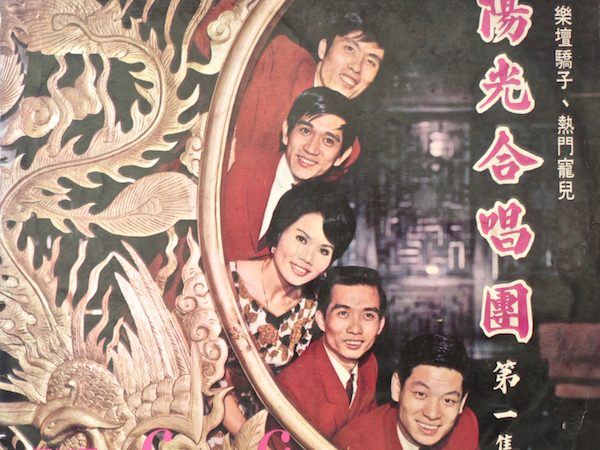
台南是「陽光合唱團」的發源地,由樂迷李家麟引進美軍俱樂部表演,「陽光」在台北打開了知名度,漸漸「北雷蒙,南陽光」的稱號亦不脛而走。 The Sunshine Vocal Group originated in Tainan, introduced to American military club circuits by music enthusiast Li Chia-lin. After establishing its reputation in Taipei, the saying spread: 'Reymont in the north, Sunshine in the south.'
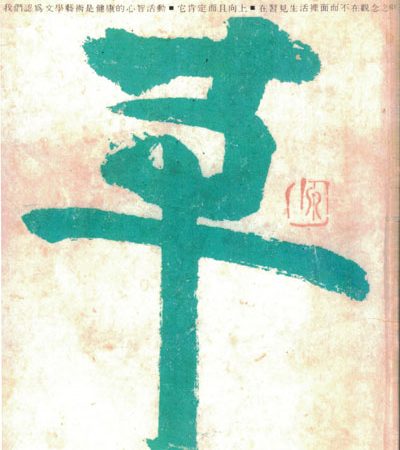
清新、園地開放、充滿理想性的《草原》雜誌,是台灣第一本明確標榜本土文學藝術的雜誌,從創辦起始至殞落雖僅一年,卻代表著一群年輕人執著追求文學夢想的紀錄。1967至68年共出刊三期。 Fresh, open, and idealistic, Prairie was Taiwan's first magazine explicitly dedicated to nativist literature and art. Though it ran for only a year, it documented a generation of young people's pursuit of literary ideals. Three issues were published between 1967 and 1968.
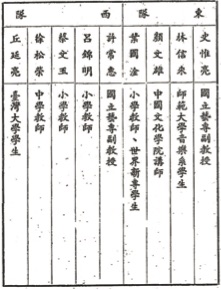
民歌採集運動指1966年1月起,由小規模轉為稍具規模,最終於1967年8月達到高潮的系列採集行動。民歌採集運動一詞首見於1968年史惟亮〈台灣山地民歌調查研究報告〉一文。 The folk song collection movement began modestly in January 1966 before expanding and reaching its peak in August 1967. The term first appeared in Shih Wei-liang's 1968 report 'Survey and Research on Taiwan Mountain Folk Songs.'
1970年任職中視的製作人顧英德與東方廣告公司的黃奇鏘共同構思,籌畫一個創作歌曲的音樂節目。《金曲獎》便於1971年(民國60年)4月在中視頻道播出,由洪小喬擔任主持人。 In 1970, CTV producer Gu Ying-de and Huang Qi-xiang of Eastern Advertising jointly conceived a songwriting competition program. The Golden Melody Award premiered on CTV in April 1971, hosted by Hung Hsiao-chiao.
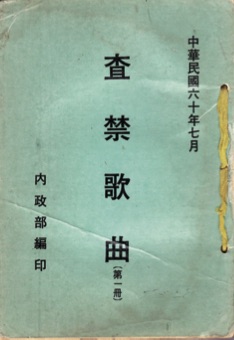
內政部從1971年7月起,開始編印查禁歌曲手冊給各媒體。還新定了查禁免列日期文號和理由的條款,從此連歌是怎麼被禁的都不清不楚。 Starting in July 1971, the Ministry of the Interior began distributing a banned songs handbook to media outlets. A new provision eliminated the requirement to state the date, document number, or reason for a ban — making it impossible to know how or why any song had been prohibited.
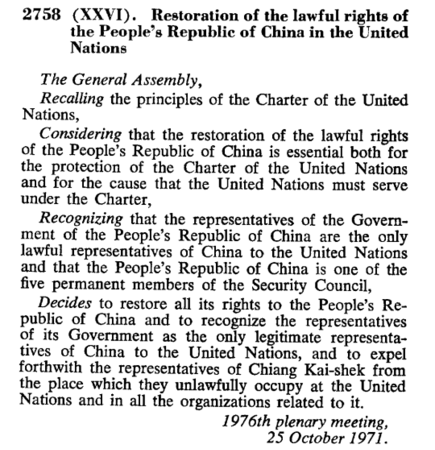
1971年10月25日,聯合國通過2758號決議文,驅逐中華民國在聯合國及其附屬組織所佔據的席位,並由中華人民共和國取代。 On October 25, 1971, the United Nations passed Resolution 2758, expelling the Republic of China from its seat and affiliated organizations, and recognizing the People's Republic of China as the sole lawful representative of China.
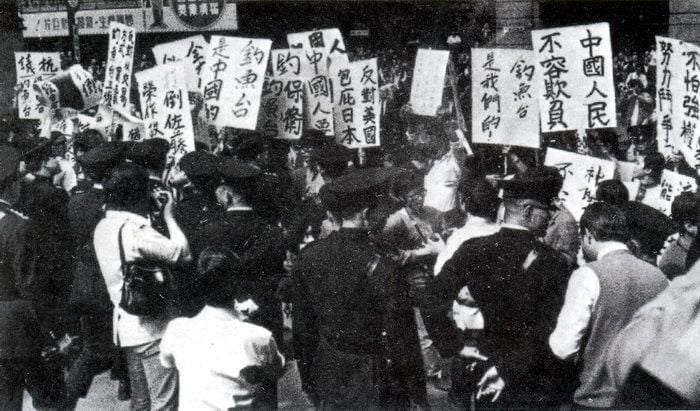
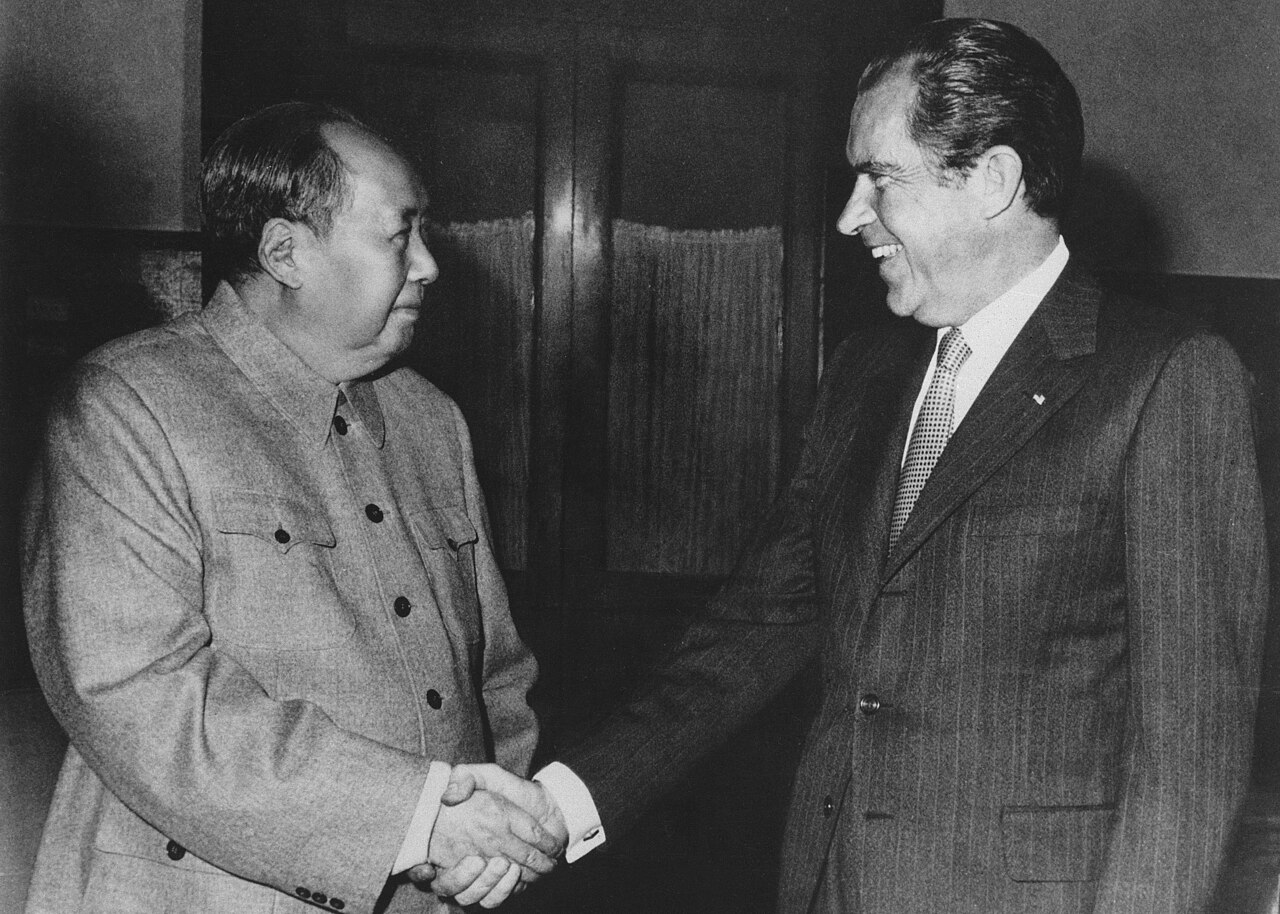
1971年,尼克森宣布他將在次年訪問中華人民共和國。1972年2月21日至28日的這次訪問,是在過去的20年內首次向美國民眾展現了當時的中華人民共和國。形成了美國聯合中華人民共和國對抗蘇聯的局面。 In 1971, Nixon announced his intention to visit the People's Republic of China the following year. His February 21–28, 1972 visit was the first time in over two decades that the PRC was presented to the American public, laying the groundwork for a U.S.–PRC alignment against the Soviet Union.
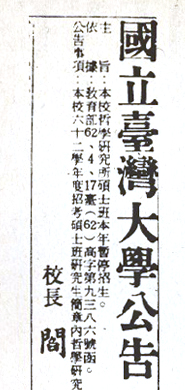
臺大哲學系事件係指1972年12月到1975年6月之間,在國立台灣大學校內,以「反共」之名,對國立臺灣大學哲學系內中國自由派學者進行整肅的一連串行動,並導致臺大哲學系教職員遭解聘,研究所停止招生一年。 Between December 1972 and June 1975, a series of purges were carried out at National Taiwan University in the name of 'anti-communism,' targeting liberal scholars in the Philosophy Department. Faculty were dismissed and graduate admissions were suspended for one year.
1973年1月27日,美國經過長期談判,與越南民主共和國在關於越南問題的《巴黎協定》上簽字,宣告美國在越南軍事行動的失敗。 On January 27, 1973, the United States and the Democratic Republic of Vietnam signed the Paris Peace Accords after prolonged negotiations, marking the failure of the U.S. military campaign in Vietnam.
1973年8月,新聞局鑒於流行歌曲的氾濫,特別成立了一個歌曲出版品輔導工作小組,11月,新聞局從警總的手中接管歌曲查禁的工作,由出版品出版小組來執行,嚴格審查淘汰「不良」歌曲。 In August 1973, the Government Information Office established a special task force for pop song publication guidance. In November, song censorship authority was transferred from military intelligence to the GIO's Publication Guidance Group, which assumed strict oversight of 'undesirable' songs.
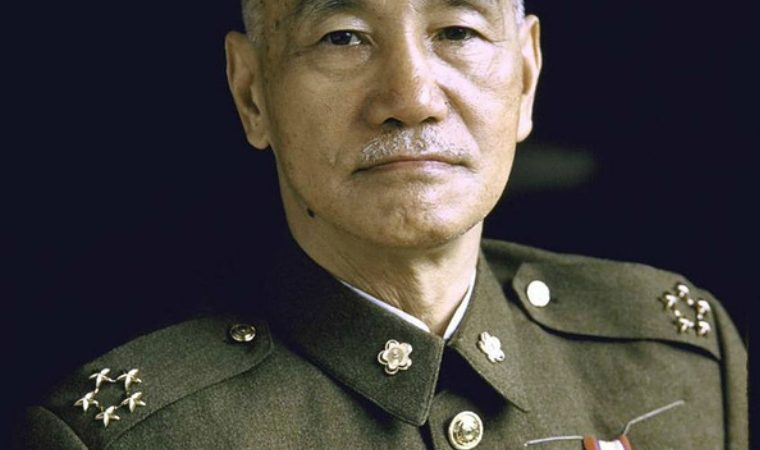
在40年前的台灣,蔣介石被稱為蔣中正,是「民族救星」、「世界的偉人」,1975年去世之後,國民政府為了紀念死後被稱為「先總統蔣公」的「豐功偉業」,號召台灣全民捐款興建中正紀念堂。 In an earlier era, Chiang Kai-shek was honored as the 'Savior of the Nation' and 'Great Man of the World.' Following his death in 1975, the Nationalist government — commemorating the man they now called 'the Late President Chiang' — launched a nationwide fundraising campaign to build the Chiang Kai-shek…
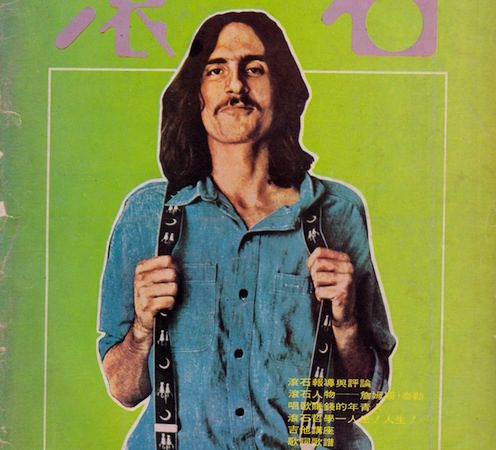
段鍾沂、段鍾潭兄弟70年代出版名喚《滾石》的音樂雜誌,師法美國Rolling Stone雜誌。在台灣70年代後半葉,它不僅是台灣唯一的搖滾樂雜誌,也留下了不少青年文化的紀錄。 Brothers Duan Zhong-yi and Duan Zhong-tan published a music magazine called Rolling Stone in the 1970s, modeled on the American Rolling Stone. In Taiwan's late-1970s cultural landscape, it was not only the island's only rock music magazine but also a vital document of youth culture.
1975年6月6日,創作者兼歌手楊弦發起的「現代民謠創作演唱會」在台北中山堂舉行。這場被視為現代民歌運動緣起的演唱會,被譽為「辛亥革命」第一槍,而「中國現代民歌」這個提法也因此引起關注。 On June 6, 1975, singer-songwriter Yang Xian organized a 'Modern Folk Song Concert' at Zhongshan Hall in Taipei. Regarded as the founding moment of the modern folk song movement, it was hailed as 'the first shot of a musical revolution,' and the term 'modern Chinese folk song' entered public discourse.
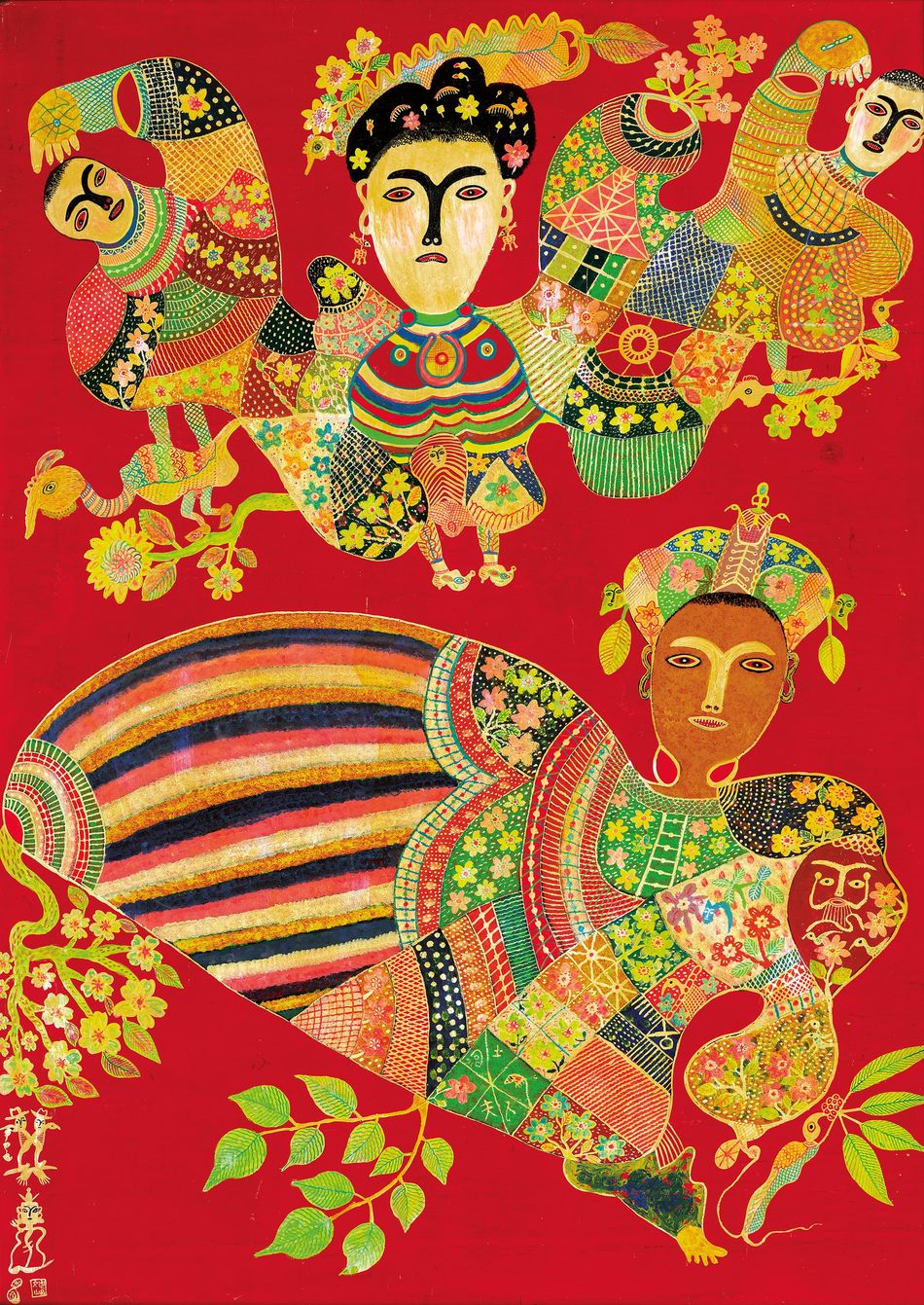
洪通50歲開始閉門自學研究繪畫,1972年一次南鯤鯓代天府廟前攝影比賽機緣,意外獲得漢聲雜誌報道,70年代掀起一股「洪通狂潮」,1976年洪通在台北美國新聞處林肯中心舉辦首次個人的畫展,震撼台灣藝壇。 Hung Tung began teaching himself to paint in his fifties. A 1972 feature in Echo Magazine brought him unexpected attention, sparking a 'Hung Tung craze' in the 1970s. In 1976, his first solo exhibition at the Lincoln Center of the American Institute in Taipei shook the Taiwanese art world.
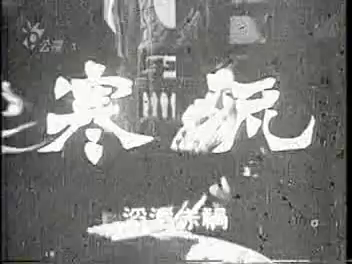
從1976年1月12日起,國防部總政戰部開始長期徵用台視、中視、華視周一至周五晚上九點至九點半的時段聯播反共電視連續劇〈寒流〉。 Beginning January 12, 1976, the General Political Warfare Department commandeered the weeknight 9–9:30 PM slots on all three major television networks — TTV, CTV, and CTS — to broadcast the anti-communist serial drama Cold Current simultaneously.
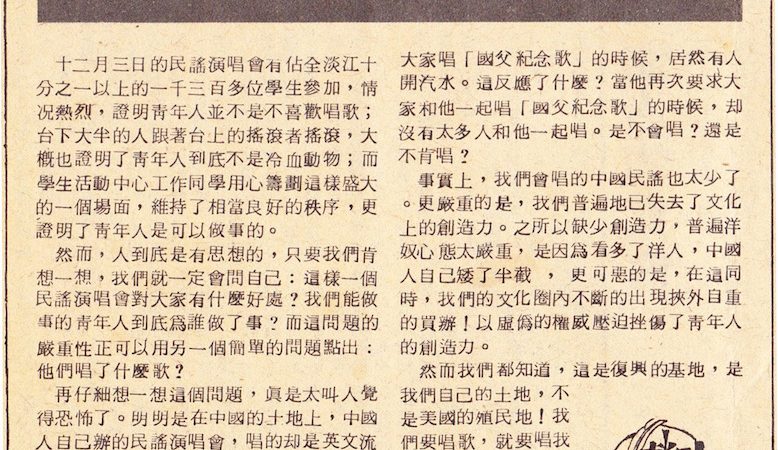
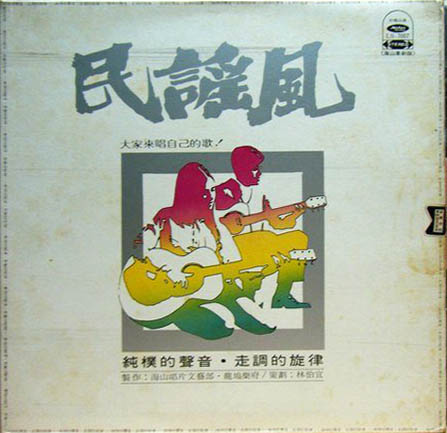
1976年(民國65年)12月3日,李雙澤在淡江文理學院舉辦的一場西洋民謠與熱門音樂演唱會上,登高一呼「我們應該要唱自己的歌」,註記下了校園民歌運動的轉捩點。 On December 3, 1976, at a Western folk and pop music concert held at Tamkang College, Li Shuang-ze stepped forward and declared, 'We should be singing our own songs' — marking a turning point in the campus folk song movement.
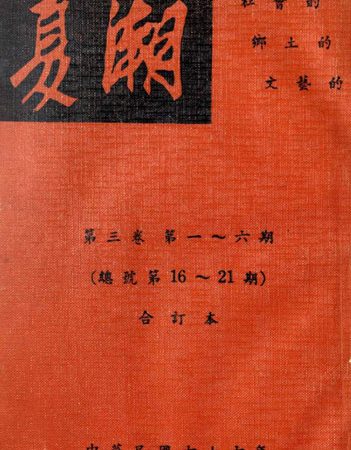
一份標榜「鄉土的、社會的、文藝的」評論性刊物。《夏潮》雜誌創刊於1976年2月28日,內容轉向反帝國主義、反資本主義以及反制式歷史教育教育文化體系,開啟左翼的知識論述運動。 Billing itself as 'nativist, social, and literary,' Summer Tide was founded on February 28, 1976. Its content turned toward anti-imperialism, anti-capitalism, and a critique of orthodox historical education, opening up a left-leaning intellectual discourse movement.
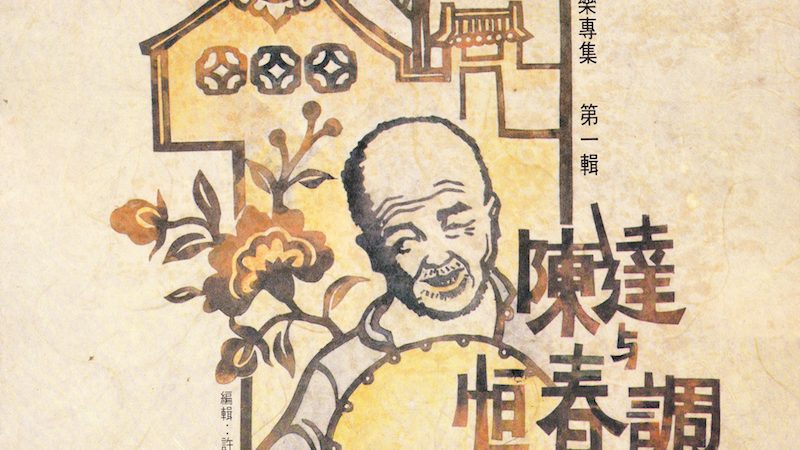
在1976、1977年間,陳達至「稻草人」駐唱,吸引大群聽民謠、聽搖滾的文青、嬉皮前來「朝聖」,蔚為奇觀。 In 1976 and 1977, Chen Da held a performance residency at the Scarecrow restaurant, drawing crowds of folk-music and rock-loving intellectuals and counterculture youth who came as if on pilgrimage — a remarkable cultural phenomenon.
70年代「鄉土文學論戰」的爆發,是臺灣戰後以來「一次大規模文化論戰。而且論戰的範圍並不僅止於文學領域,還包括了在政治、經濟層面的意識形態的對立要素,因此也可說是一場全面性的思想、文化論爭。」 The explosion of the 1970s 'Nativist Literature Debate' was the largest cultural controversy in postwar Taiwan. Its scope extended far beyond literature, encompassing ideological cleavages in politics and economics — making it a comprehensive struggle over ideas and culture.
1977年5月6日,新力公司、新力文教基金會與台北市陽明扶輪社合辦的「金韻獎青年歌謠演唱大賽」開始接受報名,優勝者若通過複賽及決賽,可獲得獎金並獲聘為新力公司歌星。興盛期代表了校園民歌的高峰時期。 On May 6, 1977, Sony Taiwan and the Sony Cultural Foundation co-organized the 'Golden Melody Award Youth Song Competition,' open for entries. Winners who advanced through the semifinals and finals received prize money and recording contracts. The competition represented the height of the campus folk song era.
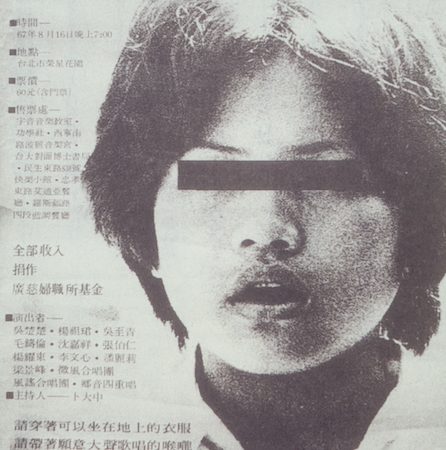
1978年,楊祖珺因不滿新聞局強制要求演唱淨化歌曲而於台視辭職。同年八月十六日,她在榮星花園舉辦「青草地歌謠慈善演唱會」,為幫助雛妓籌款。這是台灣戰後第一次的戶外大型演唱會。 In 1978, Yang Tzu-chiung resigned from Taiwan Television after refusing the GIO's demand to perform 'purified' songs. On August 16, she held the 'Green Meadow Charity Folk Concert' at Rongxing Garden to raise funds for child prostitution victims — Taiwan's first large-scale outdoor concert in the postwar era.
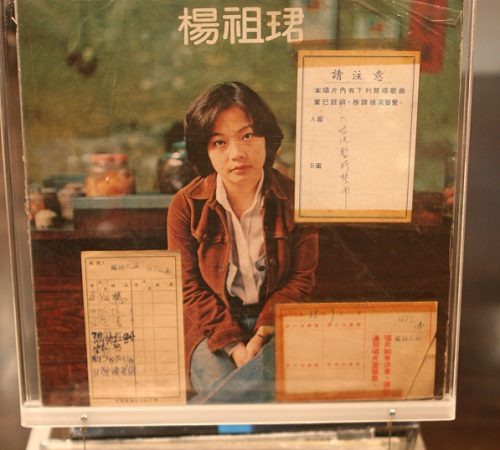
1975年,就讀淡江文理學院(今淡江大學)的楊祖珺響應學長李雙澤呼喊的「唱自己的歌」,成為校園民歌運動的重要一員。1978年,新格唱片發行楊祖珺首張唱片專輯《楊祖珺》於兩個月後遭到回收禁播。 In 1975, Tamkang College student Yang Tzu-chiung answered Li Shuang-ze's call to 'sing your own songs' and became a key figure in the campus folk song movement. In 1978, Xingeé Records released her debut album; it was recalled and banned just two months later.
1978年12月16日,美國總統卡特宣布,美國將於1979年1月1日起與中華人民共和國建交完全的外交關係,並將終止美國與台灣的共同防禦條約。 On December 16, 1978, President Carter announced that the United States would establish full diplomatic relations with the People's Republic of China beginning January 1, 1979, and would terminate its mutual defense treaty with Taiwan.
1979年美國正式與中共建交,美國駐台官方單位陸續離開台灣,包括駐台美軍,美軍電台後轉型為台北國際社區廣播電台(ICRT)。 In 1979, as the United States formally recognized the PRC, American official institutions — including U.S. military forces — gradually withdrew from Taiwan. Armed Forces Radio Taiwan was reorganized as the International Community Radio Taipei (ICRT).
Sony 從 1979 年 7 月開始,推出了 Walkman,並創造了耳機文化,1980 年 2 月開始在全世界銷售。 Starting in July 1979, Sony introduced the Walkman and created earphone culture. Global sales began in February 1980.
1979至1985年間,委由「中華民俗藝術基金會」所策畫、第一唱片公司出版的《中國民俗音樂專集》系列黑膠唱片。囊括早年戰後各類型的族群音樂,對後來臺灣流行歌曲的本土創作者產生直接影響。 Between 1979 and 1985, the Chinese Folk Music Anthology — a series of vinyl LPs planned by the Chinese Folk Arts Foundation and published by First Records — documented a wide range of postwar ethnic music traditions in Taiwan. The series had a direct influence on later generations of Taiwanese…
1979年前新聞局對歌曲採事後審查,很多歌都是到了很紅之後才被禁,出現了很多鬧劇。為了防止這種笑話一再上演,1979年宋楚瑜上任建立了更嚴密的審查制度,規定所有歌曲,必須在發行及公開播放前都要送審。 Before 1979, the Government Information Office reviewed songs after the fact — many songs became hits before being banned, producing repeated absurdities. To prevent further embarrassment, Soong Chu-yu established a more rigorous review system upon taking office in 1979, requiring all songs to be submitted for approval before release or…
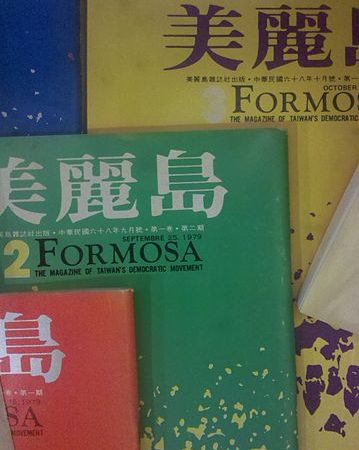
1979年12月10日,施明德、姚嘉文等帶領二、三百名群眾在中山一路的大圓環進行演講,過程中軍民發生衝突,遭鎮暴部隊強制驅散,此後活躍於黨外陣營的主要人物多數被逮捕,稱為「美麗島事件」。 On December 10, 1979, Shih Ming-teh, Yao Chia-wen, and two to three hundred supporters held a rally at the Zhongshan Roundabout, which ended in clashes with riot police and forced dispersal. In the aftermath, most leading figures of the tangwai opposition movement were arrested — the event known as the…
隨身聽是指體積小、重量輕便於隨身攜帶的媒體播放器,用耳機播放聲音是其特點,由索尼創造的Walkman為代表,其他品牌包括松下等日系平牌,愛華等國產品牌,飛利浦等歐系品牌。 The personal stereo — a compact, portable media player characterized by earphone listening — swept through Taiwan. The Sony Walkman was its defining symbol, alongside other brands including Panasonic and Aiwa from Japan, local manufacturers, and European brands like Philips.
魔幻現實主義一般被認為源自拉丁美洲文學,作品多在揭露社會弊端,抨擊暴暗現實,歸根結底是拉丁美洲人民新的覺醒的表現,是一種民族自醒和反思的開始。 Magical realism is generally considered to have originated in Latin American literature, where it exposed social ills and confronted harsh realities. At its root, it expressed a new awakening among Latin American peoples — a beginning of national self-awareness and reflection that resonated with Taiwanese writers.
滾石唱片,全名為「滾石國際音樂有限公司」(最早的名稱為滾石有聲出版社)由段鍾沂、段鍾潭兄弟於1980年所創建,是台灣首家本土唱片公司。 Rock Records (Rock International Music Co., Ltd. — originally Rock Audio Publications) was founded in 1980 by brothers Duan Zhong-yi and Duan Zhong-tan. It was Taiwan's first homegrown record label.
羅蘭的TR-808節奏作曲(又名808)是最早的可編程的電子鼓機。TR作為Transistor Rhythm晶體管節奏的手字縮略簡寫之一,由Roland公司在1980年年初推出。 Roland's TR-808 Rhythm Composer (commonly known as the 808) was one of the earliest programmable electronic drum machines. TR, short for Transistor Rhythm, was introduced by Roland in early 1980.
李師科案是台灣治安史上首起持槍搶劫銀行的搶案。民國71年的四月份,退伍老兵李師科,在位於羅斯福路上的土地銀行古亭分行,洗劫新台幣531萬元後逃跑,為台灣的治安史投下了震撼彈。 The Li Shih-ko case was the first armed bank robbery in Taiwan's criminal history. In April 1982, retired veteran Li Shih-ko robbed the Land Bank's Guting branch on Roosevelt Road, making off with NT$5.31 million — a shockwave to Taiwan's public safety history.
1981年,華國大飯店與夜總會的合作到期且不再續約,夜總會的原班人馬於林森北路開了這家名叫Diana(黛安娜)的西餐廳。但其並非供餐,而是一家Disco舞廳,也正是傳說中的全台第一家地下舞廳。 In 1981, when the Imperial Hotel's nightclub contract expired, the original nightclub team opened a restaurant called Diana on Linsen North Road. It did not actually serve food — it was a disco, and the legendary first underground dance hall in Taiwan.
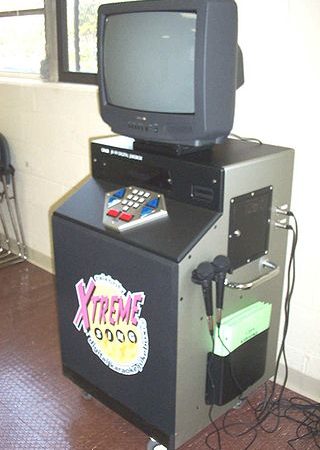
卡拉OK伴唱機1971年由日本樂師井上大佑發明,取代了傳統的「那卡西」。1981年時引進台灣,由於價格昂貴,早年多為日式酒店內供客人玩樂,1990年代末期價格大幅下降後,才打入家庭市場。 Karaoke was invented in 1971 by Japanese musician Daisuke Inoue, replacing the traditional Nakashi street performers. Introduced to Taiwan in 1981, the expensive equipment was initially found only in Japanese-style clubs. It wasn't until prices dropped dramatically in the late 1990s that karaoke entered the home market.
為解決中華民國政府撤退台灣後的兩岸海峽關係,中華人民共和國第二代領導人鄧小平於1980年代提出「一國兩制」的憲法原則。 To address the cross-strait relationship following the ROC government's retreat to Taiwan, PRC leader Deng Xiaoping proposed the constitutional principle of 'One Country, Two Systems' in the 1980s.
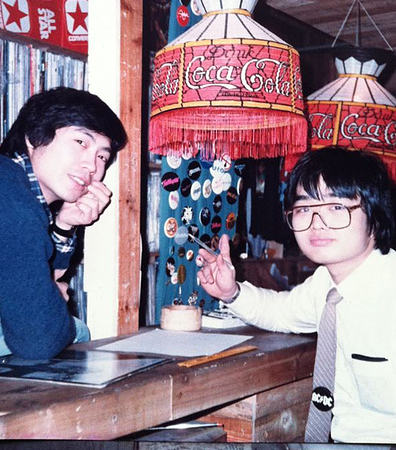
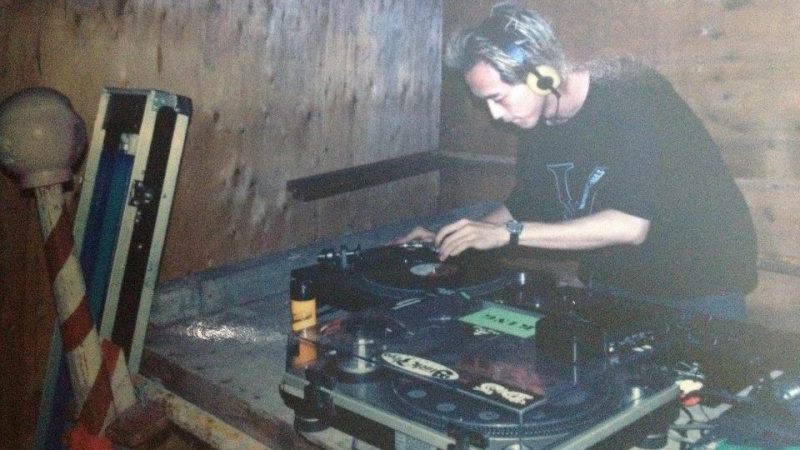
凌威自1980年代起從AC/DC,在台北各地開了無數間的「Rock House」,這些音樂空間最後不僅成為樂迷與知青的聚集處,部分空間也成為樂手演練的展演空間以及培養台灣年輕DJ的實驗空間。 Starting in the 1980s, Ling Wei opened numerous 'Rock Houses' across Taipei, beginning with AC/DC. These music spaces became gathering places for fans and young intellectuals, and some evolved into performance venues for musicians and experimental training grounds for Taiwan's first generation of DJs.
丘丘合唱團,台灣流行樂團,成立於1981年。流暢的旋律、強勁的節奏、沙啞的唱腔給當時流行校園民歌的台灣樂壇帶來全然不同的音樂風格。 The Chiu Chiu Band, a Taiwanese pop group formed in 1981, brought a radically different sound to a scene dominated by campus folk songs. Their fluid melodies, powerful rhythms, and raspy vocals heralded a new direction in Taiwanese popular music.
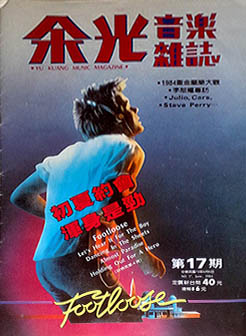
《余光》創立於1982年,雜誌的報導內容主要為西洋流行音樂,介紹每月發行的流行音樂專輯、國外藝人動態及介紹一些有關流行音樂的知識或歷史。於2002年轉型為網站。為影響80年代影響台灣「西洋音樂」品味與消息最大宗重要的管道之一。 Founded in 1982, Yu Guang magazine covered Western pop music, reviewing new monthly releases, reporting on international artists, and introducing knowledge and history of popular music. It transitioned to a website in 2002. It was one of the most important channels shaping Taiwan's taste for Western music in the 1980s.
樂器數位介面(簡稱MIDI)是一個工業標準的電子通訊協定,為電子樂器等演奏裝置定義各種音符或彈奏碼,容許電子樂器、電腦、手機或其它的舞台演出配備彼此連接,調整和同步。 Musical Instrument Digital Interface (MIDI) is an industry-standard electronic communication protocol that defines note and performance data for electronic instruments, enabling synthesizers, computers, mobile devices, and stage equipment to connect, sync, and communicate.
Family Computer是任天堂發行的第三代家用遊戲機。1983年主機在日本以14800日元的價格發售,初期有PPU設計問題,經更新後人氣飆升,在1984年年底成為日本最暢銷的遊戲機。 The Family Computer was Nintendo's third-generation home game console. Released in Japan in 1983 at ¥14,800, initial PPU design issues were corrected after launch, and the machine's popularity soared — by late 1984 it had become Japan's best-selling game console.
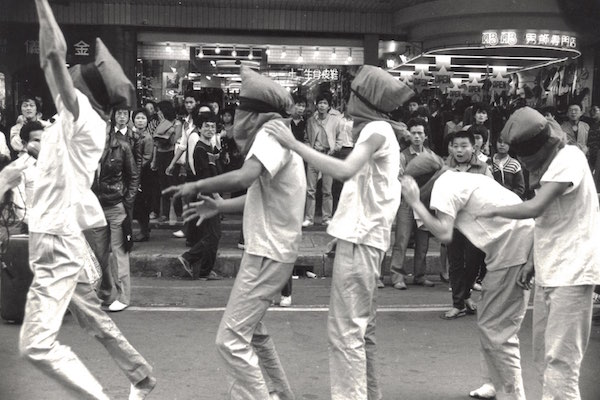
1983年10月21日,藝術家陳界仁在戒嚴時期的台北西門町武昌街,突發了一場令整個鬧區頓時震撼至寂靜無聲的行為表演。 On October 21, 1983, artist Chen Chieh-jen staged a sudden performance on Wuchang Street in Taipei's Ximending district under martial law — bringing the entire busy commercial area to a stunned and sudden silence.
蘋果創辦人Steve Jobs在1984年的發表了麥金塔(Macintosh,Mac)個人電腦,這是全球第一款針對大眾市場且具備圖形使用介面與滑鼠的個人電腦,後世稱為Macintosh 128K。 In 1984, Apple co-founder Steve Jobs unveiled the Macintosh personal computer — the world's first mass-market PC featuring a graphical user interface and mouse, later known as the Macintosh 128K.
1984年,第一家打著「MTV」三個字為旗幟的視聽中心正式設立,主要是放映西洋流行音樂的錄影帶,在空間的格局上,除了公開播映的大廳外,又首創了包廂隔間的設計。 In 1984, the first video screening center operating under the 'MTV' banner opened in Taiwan, primarily showing Western pop music videos. Beyond a communal viewing hall, it pioneered the concept of private booth partitions — an innovation that defined the format.
在美國強大的貿易報復壓力下,1984年6月,行政院長俞國華提出「自由化,國際化,制度化」的經濟發展方針,指出經濟建設的重點在調整經濟結構與加速工業升級。 Under heavy U.S. trade pressure, Premier Yu Kuo-hwa introduced the policy of 'liberalization, internationalization, and institutionalization' in June 1984, directing economic policy toward structural adjustment and accelerated industrial upgrading.
音樂錄影帶(在台灣常稱為MTV)在80年代不但影響了唱片市場,也大大改變了人們接受音樂的方式。 Music videos (commonly called MTV in Taiwan) in the 1980s not only transformed the record market but fundamentally changed how people experienced music.
自1980年代起,五大跨國音樂集團:寶麗金(Polygram)、科藝百代(EMI)、博德曼(BMG)、華納(Warner)、新力(Sony)的觸角陸續進入台灣,初期主要以授權代理的方式進入台灣。 From the 1980s onward, the five major multinational music conglomerates — PolyGram, EMI, BMG, Warner, and Sony — began entering Taiwan, initially through licensing and distribution arrangements with local record companies.
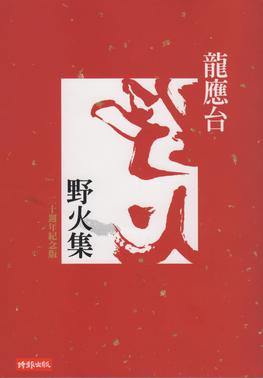
《野火集》是現代作家龍應台之作品,自1984年於臺灣《中國時報》依序刊載三篇主要針對臺灣民眾的素質、環境亂象等等不涉政治層面的批判文章,在1985年由圓神出版社結集成《野火集》一書。 Wild Fire is a collection by writer Lung Ying-tai. Beginning in 1984, she published a series of articles in the China Times critiquing public attitudes, environmental disorder, and social behavior — carefully avoiding political subjects. In 1985, the essays were collected into the book Wild Fire by Yuanchen Publishing.
1985年李再鈐的雕塑作品〈低限的無限〉在市立美術館展出,因有人投書認為作品漆成紅色有點像中國共產黨的紅星;當時的北美館館長蘇瑞屏便立即花了八千元將作品改塗成銀色,遭致雕塑家的抗議。 In 1985, Lee Tsai-chien's sculpture Minimal Infinity was exhibited at the Taipei Fine Arts Museum. When a letter-writer complained that its red paint resembled a communist red star, museum director Su Ruiping immediately spent NT$8,000 to have it repainted silver — prompting an artist's protest.
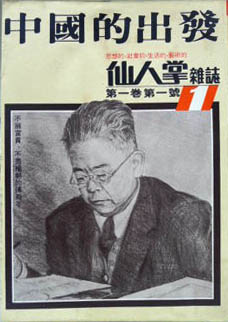
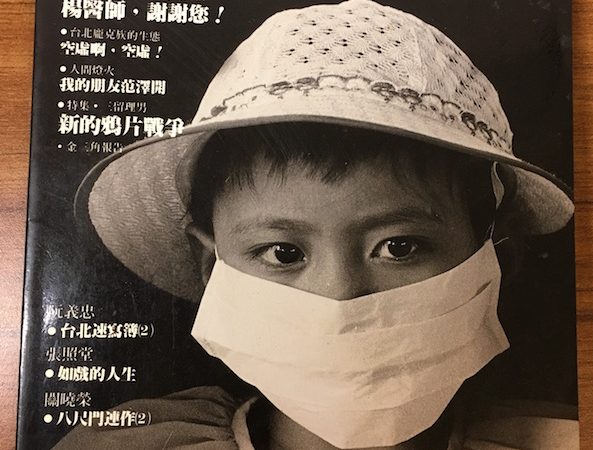
1985年11月,《人間》雜誌的創刊號封面選用了一個住在都市邊緣的原住民黑白照。這張由報導攝影家關曉榮拍的照片,相當程度也定義了這本維持近四年、出刊四十七期雜誌的生命風格。 In November 1985, the inaugural cover of Renjian magazine featured a black-and-white photograph of an indigenous person living on the urban margins, taken by documentary photographer Kuan Hsiao-jung. That image largely defined the life and spirit of the magazine, which ran for nearly four years and published forty-seven issues.
舞禁解除後的1986年,台灣第一家完全合法的KISS DISCO舞廳正式在中泰賓館的三樓盛大開幕,在當時立即成了年輕人最時尚的室內休閒去處,可說是今日所謂「夜店」的前身。 In 1986, following the lifting of the dance ban, Taiwan's first fully legal dance club — KISS DISCO — grandly opened on the third floor of the Zhongtai Hotel. It immediately became the most fashionable indoor venue for young people and is considered the forerunner of today's nightclub scene.
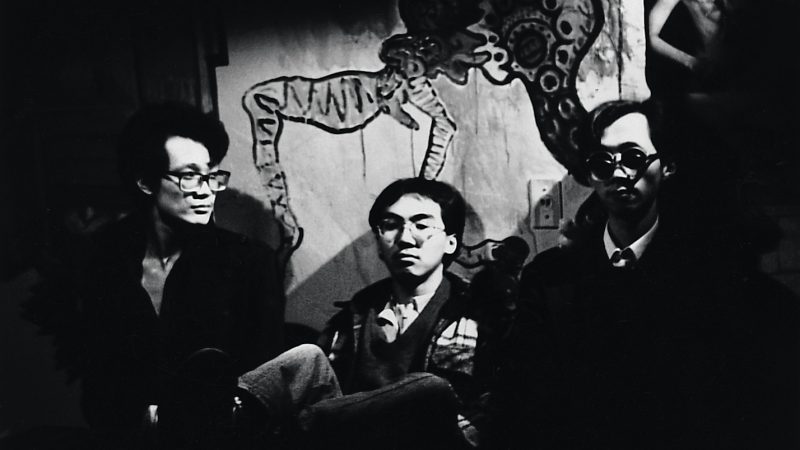
「水晶唱片」自早期翻版國外音樂,於 1986 年由任將達與林子淩接手經營,轉型為 1990 年代台灣本土且有開創意義的唱片公司之一。 Crystal Records, after an early phase of distributing foreign music, was taken over by Jen Chiang-ta and Lin Tzu-ling in 1986. It transformed into one of the most pioneering independent record labels in Taiwan in the 1990s.
一九八六年是台灣解除戒嚴後的隔年。「黨外」在9月突破禁令,正式成立「民進黨」。卡拉OK在當時跟著橫掃台灣,警方表示:「卡拉OK生意愈興隆,因搶麥克風、喝人倒采而引發的糾紛和鬥毆便愈層出不窮」。 1986 was the year after Taiwan lifted martial law. The opposition formally established the Democratic Progressive Party in September, defying the ban. Karaoke simultaneously swept the island — police reported that the more business karaoke venues did, the more brawls erupted over microphone disputes and heckling.
1986年7月,「財團法人國際唱片業交流基金會」(IFPI)在台灣正式成立分會組織,其下設立管理取締組,除了具有引入西方唱片銷售制度與著作權管理規範的意義外,IFPI 更是外資進入台灣的探子。 In July 1986, the International Federation of the Phonographic Industry (IFPI) officially established its Taiwan chapter. Beyond introducing Western music sales systems and copyright management frameworks, IFPI served as a scout for foreign capital entering the Taiwanese market.
1986年9月28日,黨外人士在臺北圓山飯店召開「黨外中央後援會」,決定組黨,由130餘位反對國民黨勢力的黨外人士,宣布成立民主進步黨。 On September 28, 1986, opposition figures convened a meeting of the 'Tangwai Central Support Association' at the Grand Hotel in Taipei and resolved to form a party. More than 130 anti-KMT opposition figures announced the founding of the Democratic Progressive Party.
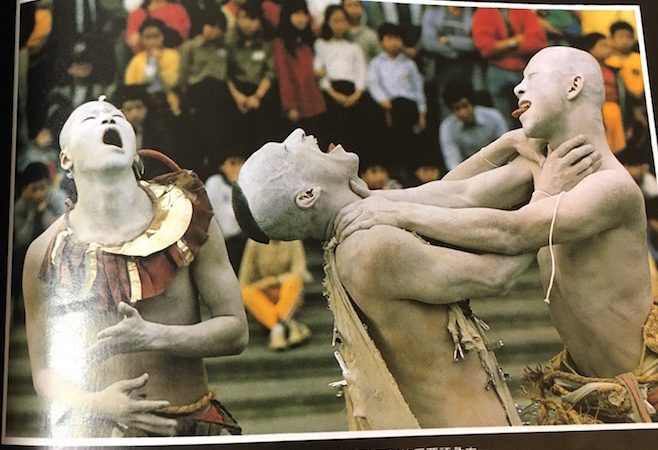
1986年日本舞踏的「白虎社」來台表演造成轟動,報章雜誌開始引介舞踏及鈴木忠志等有關日本身體訓練的脈絡,身體作為一個劇場美學的概念才慢慢出來。 In 1986, the Japanese butoh group Byakkosha performed in Taiwan to great impact. Press coverage introduced butoh and the work of Tadashi Suzuki on Japanese physical training methodologies — gradually bringing the body as a concept in theatrical aesthetics into Taiwanese consciousness.
1986年「民進黨」宣布成立之時,跟隨國民政府來台的老兵們在「黨外人士」與人道主義知識分子的協助下,組成「外省人返鄉探親促進會」,展開為期近一年的老兵返鄉探親運動。 When the DPP announced its founding in 1986, mainlander veterans — assisted by tangwai activists and humanist intellectuals — organized the Mainlander Hometown Visit Promotion Association, launching a nearly year-long movement advocating the right to return and visit family.
自1986 年在校園民歌之後崛起的11 家唱片公司,著手成立 IFPI 臺灣分會後,IFPI成為積極向政府要求及施壓的唱片業政策遊說團體,主要的方向即是「打擊盜版」以及加強宣導著作權保護觀念。 The eleven record companies that rose following the campus folk song era established the IFPI Taiwan chapter and made it an active lobbying body pressuring the government on music industry policy — primarily focused on combating piracy and raising public awareness of copyright protection.
創刊於1986年(1991年停刊),由<Wax Club>會訊擴張而創刊,水晶唱片出版的刊物,推動台灣新音樂最重要的一份刊物,在當時是許多樂迷的啟蒙刊物,早期<搖滾客>還曾附一卷錄音帶。 Founded in 1986 (ceased publication 1991), Rocker expanded from the *Wax Club* newsletter and was published by Crystal Records. It was the most important publication in advancing Taiwan's new music, serving as many listeners' point of entry into alternative sounds. Early issues came with a cassette tape.
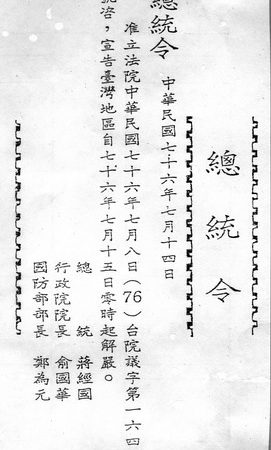
1986年的5月19日鄭南榕等人發起「519綠色行動」,解除戒嚴是行動中的主要訴求。200多名「黨外」人士在台北龍山寺廣庭靜坐示威。1987年7月14日,蔣經國總統迫於形勢宣佈解除長達38年的戒嚴。 On May 19, 1986, Cheng Nan-jung and others launched the '519 Green Action,' with lifting martial law as a central demand. Over 200 tangwai activists sat in protest at Longshan Temple in Taipei. On July 14, 1987, President Chiang Ching-kuo, under mounting pressure, announced the end of 38 years of…
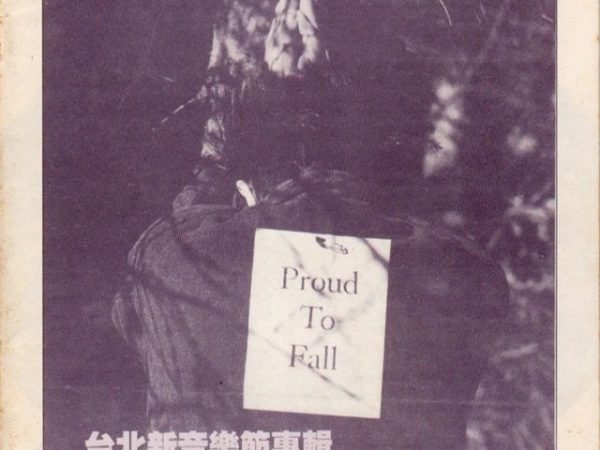
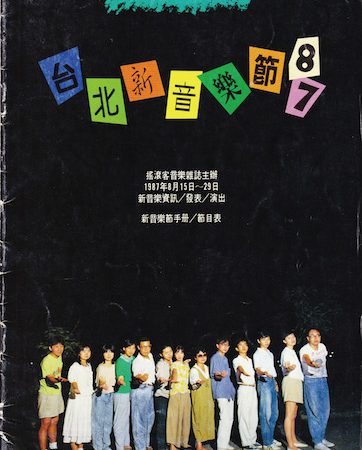
1987年解嚴後水晶唱片辦了第一屆台北新音樂節,是台灣第一次舉辦的獨立音樂節,具體鼓吹本地化的另類音樂創作,主張開創音樂新元素更要傳達人文意涵。 Following the lifting of martial law in 1987, Crystal Records organized the first Taipei New Music Festival — Taiwan's first independent music festival. It actively promoted locally-rooted alternative music creation and championed the opening of new musical forms as a vehicle for humanistic expression.
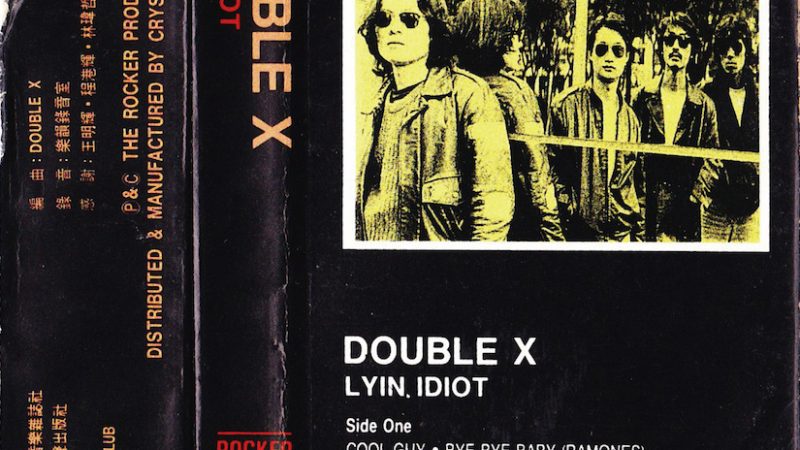
Double X在1988年出版的處女作《白痴的謊言》,是台灣第一張龐克唱片,被視為「地下音樂」、「地下搖滾」的開山經典專輯。 Double X's 1988 debut album The Idiot's Lie is Taiwan's first punk record and is regarded as the foundational classic of 'underground music' and 'underground rock' in Taiwan.
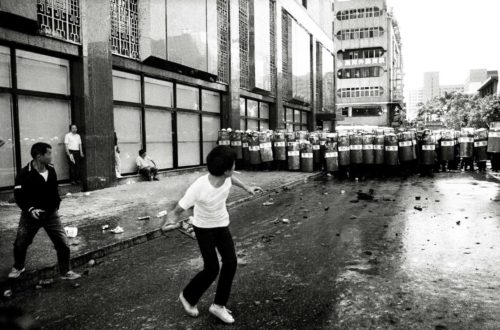
台灣農民運動發生於1988年5月20日的農民大規模社會群眾運動,也是臺灣解嚴後首次爆發激烈警民衝突的社會群眾運動。 The Taiwan Farmers' Movement on May 20, 1988, was the largest grassroots social mobilization since the postwar era and the first intense confrontation between civilians and police following the lifting of martial law.
1980年代末期開始在台灣流行的KTV源自日本的「卡拉OK」以及當時在台灣出現的新興娛樂「MTV(音樂錄影帶)包廂」融合而成。 KTV, which began sweeping Taiwan in the late 1980s, was a fusion of Japan's karaoke and the private-booth MTV video screening rooms that had recently appeared in Taiwan.
1988年開播的「中廣青春網」是台灣第一個鎖定年輕聽眾,全天候播放流行音樂的電台,裡投集結了一批台灣廣播史上最最放肆乖張、動搖國本的年輕DJ。 The Broadcasting Corporation of China's Youth Network, which launched in 1988, was Taiwan's first radio station aimed exclusively at young listeners and dedicated to playing pop music around the clock. It assembled a roster of the most irreverent and influential young DJs in Taiwanese broadcasting history.
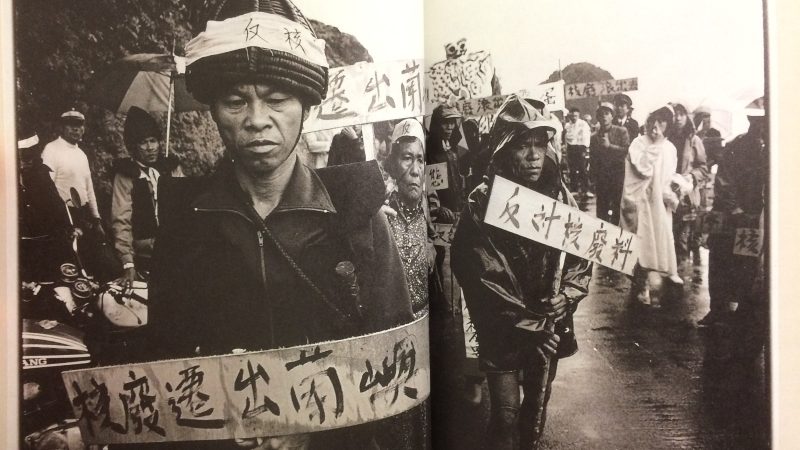
1988年於蘭嶼人發起的「二二○反核廢驅逐蘭嶼惡靈運動」中,由國內劇場人士策畫的第一齣報告劇「蘭嶼反核報告劇」於蘭嶼第二十六號地核廢料儲存場前演出。 During the February 20 anti-nuclear-waste movement launched by the people of Orchid Island, Taiwan's first political report theatre piece — the 'Orchid Island Anti-Nuclear Report Play' — was performed in front of nuclear waste storage facility No. 26 on the island.
蔣經國在台灣主政期間推行十大建設、解除多年戒嚴法。享年78歲,宣布逝世後四小時,李登輝宣布繼任,結束蔣家在台灣執政的局面。 During his rule in Taiwan, Chiang Ching-kuo oversaw the Ten Major Construction Projects and lifted martial law. He died at age 78; four hours after the announcement of his death, Lee Teng-hui declared himself successor, ending the era of the Chiang family's rule in Taiwan.
寶麗金唱片曾經是世上規模最大的唱片公司,1977年,寶麗金唱片也跟台灣的歌林唱片開始合作,並引進香港歌手來台發展。 PolyGram was once the world's largest record company. In 1977, it began collaborating with Taiwan's Kolin Records and introduced Hong Kong artists to the Taiwanese market.
1988年,新光集團的核心公司新光紡織股份有限公司以「機器老舊」、「經營虧損」為由,宣布於1988年10月30日關閉位於臺北市士林區的士林廠。 In 1988, Shin Kong Textile — a core company in the Shin Kong Group — announced it would close its Shihlin plant in Taipei on October 30, citing 'aging machinery' and 'operating losses.' The announcement ignited Taiwan's first wave of labor activism.
301條款是一九七四年貿易法經修訂的一個條款,授權美國貿易代表經由談判根除外國的不公平貿易行徑,台灣曾在1989年被列入特別301優先觀察國家名單。 Section 301 is a provision of the revised 1974 Trade Act that authorizes the U.S. Trade Representative to negotiate the elimination of unfair foreign trade practices. Taiwan was placed on the Special 301 Priority Watch List in 1989.
Miller Puckette等人自1988年開始研發的Max/MSP系統,由原本MIDI操控為主的功能,進步到聲音訊息的即時處理之功能,使電腦的角色在音樂作品中的角色與功能,成為一個即興的演奏者。 The Max/MSP system, developed by Miller Puckette and others beginning in 1988, advanced from MIDI control toward real-time audio processing, allowing the computer to function as an improvising performer within musical compositions.
六四事件始於胡耀邦悼念活動上的學生要求對抗通貨膨脹、處理失業問題、解決官員貪腐、政府問責、新聞與結社自由等,但遭政府軍隊鎮壓導致的流血事件,事件後總理李鵬簽署戒嚴並爆發示威。 The June Fourth Incident began with student demands — made at a memorial for Hu Yaobang — for action on inflation, unemployment, official corruption, government accountability, and freedom of the press and assembly. The government responded with military force, resulting in mass bloodshed. Premier Li Peng subsequently signed a declaration…
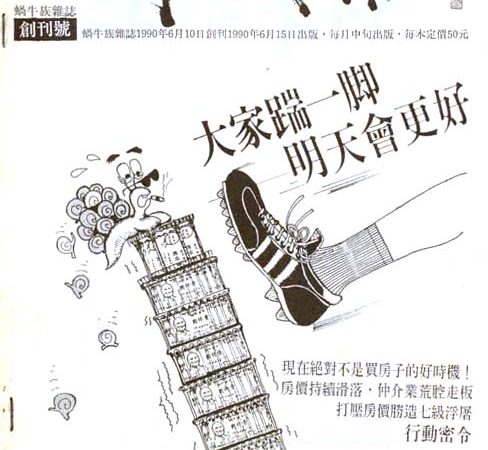
1989年5月初,時任臺北縣板橋市新埔國民小學教師李幸長等人發起組織「無住屋者救援會」,引起民眾廣大的迴響,成為台灣第一個以都市改革為取向的集體行動組織。 In early May 1989, Banqiao elementary school teacher Li Hsing-chang and others organized the 'Houseless Persons Relief Association,' drawing enormous public response. It became Taiwan's first collective action organization oriented toward urban reform.
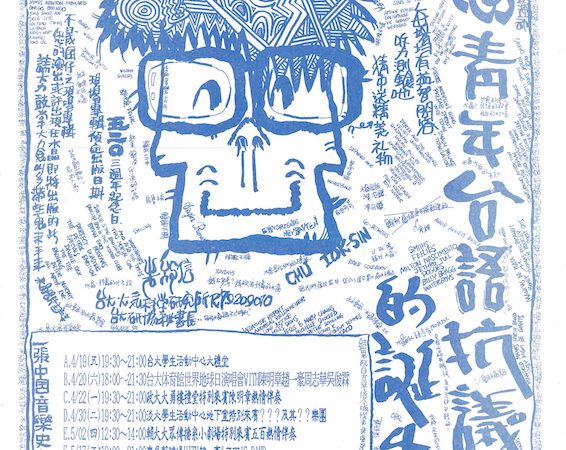
《抓狂歌》是台灣「黑名單工作室」於1989年所推出的第一張音樂專輯。專輯在封面即清楚地標舉「這不是黑白唱,這是咱的番薯仔歌。被多數評論家視為是1990年代後「新台語歌運動」的第一聲春雷。 Songs of Madness was the debut album by Taiwan's Blacklist Studio, released in 1989. Its cover boldly declared: 'This is not empty talk — these are our sweet potato songs.' Most critics regard it as the opening salvo of the New Taiwanese Song Movement of the 1990s.
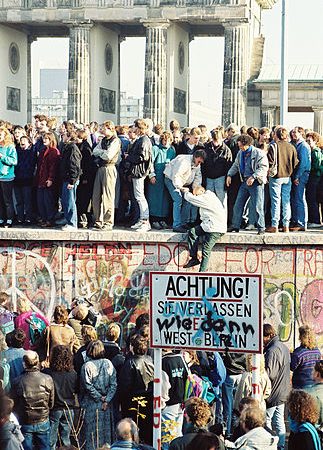
1989年夏末秋初,東德境內人民對於柏林圍牆能不能倒下的聲音越來越大,11月超過100萬東德民眾示威要求結束東德政權,人數佔了當時德國人口10%,最後東德政府在11月9日宣布開放民眾進入其他國家。 In late 1989, popular pressure for the fall of the Berlin Wall grew louder across East Germany. In November, over one million East Germans — approximately 10% of the German population — demonstrated to demand the end of the East German regime. On November 9, the East German government announced…
台灣地下電台產生於二十世紀90年代,在國民黨處於大眾媒體絕對優勢地位的情況下,為了助選,民主進步黨等反對黨紛紛設立地下電台,宣傳政見,號召選民投票支持。 Taiwan's underground radio stations emerged in the 1990s. With the KMT dominating mainstream media, the DPP and other opposition parties set up underground stations to campaign, broadcast their platforms, and mobilize voters.
90年代初期,跨國唱片帶著豐沛的財力與資源來台設立分公司,正式進入臺灣流行音樂市場。跨國公司進入臺灣後,將臺灣流行音樂產業由「創意導向」產業轉變為注重投資報酬率及獲利成長率的「資本密集」產業。 In the early 1990s, multinational record companies arrived in Taiwan with substantial capital and resources to establish local subsidiaries. Their entry transformed Taiwan's pop music industry from a 'creativity-driven' sector into a 'capital-intensive' industry focused on return on investment and profit growth.
1988年,臺灣第一家光碟製造廠「錸德科技公司」成立。1990年,錸德開始壓制CD成為國內第一家量產CD的廠商。 In 1988, Ritek Corporation — Taiwan's first optical disc manufacturer — was established. In 1990, Ritek began pressing CDs, becoming the first company in Taiwan to mass-produce compact discs.
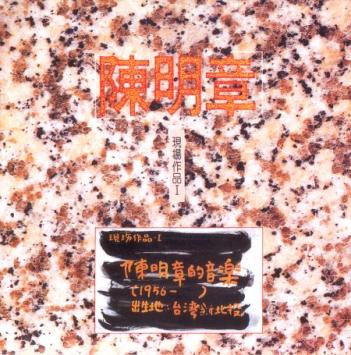
水晶唱片於1990年1月發行了陳明章首張專輯《現場作品I》,雖然音質粗糙,卻有著強大而動人的情感。這可能是台灣第一張以廉價的現場表演收音卻得到高度評價的專輯。 Crystal Records released Chen Ming-chang's debut album Live Work I in January 1990. Though rough in sound quality, it carried powerful and deeply moving emotions. It may be the first album in Taiwan recorded cheaply in a live performance setting to receive widespread critical acclaim.
1990年7月,教育部電子計算機中心邀集受補助大學成立「台灣學術網路」為台灣第一個網際網路系統,也是台灣往後發展政府、商用網際網路系統之基礎。 In July 1990, the Ministry of Education Computer Center convened subsidized universities to establish the Taiwan Academic Network — Taiwan's first internet system and the foundation for subsequent development of government and commercial internet infrastructure.
自1990年3月16日起至22日結束,人數最多時達將近6000名來自台灣南北各地的大學生,集結在中正紀念堂廣場上靜坐抗議,他們提出解散國民大會、廢除臨時條款、召開國事會議、政經改革時間表等訴求。為遷台後最大規模學運。 From March 16 to 22, 1990, nearly 6,000 university students from across Taiwan assembled in a sit-in at Chiang Kai-shek Memorial Hall Plaza. They demanded the dissolution of the National Assembly, abolition of the Temporary Provisions, convening of a National Affairs Conference, and a timetable for political and economic reform.…
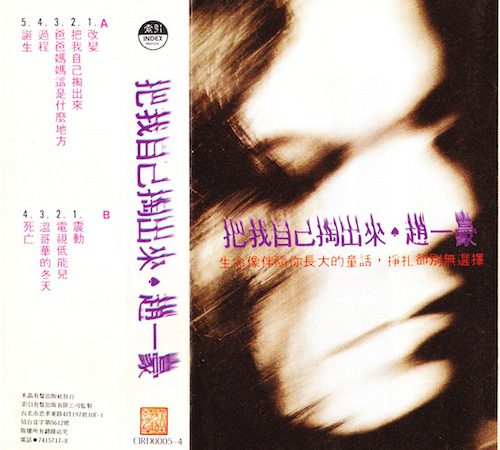
《把我自己掏出來》是台灣出版史最後一張被查禁的專輯:1990年,新聞局以「歌詞粗俗不雅、有違社會善良風俗」為由查扣這張專輯。 Pull Myself Out was the last album to be banned in Taiwan's publishing history. In 1990, the Government Information Office seized the record on grounds that the 'lyrics are vulgar, indecent, and contrary to public morals.'
1990年5月22日,Windows 3.0作業系統正式發布,算是微軟第一個大獲成功的作業系統,他將更多 MS-DOS 元素藏在圖形化的介面背後,並多了程式管理員方便使用者操作。 Windows 3.0 was officially released on May 22, 1990 — effectively Microsoft's first genuinely successful operating system. It concealed more MS-DOS elements behind a graphical interface and introduced a Program Manager that made the system far more accessible to users.
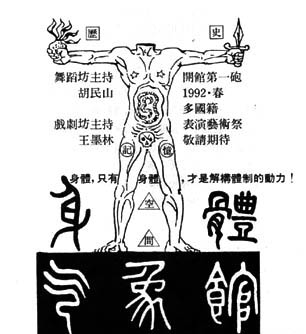
身體氣象館,台灣非營利跨文化交流之先驅藝術團體。於1991年由台灣小劇場先驅人物王墨林所組成,顧名思義,旨在探索身體表現的各種可能性。 Body Weather Laboratory is Taiwan's pioneering non-profit intercultural arts organization. Founded in 1991 by small theatre pioneer Wang Mo-lin, it is dedicated, as its name suggests, to exploring the full range of possibilities in bodily expression.
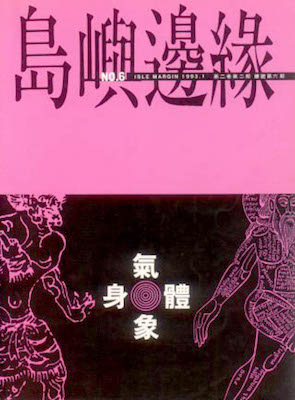
《島嶼邊緣》雜誌由王浩威、姚立群等人發行,大體而言投入者都有「超越狹隘的統獨國族論述,進行全面的激進民主鬥爭」的基本共識。 Island Margin magazine, published by Wang Hao-wei, Yao Li-chun, and others, united contributors around a shared commitment to 'transcending narrow unification/independence nationalist discourse and pursuing an all-encompassing radical democratic struggle.'
對台灣本土意識的反思促使了水晶唱片去探索、紀錄能夠深刻反應臺灣本土全貌的聲響,收集了具有民間特色民俗音樂的《來自台灣底層的聲音》即為一例。 Reflection on Taiwan's local identity drove Crystal Records to explore and document sounds that authentically captured Taiwan's grassroots culture. Sounds from the Depths of Taiwan — a collection of folk and indigenous music — was one such document.
豬頭皮(1966年2月16日-),本名朱約信,台灣音樂創作人、歌手,是新台語歌運動的成員之一。出道初期以政治批評為主題發表歌曲,後以《豬頭皮》為藝名出唱片。 Chu Yo-hsin (b. February 16, 1966), also known as Pigtou Pi, is a Taiwanese singer-songwriter and member of the New Taiwanese Song Movement. His early career focused on political critique; he later released albums under the stage name Pigtou Pi.
1991 年經改良後的 Pro Tools 可以多軌錄音和簡化設定流程,它讓音樂製作難度突然大幅下降。這讓年輕的音樂製作人可以花比較少的成本完成一個不錯的錄音作品,專業製作人可以更快速的完成一張專輯的後期製作。 By 1991, an upgraded Pro Tools offered multitrack recording and a simplified workflow, dramatically lowering the barrier to music production. Young producers could now complete quality recordings at far lower cost, while experienced producers could finish post-production on an album much more quickly.
1989年柏林圍牆倒塌。接連數月共產黨政體相繼垮台。民主政府在匈牙利、波蘭和捷克斯拉夫等國家建立起來,德國宣告統一。在蘇聯波羅的海沿岸的立陶宛、拉脫維亞和愛沙尼亞等國於1991年獨立。 The Berlin Wall fell in 1989. Over the following months, communist regimes collapsed in succession. Democratic governments were established in Hungary, Poland, and Czechoslovakia; Germany reunified. In 1991, the Baltic states of Lithuania, Latvia, and Estonia within the Soviet Union achieved independence.
淘兒唱片是一家發祥自美國的連鎖唱片店,1992年在台北設點,是既淘兒在日本設點後第二處亞洲據點,為台灣唱片通路投下一顆震撼彈。 Tower Records, the U.S.-founded chain, opened a location in Taipei in 1992 — its second outpost in Asia after Japan. The arrival sent a shockwave through Taiwan's music retail landscape.
「零與聲音解放組織」(簡稱ZSLO,或零與聲)是台灣第一個噪音團體,自1992年創立後,發行過自製卡帶與CD,發行台灣首張自製、自發與自銷的「噪音」專輯。 Zero and Sound Liberation Organization (ZSLO, or Zero and Sound) was Taiwan's first noise collective. Founded in 1992, it released self-produced cassettes and CDs, and put out Taiwan's first self-made, self-published, and self-distributed 'noise' album.
「九二共識」指在1992年,台灣海峽兩岸政府授權的非官方組織海峽交流基金會、海峽兩岸關係協會,在香港會談之後經由口頭協商而逐漸形成的不成文默契。但其實質含義為何,至今海峽雙方仍無交集。 The '1992 Consensus' refers to an unwritten understanding said to have emerged from back-channel negotiations in Hong Kong in 1992 between the Strait Exchange Foundation (Taiwan) and the Association for Relations Across the Taiwan Straits (PRC). What the consensus actually means remains a point of disagreement between the two sides.
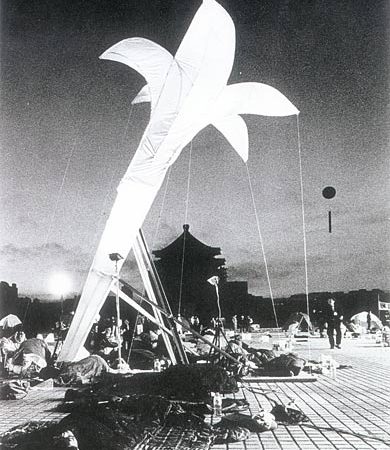
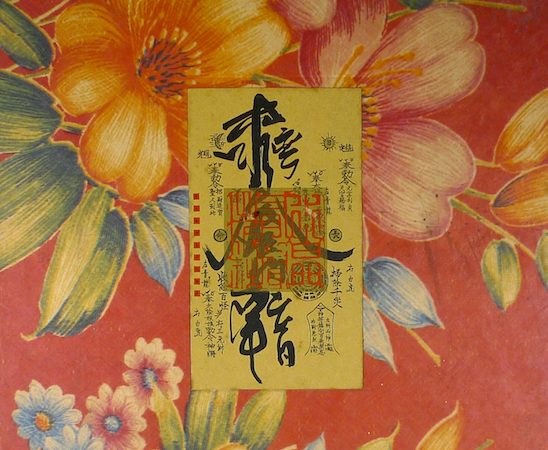
1992年陳文茜擔任策畫的「台灣現第一屆中元普渡藝術節」,首次將當代藝術與常民信仰及行政系統作結合。1990年代中旬起蔚為風潮的戶外裝置藝術展,開始變成一個重要的平台。 In 1992, the Ghost Festival Arts Celebration organized by Chen Wen-chien was the first event to integrate contemporary art with popular religious practice and local governance. Beginning in the mid-1990s, large-scale outdoor installation art exhibitions became an important cultural platform.
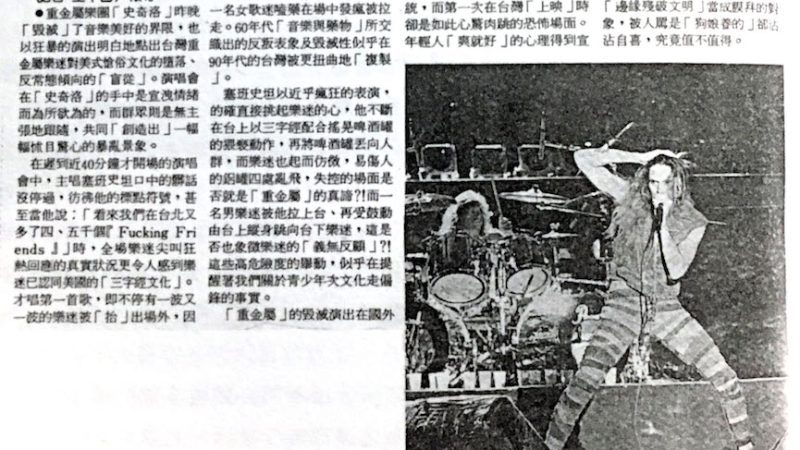
1992年由余光音樂引進當時紅翻全球來自美國的超級重金屬搖滾天團「史奇洛 (SKID ROW)」來台演唱,在台北市體育場創下一萬多人進場觀看的驚人紀錄,這是台灣第一次邀請到重量級的國外搖滾巨星演唱會。 In 1992, Yu Guang Music brought American rock supergroup Skid Row — then at the height of their global fame — to perform in Taiwan. The concert at Taipei Municipal Stadium drew over 10,000 attendees, marking Taiwan's first major concert headlined by a heavyweight international rock act.
1992年台大爆發轟動全國的「盜墓事件」八名學生遭退學處分,包括濁水溪公社的左派和小柯,這年濁水溪公社便在視聽小劇場舉辦告別校園演唱會。 In 1992, NTU was rocked by the nationally infamous 'tomb-raiding incident,' which led to eight students being expelled — including Zordan's River Commune members Zuopai and Xiao Ke. That year, the band held a farewell-to-campus concert at the Audio-Visual Theatre.
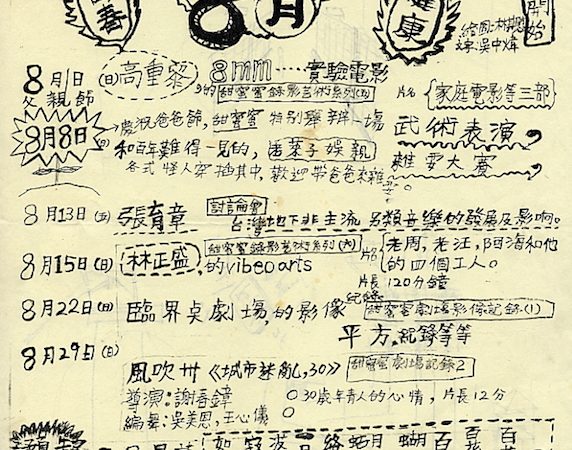
90年代校園裡的一群學生在跨校圖書會與報社結識,相繼創辦了報紙《甜蜜蜜》、《台大學生報》副刊《甜蜜蜜的午後》,隨後吳中煒在1993年開了甜蜜蜜咖啡。 In the 1990s, a group of students met across campuses through inter-university reading clubs and newspapers, co-founding publications including the newspaper Sweetness, and the NTU Student Newspaper supplement Sweetness Afternoons. Wu Chung-wei followed by opening Sweetness Café in 1993.
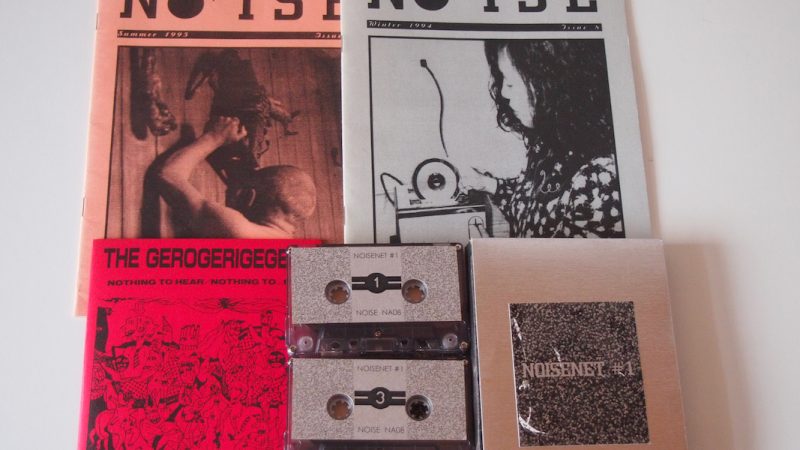
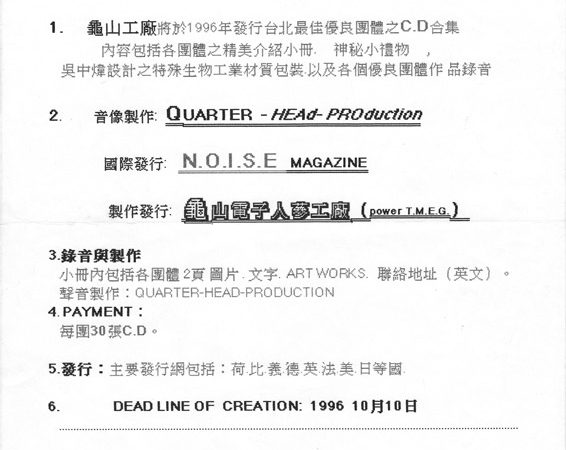
王福瑞1993年創立了台灣第一個實驗音樂廠牌和刊物《Noise》並發行了一系列集結台灣與國際噪音創作者的選輯「Noisenet」成為國際噪音網絡的據點。 In 1993, Wang Fu-jui founded NOISE — Taiwan's first experimental music label and journal — and released a series of compilations titled *Noise Magazine*net, featuring Taiwanese and international noise artists. It became a node in the international noise network.
90年代,台灣開始流行義式咖啡館,並以「文藝」作為氛圍的包裝,其中於1993年開設的「挪威森林」與1995年開幕的「2.31」則以專門播放非主流音樂出名。 In the 1990s, Italian-style cafés began to proliferate in Taiwan, packaged with a 'cultural and artistic' atmosphere. Among them, 'Norwegian Wood,' opened in 1993, and '2.31,' opened in 1995, became known for specializing in non-mainstream music.
地下電臺問題,1993年起政府逐步開放廣播頻道的開放,迄2000年10月,政黨輪替後,政府總共辦理了10梯次的廣播頻道開放。 In response to the underground radio station problem, the government began gradually opening radio frequencies from 1993 onward. By October 2000, following the change in government, a total of ten rounds of frequency licensing had been conducted.
Mosaic瀏覽器是互聯網歷史上第一個獲普遍使用的網頁瀏覽器,它是第一款可以在同一個視窗上同時顯示圖像與文字的瀏覽器。 Mosaic was the first web browser to achieve widespread use in internet history. It was the first browser capable of displaying images and text simultaneously in the same window.
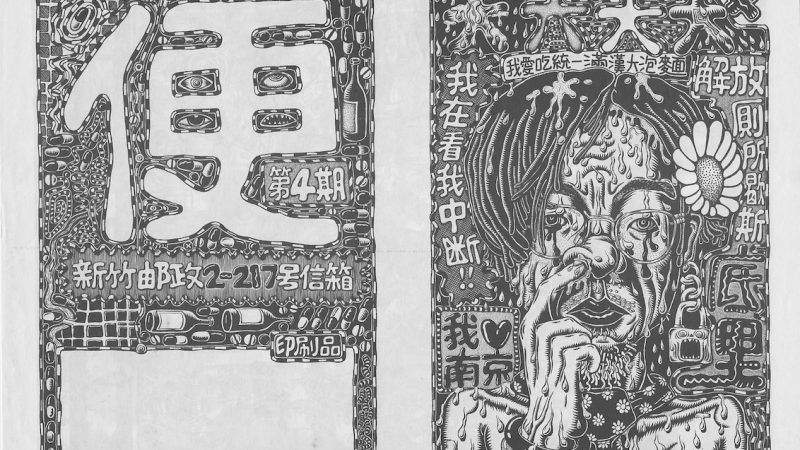
歷經「野百合學運事件後,言論審查機制解禁,意識形態鬆綁,台灣大專院校的開始湧現地下刊物風潮,包括台大的《苦悶報》、《人文報》、輔大的《甜蜜蜜》、清大的《衛生紙》、《大便》、藝術學院的《宣統報》… In the wake of the Wild Lily Student Movement, censorship loosened and ideological controls relaxed. Universities across Taiwan saw a surge in underground publications, including NTU's Bitter Struggle Report and Humanities Report, Furen's Sweetness, Tsing Hua's Toilet Paper and Shit, and the Arts Academy's Xuantong Report.
台灣在1993年正式進入「有線新時代」前後,市場一片混亂,行政院稱呼還沒領到執照的業者為「有線電視節目播放系統」,播放系統共超過六百多家。 As Taiwan entered a new cable TV era in 1993, the market was in chaos. The Executive Yuan referred to unlicensed operators as 'cable television program relay systems,' of which there were over 600.
Channel V 是亞洲區土生土長的音樂頻道,是 1994 年 MTV Asia 成立之後由香港衛視國際傳媒集團決定跟進而成立的亞洲音樂電視台。 Channel V is Asia's homegrown music channel, established by Hong Kong's STAR TV in 1994 in response to the launch of MTV Asia — Asia's first music television network dedicated to regional content.
在台灣的中文BBS程式完成後,1994年3月第一個搖滾版「死人搖滾芭樂」版在交大電子系BBS上開設。同年7月成大資訊系BBS也成立了「骷髏城堡」版。 After Chinese-language BBS software was developed in Taiwan, the first rock forum — 'Dead Man's Rock Guava Board' — was opened on NCTU's BBS in March 1994. That July, NCKU's BBS established the 'Skull Castle' board.
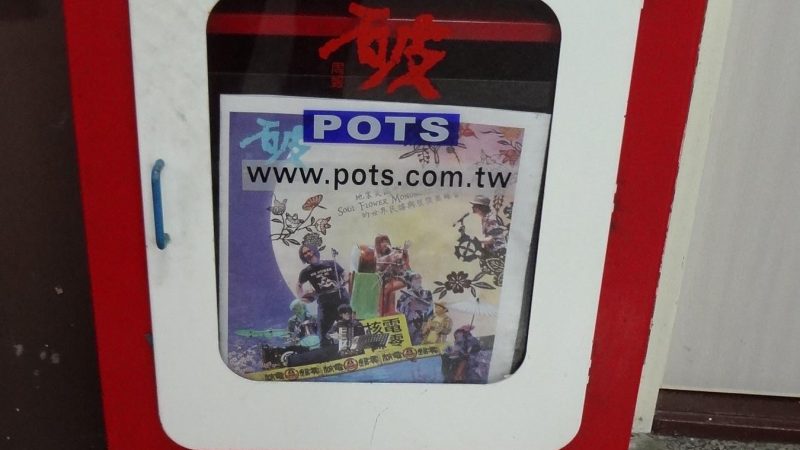
《破報》為全台灣第一份「自由偏左派」的免費報,創刊時值1994年,原歸屬於《立報》藝文新聞中心,後成為獨立發行的周刊,資金由世新大學資助。 Pots was Taiwan's first 'freely distributed, left-leaning' newspaper, founded in 1994. Originally part of the Li Pao arts and culture desk, it became an independently published weekly, financially backed by Shih Hsin University.
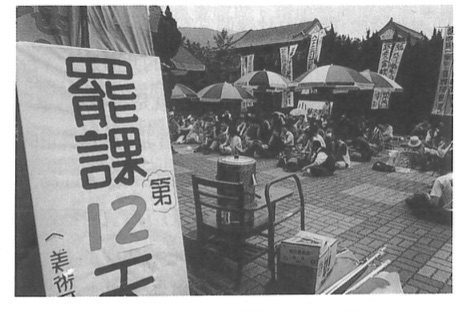
1994年秦政德於文化大學成立團體「藝術法西斯」諷刺美術系老師對學生言論的壓制而遭到退學,日後學生聯合「草山學會」展開抗爭及一個多月的罷課,並於罷課期間成立「小草藝術學院」。 In 1994, Chin Cheng-te formed the group 'Art Fascism' at Chinese Culture University to satirize faculty suppression of student speech, and was expelled. Students later joined forces with the Grass Mountain Society in over a month of class boycotts, during which they established the 'Little Grass Arts Academy.'
1994年台北市長選舉為台灣首次直轄市長選舉,也就是中華民國史上首次的首都市長選舉,選舉結果由民進黨候選人陳水扁以615,090票當選市長。 The 1994 Taipei mayoral election was the first direct election for the capital's mayor in ROC history. DPP candidate Chen Shui-bian won with 615,090 votes.
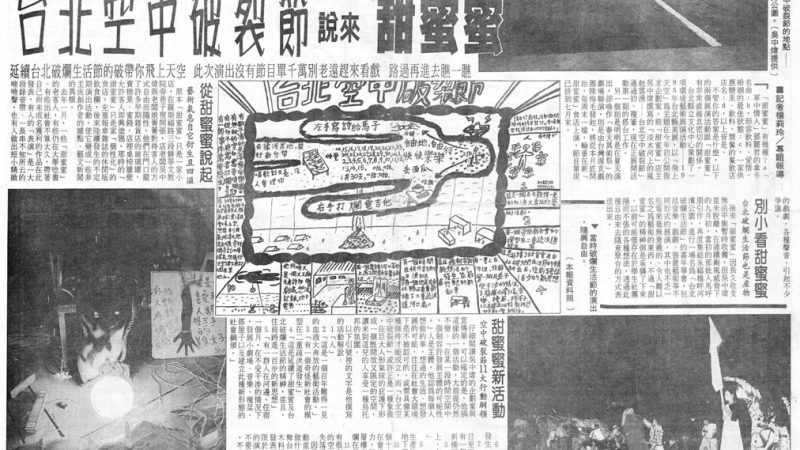
台北破爛生活節起於延續甜蜜蜜咖啡屋的精神,於1994年9月2-5日選在台北永福橋下舉辦,活動集合了噪音、搖滾、小劇場、SM、裝置藝術、實驗短片等。 The Taipei Broken Life Festival grew out of the spirit of Sweetness Café. Held September 2–5, 1994 under Yongfu Bridge in Taipei, it brought together noise, rock, small theatre, SM performance, installation art, and experimental short film.
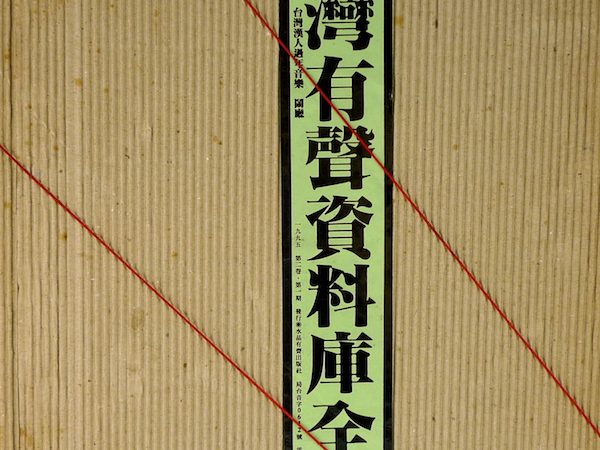
發行於1994至1995年間發行的「台灣有聲資料庫」是《來自台灣底層的聲音》的延伸,但野心更加廣而遠。這項幾乎可以與1960年代的「民歌採集運動」相較的計畫分為聲音、影像、文字三方面積極搶錄即將失傳的民間音樂。 Released between 1994 and 1995, the Taiwan Sound Archive was an extension of Sounds from the Depths of Taiwan, but far more ambitious in scope. Comparable in spirit to the 1960s Folk Song Collection Movement, the project raced to record vanishing folk music through sound, image, and text.
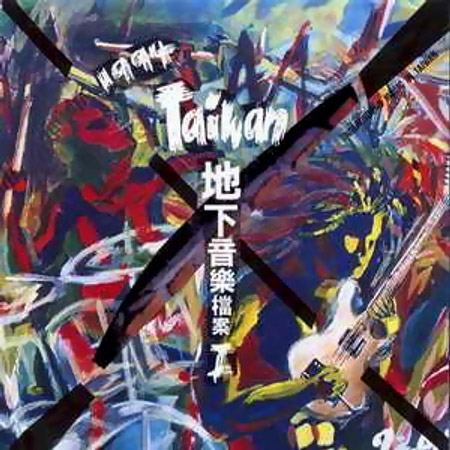
1994-1995年在白紀齡製作下,友善的狗唱片公司發行了系列的台灣音樂專輯,稱之台灣地下音樂檔案,收錄濁水溪公社、骨肉皮、刺客等樂團始祖開天闢地時期音樂,為台灣地下樂團初始模樣留下紀錄。 Between 1994 and 1995, under the production of Pai Chi-ling, the label Friend Dog Records released a series of Taiwanese music albums called the Taiwan Underground Music Archive, documenting the earliest recordings of Zordan's River Commune, Bone Flesh Skin, Assassin, and other foundational bands.
1994年台北市長選舉時,路寒袖與詹宏達連訣合作為候選人陳水扁寫下了兩首競選主打歌。後來,水晶唱片公司有鑒於歌曲本身的保存價值,向福爾摩沙基金會取得了授權於次年正式對外出版發行。 During the 1994 Taipei mayoral election, lyricist Lu Han-hsiu and composer Jan Hung-da collaborated to write two campaign songs for candidate Chen Shui-bian. Crystal Records later recognized the archival value of the songs and acquired rights from the Formosa Foundation to publish them officially the following year.
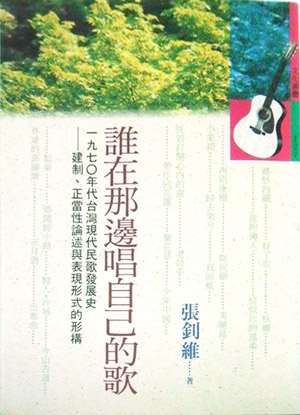
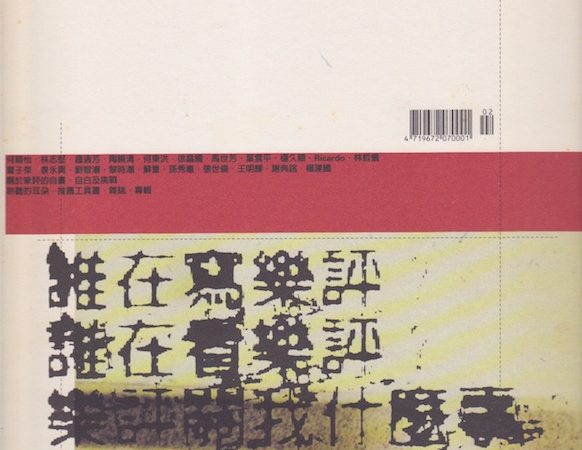
完稿於1992年,出版於1994年的《誰在那邊唱自己的歌》是張釗維的碩士論文,它梳理了七十年代臺灣現代民歌發展史,並以民歌作為切入點,探究了知識份子與通俗文化之間的複雜關係。 Completed in 1992 and published in 1994, Who Is Over There Singing Their Own Songs is Chang Chao-wei's master's thesis. It maps the history of Taiwan's modern folk song movement in the 1970s, using folk songs as a lens to examine the complex relationship between intellectuals and popular culture.
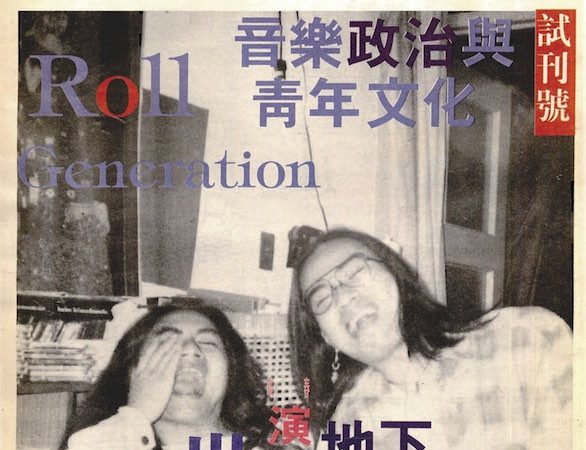
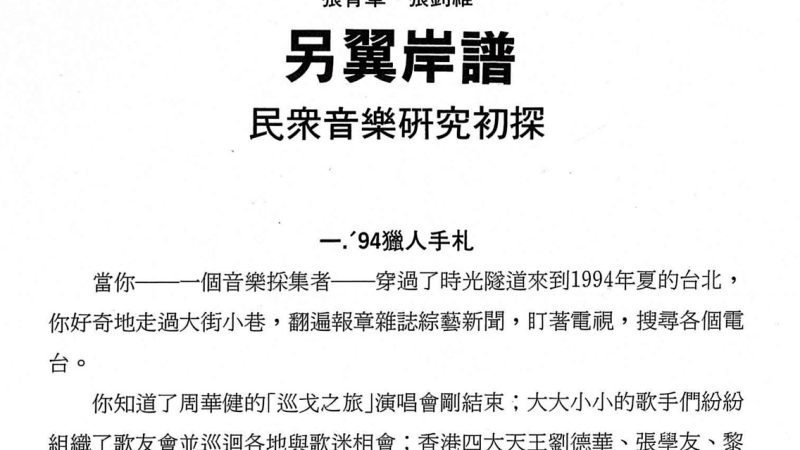
來自《破報》團隊的蔣慧仙、張釗維與張育章,於1994年共組「民眾音樂研究群─另翼岸譜」讀書會,試圖尋求民眾音樂的另翼觀點。 Chiang Hui-hsien, Chang Chao-wei, and Chang Yu-chang — from the Pots newspaper team — co-founded the 'People's Music Research Group: Alternative Shore Music' reading circle in 1994, seeking an alternative perspective on popular music.
從1995年上半年開始直到整個90年代後期,MP3開始在網際網路上蓬勃發展,並得益於Winamp及Napster等軟體廣為傳播。 From the first half of 1995 through the late 1990s, the MP3 format flourished on the internet, spreading widely through software such as Winamp and Napster.
在地實驗由藝術家黃文浩於1995年成立,為台灣最重要的數位藝術民間機構。在台灣寬頻網路尚未普及時,便開始自製媒體與線上電台。 Etat Lab was founded in 1995 by artist Huang Wen-hao and is Taiwan's most important non-governmental digital arts organization. It began producing self-made media and online radio before broadband internet became widespread in Taiwan.
全民健康保險,一般簡稱為「全民健保」或「健保」,是一種強制性保險的福利政策。為增進全體國民健康,中華民國於84年開始實施全民健康保險,提供醫療保健服務。 National Health Insurance (NHI) is a compulsory social insurance welfare policy. To improve the health of all citizens, the Republic of China began implementing the NHI program in 1995, providing comprehensive medical and healthcare services.
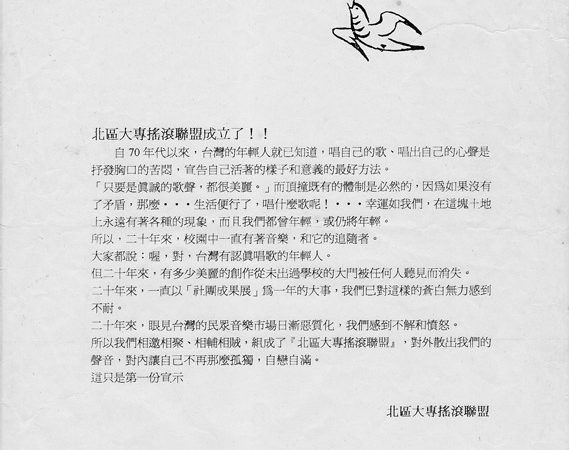
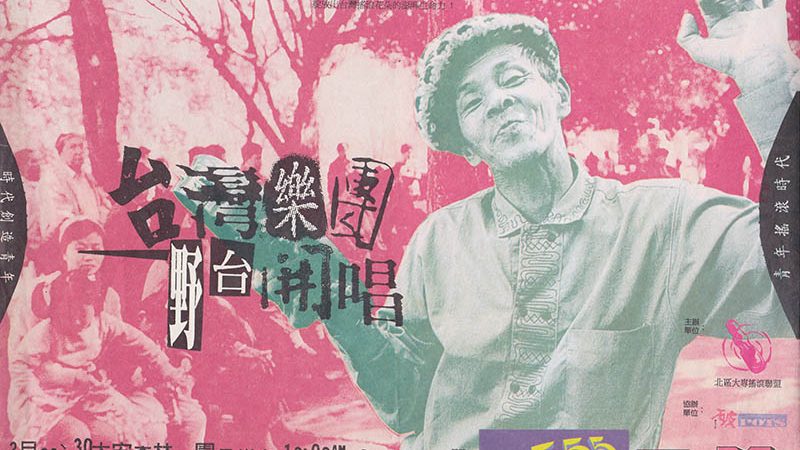
1995年台大醉酒湖舉辦了一場揚言要「奪回我們的音樂」的「酒神祭-地下發聲節」,活動中「北區大專搖滾聯盟」在十多個台北大專學校社團聯署後成立,並主辦了第一個演唱活動「搖不死,滾不倒」。 In 1995, NTU hosted the 'Dionysus Festival — Underground Sound Festival' at the Zuijiu Lake with the rallying cry of 'taking back our music.' At the event, the Northern Taiwan College Rock Alliance was founded with the support of over ten Taipei university clubs, and organized its first concert, 'Can't…
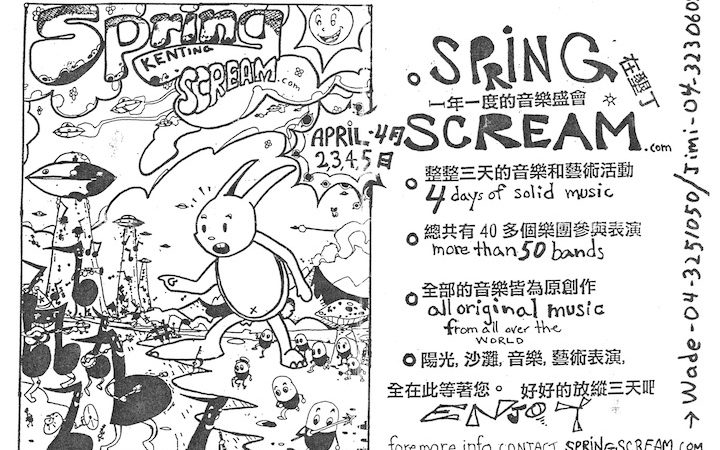
第一屆「春天吶喊」由 兩個定居台灣的美國人自 1995 年起開始在墾丁舉辦,從原本的同樂會式的小規模慢慢擴張自今日上百組樂團的慶典,並逐漸發展為獨立樂團表演的平台,被視為台灣音樂祭濫觴。 Spring Scream was launched in 1995 by two Americans living in Taiwan, held in Kenting. It grew from a small, friendly gathering to a festival featuring over a hundred bands, gradually evolving into a platform for independent music — widely regarded as the origin of Taiwan's music festival scene.
1995年大學聯考結束後,台北市政府於新生南路封街舉辦「讓我們飆舞去:青少年仲夏夜舞會」。 After the university entrance exams concluded in 1995, the Taipei City Government closed off Xinsheng South Road to host 'Let's Dance in the Streets: Youth Midsummer Night Dance Party.'
台北空中破裂節由吳中煒及一群參與者籌畫,是一個揉合環境雕塑、偶發、噪音、垃圾藝術的大雜燴,也可被視為一個歷時月餘的烏托邦聚落。 The Taipei Sky Rupture Festival, organized by Wu Chung-wei and a group of participants, was a sprawling mash-up of environmental sculpture, happenings, noise, and junk art — also legible as a month-long utopian commune.
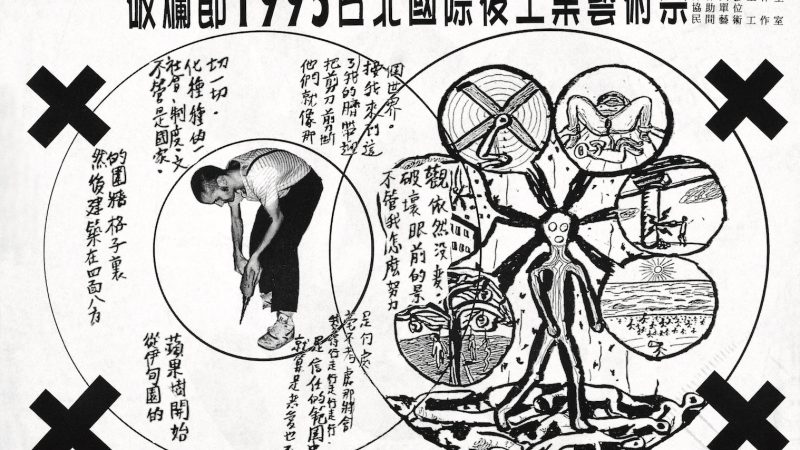
1995年吳中煒、林其蔚、蔣慧仙、林中杰等人在板橋廢酒廠舉辦了為期三天的大規模戶外演出「後工業藝術祭」,邀請各國的噪音、實驗音樂、驚悚劇場團體演出,種種極端行為彷彿是受戒嚴壓抑多年後的一次爆發。 In 1995, Wu Chung-wei, Lin Chi-wei, Chiang Hui-hsien, Lin Chung-chieh, and others organized a three-day large-scale outdoor event at an abandoned distillery in Banqiao — inviting noise, experimental music, and horror theatre groups from various countries. The extreme acts felt like an explosion of expression suppressed for years under martial…
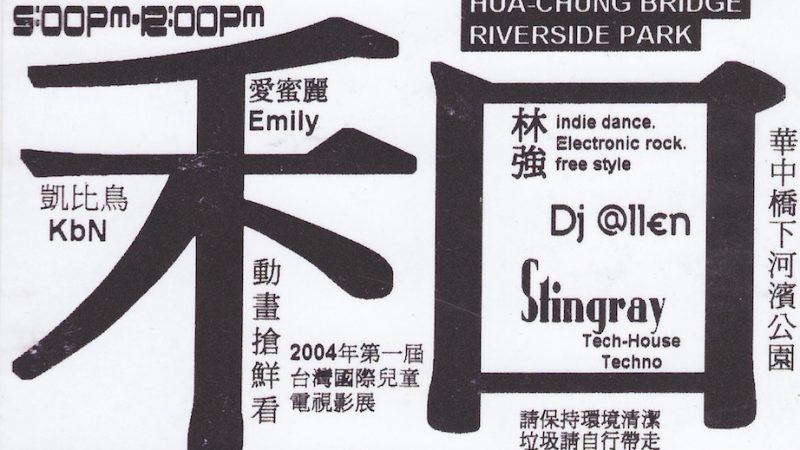
1995年7月29日,這是台灣電音舞曲歷史上關鍵的一天,DJ @llen與朋友們用卡車載運音響,在二重疏洪道舉辦了台灣第一場戶外瑞舞派對。 July 29, 1995 was a pivotal day in the history of Taiwanese electronic dance music. DJ @llen and friends loaded speakers onto a truck and held Taiwan's first outdoor rave party at the Erchong Flood Diversion Zone.
計程車暴動事件為1995年發生於臺北市與臺北縣(今新北市)因計程車駕駛糾紛而導致的群眾鬥毆社會事件。 The Taxi Riot of 1995 was a mass street brawl that broke out in Taipei City and Taipei County (now New Taipei City), triggered by a dispute between taxi drivers.
TVBS新聞台,是屬於臺灣TVBS旗下的電視新聞頻道,於1995年10月2日啟播,是當時臺灣第一個24小時的本土新聞頻道。 TVBS News is the news channel of Taiwan's TVBS network. It launched on October 2, 1995, making it Taiwan's first 24-hour local news channel at the time.
香港知名音樂雜誌《音樂殖民地》由樂評袁智聰於1994年創辦,主要報導獨立、電子與另類等非主流音樂,1996年被引入台灣帶來國外一手的音訊。 Music Colony, Hong Kong's well-regarded music magazine founded by critic Yuen Chi-tsung in 1994, focused on independent, electronic, and alternative music. It was brought into Taiwan in 1996, providing first-hand international music intelligence.
繼同年在墾丁舉辦的春天吶喊,第一屆野台開唱於1995年在台北市府廣場和大安森林公園舉辦,是當時台灣最具國際規模的音樂祭。 Following Spring Scream in Kenting earlier that year, the first Formoz Festival was held in 1995 at Taipei City Hall Plaza and Da'an Forest Park. It was Taiwan's most internationally scaled music festival at the time.
中華民國第九任總統、副總統選舉於1996年3月23日舉行,是中華民國建國以來第一次總統、副總統的公民直選,也是動員戡亂時期結束後的第一次總統、副總統選舉。 The ninth-term presidential election of the Republic of China was held on March 23, 1996. It was the first direct popular election of a president and vice president in ROC history, and the first presidential election following the end of the Period of National Mobilization for Suppression of the Communist…
雖然電音與瑞舞活動在90年代都尚未成為主流,但就已成時髦與流行的代名詞,1996年台北市政府起用市民廣場的活動號召即為─超級市民,瑞舞狂歡。 Although electronic music and rave events had not yet entered the mainstream in the 1990s, they had become synonymous with modernity and cool. In 1996, the Taipei City Government used the Citizen Plaza with the event motto: 'Super Citizens Rave Carnival.'
地下社會創立於1996年8月,位於台北市大安區師大路,是台北歷史悠久且具代表性的Livehouse之一,與女巫店、河岸留言等同為台北樂團的才能池(talent pool)。 The Wall (Di Xia She Hui) was founded in August 1996 on Shida Road in Taipei's Da'an District. It is one of Taipei's oldest and most emblematic live music venues, and alongside Witch House and Riverside Music, one of the key talent pools for Taipei's band scene.
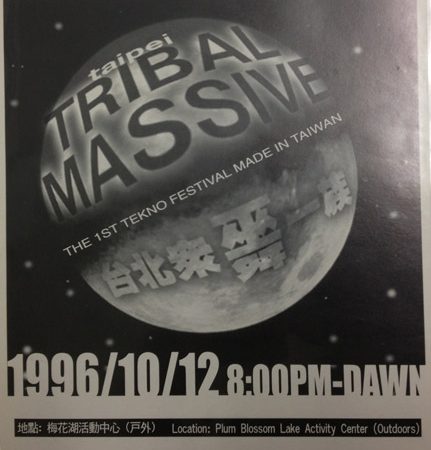
1996年,台灣DJ界名號最響亮的@llen 與EDGE在新店梅花湖合辦"Taipei Tribal Massive",是台灣第一個大型的戶外瑞舞會。活動晚間十點過後,當地警方以活動未經申請為由要求結束活動,主辦單位最後決定停止播放音樂。 In 1996, Taiwan's most prominent DJs @llen and EDGE co-organized a rave at Meihua Lake in Xindian — the first electronic dance party in Taiwan to be forcibly stopped by police.
前味音樂網,是由1999年2月建置的「新邏輯藝文網」的分支「前衛音樂網」延續而來。主要內容是由姚大鈞編輯、錄製和發送的網絡電台節目。至2014年已經有80多期問世。 Qian Wei (前味) Music Network grew from the 'New Logic Arts Network,' established in February 1999, and its branch 'Avant-Garde Music Network.' Its primary content is online radio programs edited, recorded, and distributed by Yao Dajuin. By 2014, over 80 episodes had been produced.
前味音樂網,是由1999年2月建置的「新邏輯藝文網」的分支「前衛音樂網」延續而來。主要內容是由姚大鈞編輯、錄製和發送的網絡電台節目。至2014年已經有80多期問世。 Qian Wei (前味) Music Network grew from the 'New Logic Arts Network,' established in February 1999, and its branch 'Avant-Garde Music Network.' Its primary content is online radio programs edited, recorded, and distributed by Yao Da-chun. By 2014, over 80 episodes had been produced.
1996年陳水扁任台北市市長期間,執行了一次全面的掃黃行動,針對八大行業大舉取締,許多LIVE HOUSE因而遭波及。 During Chen Shui-bian's tenure as Taipei mayor in 1996, a comprehensive anti-vice operation was launched targeting the 'eight major industries.' Many live music venues were caught in the sweep.
1996年,Cubase 發表了VST(虛擬樂器) 介面SDK,從此電腦的聲響創作軟體更加百花齊放,幾乎可以只用電腦就完成所有電子聲響的創作。 In 1996, Cubase released the VST (Virtual Studio Technology) interface SDK. From that point on, software for sonic creation on computers proliferated explosively — it became possible to complete virtually any electronic music production using only a computer.
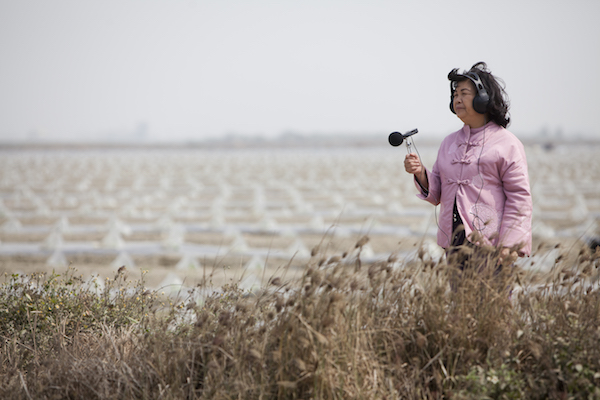
台灣第一張完全自然音的田野錄音CD──《浪來了》,錄製於台灣東海岸,幾乎無人造音,僅有波起浪平一陣又一陣的海濤聲,長達47分鐘 。 Taiwan's first entirely natural field recording CD — The Waves Are Coming — was recorded on Taiwan's east coast with almost no man-made sound: only the endless rhythm of waves rising and falling, lasting 47 minutes.
1997年7月1日起,中國在香港成立特別行政區,開始對香港島、界限街以南的九龍半島、新界等土地重新行使主權和治權。大不列顛及北愛爾蘭聯合王國政府於1997年7月1日將香港交給中華人民共和國。 Beginning July 1, 1997, China established a Special Administrative Region in Hong Kong and resumed sovereignty and governance over Hong Kong Island, the Kowloon Peninsula south of Boundary Street, and the New Territories. The United Kingdom formally handed Hong Kong to the People's Republic of China on July 1, 1997.
亞洲金融風暴發生於1997年7月至10月,由泰國開始,之後進一步蔓延至鄰近亞洲國家的貨幣、股票市場和其它的資產價值暴跌。亞洲各國經濟遭受嚴重打擊,紛紛進入大蕭條,並造成社會動盪和政局不穩。 The Asian financial crisis occurred from July to October 1997, beginning in Thailand and rapidly spreading to neighboring Asian economies, causing dramatic collapses in currencies, stock markets, and asset values. Asian economies were severely damaged, entering deep recessions accompanied by social unrest and political instability.
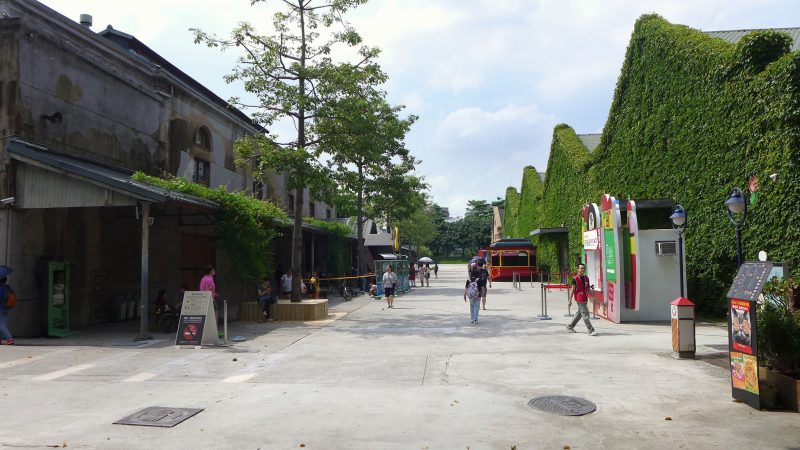
1997華山藝文特區開啟文建會「閒置空間再利用」政策。當文化藝術成為都市競爭力的具體表徵時,公部門資源的投入勢必牽動藝文空間的下一波發展,藝文空間的發展也就開始涉及了都市結構與更新議題。 In 1997, the Huashan Arts District inaugurated the Council for Cultural Affairs' policy of 'repurposing idle spaces.' As culture and the arts became concrete markers of urban competitiveness, public sector investment began shaping the next phase of cultural space development — connecting arts venues to urban restructuring and renewal.
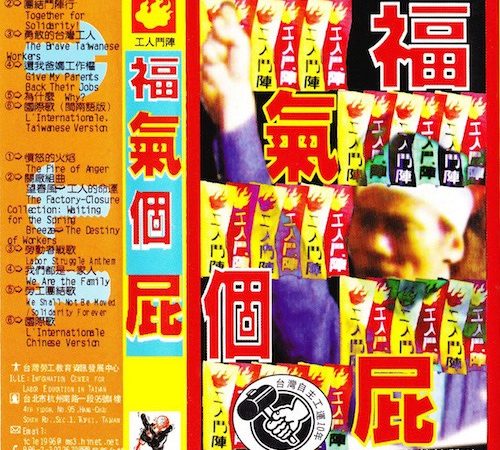
黑手那卡西-工人樂隊,由工人與工運組織在1996年成立,一般多稱呼為「黑手那卡西」、「黑手」,1996年發行台灣第一張工運抗爭歌曲專輯─「福氣個屁」。 Blackhand Nakasi — Workers' Band was founded in 1996 by laborers and labor movement organizations. In 1996, they released Taiwan's first labor protest music album, Fuck Your Fortune.
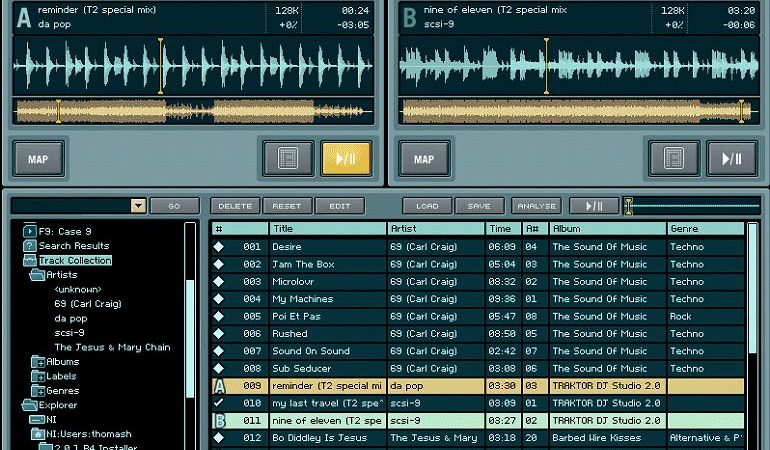
1998年荷蘭公司N2IT推出的軟體FinalScratch,標誌著現在無處不在的數位唱盤控制系統的首次登場,同時也澈底改變了舞場DJ文化。 In 1998, Dutch company N2IT released FinalScratch — marking the debut of what would become the now-ubiquitous digital vinyl control system, fundamentally transforming DJ culture on the dance floor.
1998年2月,台北90.5調頻突然出現台灣首個專門播放搖滾、另類與實驗音樂的電台,它是由水晶唱片負責人任將達所策劃。 In February 1998, Taiwan's first radio station dedicated exclusively to rock, alternative, and experimental music suddenly appeared on Taipei's 90.5 FM. It was conceived by Crystal Records director Jen Chiang-ta.
teXound是90年代末台北以專注於播放電子舞曲而出名的舞廳。teXound 於'99年開幕,從店名、招牌所採用的字體和舞廳燈光音響設計,還有經驗豐富的DJ,無一不忠實呈現出電子舞曲特有的未來感。 TeXound was a Taipei club known in the late 1990s for its exclusive focus on electronic dance music. Opening in 1999, everything from its name, signage typography, and lighting and sound design to its experienced DJ roster faithfully evoked the futurist aesthetic characteristic of electronic dance culture.
「電子音樂實習」活動由電解體主辦,演出的團體包括Dino、零與聲音解放組織、田中能與應蔚民(夾子小應)。電解體致力於串聯電子音樂與聲響表演者,曾經舉辦第一屆破爛生活節以及空中破裂節。 The 'Electronic Music Workshop' event was organized by Dianjeti, with performances by Dino, Zero and Sound Liberation Organization, Tanaka Noh, and Ying Wei-min (Clip Hsiao-ying). Dianjeti was dedicated to connecting electronic music and sonic performers, and previously organized the first Broken Life Festival and Sky Rupture Festival.
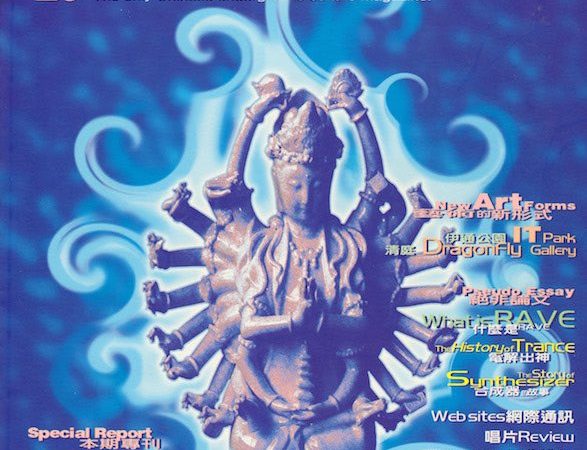
《PLUR》雜誌創刊於1997年,是台灣唯一的電音文化雜誌,由「藍月唱片」發行,張耘之(Monbaza)為主要撰寫者,除了樂評、銳舞場景,還有時尚、前衛藝術的報導,全文中英對照,美編極具未來電子的迷幻感美編極具未來電子的迷幻感。 *PLUR* magazine was founded in 1997 — Taiwan's only electronic music culture magazine, published by Blue Moon Records with Zhang Yun-zhi (Monbaza) as primary writer. Covering music criticism, rave culture, fashion, and avant-garde art, with full Chinese-English bilingual text, its design captured the psychedelic futurism of electronic culture.
1998年第四屆野台開唱,陳水扁以市長身分出席,2004年第十屆野台開唱則以國家元首身分出席,並表示早在1995年他時就曾協助第一屆野台開唱舉辦。 Mayor Chen Shui-bian attended the fourth Formoz Festival in 1998 as Taipei's mayor. In 2004, he attended the tenth edition as head of state, noting that he had helped facilitate the very first Formoz Festival back in 1995.
吳中煒、林其蔚、馬惠中等人於永福橋頭舉辦「破爛藝術節」策動自發性跨領域展演後,隨後即成立都市的異次元空間「龜山工廠」,是解嚴後令人驚異的一股力量。 After Wu Chung-wei, Lin Chi-wei, Ma Hui-chung, and others organized the 'Broken Art Festival' at Yongfu Bridge, they established the alternative urban space 'Guishan Factory' — a remarkable force in post-martial law Taiwan.
Napster是一個能搜尋並下載MP3的蒐尋軟體,藉由點對點(P2P)資料交換架構,讓網友不需透過伺服器主機而直接將資料從其硬碟分享給其他使用者。 Napster was a search and download program for MP3 files. Using a peer-to-peer (P2P) data exchange architecture, it allowed users to share files directly from their hard drives without going through a central server.
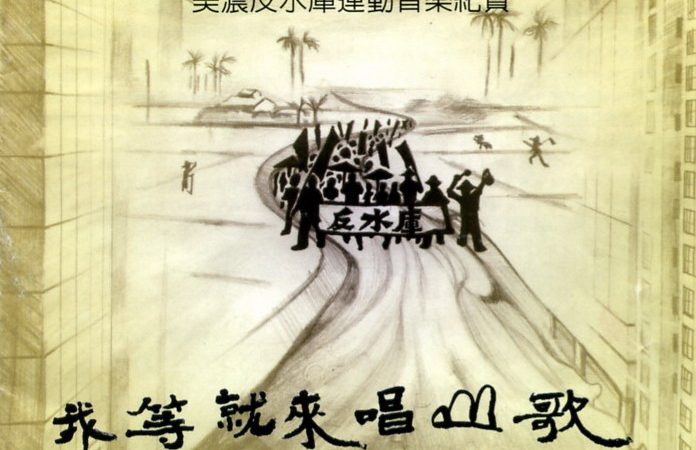
交工樂隊以在地傳統音樂為基礎,使用鑼、鼓、嗩吶、月琴…等傳統樂器,結合現代音樂手法創造呼應現實社會的客家新民謠。1999年年初,交工樂隊的成員們回到美濃,開始錄製「反美濃水庫專輯」。 Gau Gong Band (Jiāo Gōng yuèduì) built on local traditional music, using gongs, drums, suona, and moon lutes combined with contemporary musical approaches to create new Hakka folk songs responsive to contemporary social realities. In early 1999, the members returned to Meinong to record their anti-dam album.
1999年,環保署完成「噪音管制法」的修正,在原有的「分貝管制」之外,大幅增加「行為管制 」,所有管制區內包括彈琴、唱歌、鑽牆刨地板、聽音響等,在晚間十點以後都將予以禁止。 In 1999, the Environmental Protection Administration completed amendments to the *Noise Magazine* Control Act. Beyond the original 'decibel regulation,' extensive new 'behavioral regulation' was added — prohibiting playing piano, singing, drilling, and listening to audio equipment after 10 PM in all regulated zones.
1999年「聖界 Live House」首次將名詞「Live House」放入店名,為了要讓所有人了解這樣的場域是以音樂為主體,而非媒體描繪下的是非之地,或是燈紅酒綠的不良場所。 In 1999, 'Sheng Jie Live House' was the first to incorporate the term 'Live House' into its name — to communicate to everyone that this space was centered on music, not the morally questionable, vice-ridden establishment the media often portrayed such venues to be.
早在「台客」一詞還沒被媒體炒作的1999年,濁團就發行了專輯《台客的復仇》,曲風融合強悍的西方龐克搖滾,以及台灣鄉野民間的通俗元素,反轉並重新拼貼出他們所謂的「台客」。 Long before the term 'taikè' (台客) was media-hyped, the band released Revenge of the Taikè in 1999. Its sound fused hard Western punk rock with Taiwanese rural and folk elements — reclaiming and reappropriating what they called the 'taikè.'
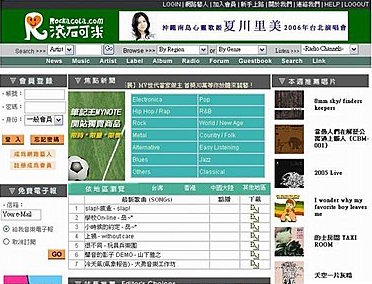
1999年滾石音樂集團成立「滾石網路股份有限公司」正式揮軍網路事業,滾石可樂即為其中一環,除透過網路發掘藝人,也將其創作以數位音樂形式(MP3)銷售。 In 1999, Rock Music Group established Rock Network Co., Ltd. to formally enter the online business. Rock Cola was one of its ventures — discovering artists via the internet and selling their music as digital audio (MP3).
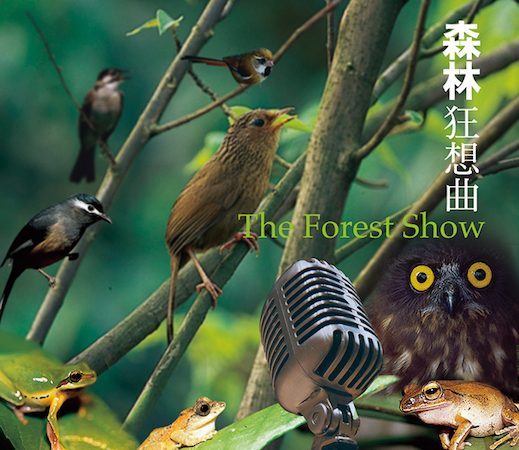
《森林狂想曲》由風潮音樂發行,是第一張收錄台灣森林自然聲音圖鑑並融合音樂創作的專輯,內容收集台灣鳥類、蛙類、蟬類、蟲類、山羌、獼猴、飛鼠、溪流...等近100種台灣的自然聲音。 Published by Wind Music, Forest Rhapsody was the first album to combine Taiwan's forest soundscape catalogue with original music composition. It documented nearly 100 species of Taiwanese natural sounds — birds, frogs, cicadas, insects, muntjacs, macaques, flying squirrels, and streams.
自2000年的跨世紀跨年晚會起,幾乎各個縣市政府都會舉辦當地的跨年晚會,成為常態性的活動。同時,跨年晚會也成為政黨輪替的指標儀典(ceremony)。 Since the millennium New Year's Eve celebrations of 2000, nearly every county and city government has organized its own annual New Year's Eve party — a now-routine civic event. These celebrations have also become ritualized ceremonies marking political transitions.
「反中國併吞」是台灣首次將政治訴求直接置入大型搖滾演唱會的系列音樂表演活動,一反當時由陳水扁總統的「政治中間路線」,主張悍衛台灣的自由、獨立,反中國武力威脅。 The 'Anti-Annexation' series was the first in Taiwan to embed explicitly political demands into a large-scale rock concert format. Defying the 'political centrist line' of President Chen Shui-bian at the time, it advocated defending Taiwan's freedom and independence against Chinese military threats.
2000年總統大選,宋楚瑜、連戰和陳水扁三人競爭;連宋瓜分選票,加上選前爆發的興票案,民進黨的陳水扁獲勝。華人歷史上,第一個以和平合法手段取得政權的政黨。 In the 2000 presidential election, Soong Chu-yu, Lien Chan, and Chen Shui-bian competed; the vote was split between Soong and Lien, compounded by a pre-election corruption scandal. The DPP's Chen Shui-bian won — the first transfer of power through peaceful, lawful means in Chinese-speaking world history.
P2P技術造就Kuro超強的MP3搜尋、下載、播放、刻錄功能,因而贏得全球百萬樂迷的喜愛,但卻也因涉及侵權在2005年遭IFPI控告,於2008年終止在台灣使用P2P的運作模式。 P2P technology powered Kuro's formidable MP3 search, download, playback, and burning capabilities, attracting millions of fans worldwide. However, IFPI sued it for copyright infringement in 2005, and in 2008 it discontinued its P2P operations in Taiwan.
海洋音樂祭最早是由臺北縣政府(今新北市政府)與角頭音樂共同合作發起,免費入場的形式,再加上距離首都臺北市並不遙遠,在2000年起始之初,便吸引大批民眾及喜好音樂的樂迷們參與。 The Ho-Hai-Yan Rock Festival (Ocean Music Festival) was originally co-organized by the Taipei County Government and Corner Music. With free admission and proximity to Taipei, it drew massive crowds from the very first edition in 2000.
2000年九月九日《搖滾客》復刊,由鄭鏗彰擔任主編,如同80年代的《搖滾客》附贈卡帶,復刊的《搖滾客》內附CD,其中蒐羅了台灣地下樂團的創作,在發行6期後再度於2001停刊。 Rocker relaunched on September 9, 2000, with Cheng Keng-chang as editor-in-chief. Like its 1980s predecessor that came with a cassette tape, the relaunched Rocker included a CD featuring original recordings by Taiwanese underground bands. It ceased publication again in 2001 after six issues.
Live House一詞最早是出現於日本,是伴隨著獨立音樂的潮流而興起的,而它的起源是在歐洲,六〇年代末所誕生的Rock Bar、Rock Pub即是Live House的前身。Live House是有著展演的場地與音響設備,以各種獨立音樂以及創作歌手樂團演出為主題的空間,和普通的酒吧不同,在歐、美、日本地區已經擁有二、三十年的歷史。 The term 'live house' originated in Japan, rising alongside the independent music wave — though its roots are in Europe, where Rock Bars and Rock Pubs in the late 1960s were its forerunners. A live house is a performance space equipped with sound systems, centered on independent music and singer-songwriter…
2001年蘋果發表iTunes與iPod,成功的將兩者和數位音樂緊密整合為一,不只改變了個人收聽音樂的習慣也對音樂產業產生劇烈的影響。 In 2001, Apple launched iTunes and the iPod, seamlessly integrating both with digital music. The combination transformed personal listening habits and had a seismic impact on the music industry.
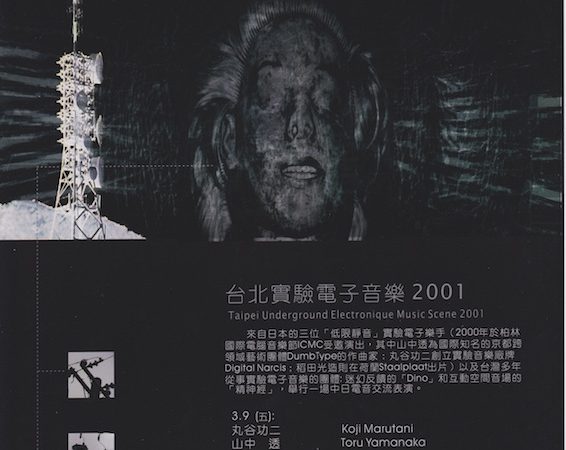
靜電暴動(Static Riot)是2001年是「電解體」(由王福瑞、葉慧雯等組成)密商,於該年三月在台北聶魯達咖啡館所進行的一場連續兩晚的中日交流演出。 Static Riot was a two-night Taiwan-Japan exchange performance organized in 2001 by Dianjeti (composed of Wang Fu-jui, Yeh Hui-wen, and others) at Neruda Café in Taipei.
2001年台南地檢署接獲財團法人國際唱片業交流基金會的檢舉函,通報成功大學男生宿舍「勝利一舍」內有學生私設網站、下載電影、音樂、色情圖片等行事,恐違反著作權法。事後各大學一度禁止校內學生下載mp3。 In 2001, the Tainan District Prosecutors Office received a complaint from IFPI reporting that students in NCKU's Victory Dormitory 1 had set up private websites and were downloading films, music, and pornographic images in violation of copyright law. In response, many universities temporarily banned students from downloading MP3 files on…
美國2001年9月11日早上8時46分發生舉世震驚的恐怖攻擊事件,簡稱「911事件」。恐怖份子分別劫持3架客機,衝撞紐約世貿中心兩棟大樓以及美國國防部總部所在地五角大廈。 At 8:46 AM on September 11, 2001, a series of terrorist attacks shook the world — known as '9/11.' Terrorists hijacked three commercial aircraft and crashed them into New York's World Trade Center twin towers and the Pentagon, headquarters of the U.S. Department of Defense.
上世紀90年代末期,台灣仍然沒有搖滾書,一直到2001年,何穎怡大膽向出版社提議出版《音樂河》系列,才吸引部分搖滾迷再度返回實體閱讀的領域,此舉也是台灣第一次大規模、有計劃的搖滾書籍出版。 As late as the 1990s, Taiwan still had no books on rock music. It wasn't until 2001, when Ho Ying-yi boldly proposed the 'Music River' series to a publisher, that rock music readers were drawn back to print. This was the first large-scale, planned rock music publishing project in Taiwan.
陳史帝(Noise Steve)受90年代末台灣瑞舞風潮的影響,與朋友以DIY的方式舉辦多場游擊式的瑞舞派對,2002年,舉辦了台中第一場噪音藝術節「電子原音的反擊」。 Influenced by Taiwan's late-1990s rave scene, Chen Shih-ti (*Noise Magazine* Steve) and friends organized several guerrilla-style rave parties using DIY methods. In 2002, they organized Taichung's first noise art festival: 'Electronic Primal Sound Counterattack.'
「文創產業」根據經濟部文化創意產業推動辦公室目前的定義,是指「源自創意或文化積累,透過智慧財產的形成與運用,具有創造財富與就業機會潛力,並促進整體生活環境提升的行業」。 Taiwan's 'cultural and creative industries,' as currently defined by the Ministry of Economic Affairs, refers to 'industries that originate from creativity or cultural accumulation, generate wealth and employment potential through the formation and application of intellectual property, and promote an overall improvement in the living environment.'
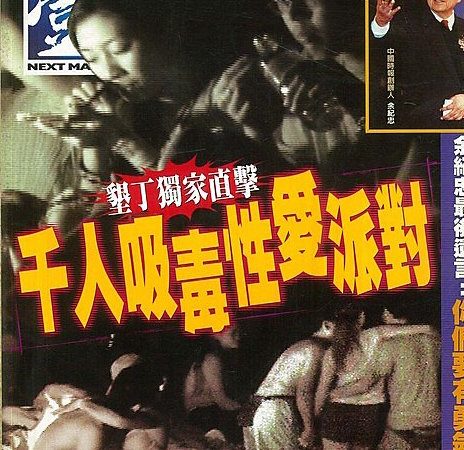
2002年的墾丁,除了春天吶喊,大尖山還舉辦了Moonlight 以及Dream Field等兩場戶外電音派對,密集的活動吸引媒體前來以獵奇的筆法密集報導觀眾放蕩行為,其中以壹週刊的「千人吸毒性愛派對」等誇大標題與圖文引起大眾熱議。 In 2002, in addition to Spring Scream, Kenting hosted two outdoor electronic parties at Dajianshan — Moonlight and Dream Field. The cluster of events attracted media coverage luridly sensationalizing audience behavior, most notoriously the Next Magazine's exaggerated headline 'Thousand-Person Drug-Fueled Sex Party.'
2002年陳史帝與朋友於台中組成「麥芽精釀工作室」,為少數在台北之外的實驗電子音樂推廣據點,從事音樂創作、販售罕見唱片、教授樂器彈奏與DJ技術,並舉辦台中第一場噪音藝術節「電子原音的反擊」。 In 2002, Chen Shih-ti and friends formed 'Malt Craft Studio' in Taichung — one of the few hubs for experimental electronic music outside Taipei. It engaged in music production, sold rare records, taught instrument playing and DJ skills, and organized Taichung's first noise art festival.
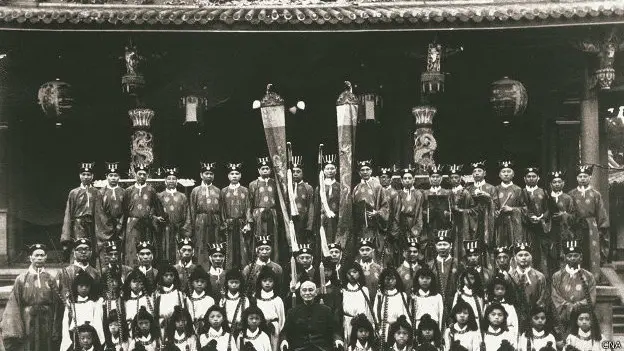
由林宏璋及吳忠良策畫的第三屆「火舞祭」是,一場火與鼓聲的融和,在華山舉辦的免費戶外音樂晚會,當晚有興趣的人,就可自動上場表演,一旁也設有電子音樂區,由國內外DJ如@llen和fish擔任DJ。 The third 'Fire Dance Festival,' organized by Lin Hung-chang and Wu Chung-liang, was a fusion of fire and drums — a free outdoor music evening at Huashan where anyone interested could perform. An adjacent electronic music zone was hosted by international DJs including @llen and fish.
台灣部落格的發展最早可以追溯到1996年,初具部落格雛形的「ePaper電子報」。2003年以後,入口網站、媒體、電信業者等陸續提供部落格平台的服務,使台灣部落格發展進入百家爭鳴的時代。 The development of blogging in Taiwan can be traced back to 1996, with 'ePaper' representing an early blog-like format. After 2003, web portals, media companies, and telecom operators successively launched blog platforms, ushering in an era of blogging diversity.
2002年底由林其蔚、許雅筑與剛成立的台北藝術大學科技藝術研究中心所主辦的「台灣國際電子藝術論壇」堪稱是「台北國際後工業藝術」之後,最具革命性的活動。 The 'Taiwan International Electronic Arts Forum,' organized in late 2002 by Lin Chi-wei, Hsu Ya-chu, and the newly established Technology Arts Research Center at Taipei National University of the Arts, was arguably the most revolutionary event since the 'Taipei International Post-Industrial Art' festival.
2002年台灣以「臺澎金馬個別關稅領域」的名義加入WTO組織,此名稱來自中華民國政府自1950年代起所實際管轄統治的主要土地,即臺灣、澎湖、金門及馬祖。 In 2002, Taiwan joined the WTO under the name 'Separate Customs Territory of Taiwan, Penghu, Kinmen and Matsu' — a designation reflecting the main territories under actual governance of the ROC since the 1950s.
2002 年蘇永康與安雅在「TeXound 台客爽」舞廳因毒品濫用被抓事件後,台北市各家舞廳風聲鶴唳,經過媒體的渲染,台客舞廳與搖頭舞廳的形象,則更被連結在一起為台灣社會所認識。 After singers William So and Anya were arrested for drug use at TeXound's 'Taikè Shuǎng' club in 2002, Taipei's dance clubs were thrown into panic. Media coverage further cemented the association between taikè clubs and drug-fueled raves in the public imagination.
1970 年代起姚大鈞即開始創作前衛、實驗音樂的姚大鈞,2003年回台開課,主持「電腦音樂實驗室」。 Yao Dajuin, who had been creating avant-garde and experimental music since the 1970s, returned to Taiwan in 2003 to teach and direct the 'Computer Music Laboratory' at Taipei National University of the Arts.
1970 年代起姚大鈞即開始創作前衛、實驗音樂的姚大鈞,2003年回台開課,主持「電腦音樂實驗室」。 Yao Da-chun, who had been creating avant-garde and experimental music since the 1970s, returned to Taiwan in 2003 to teach and direct the 'Computer Music Laboratory' at Taipei National University of the Arts.
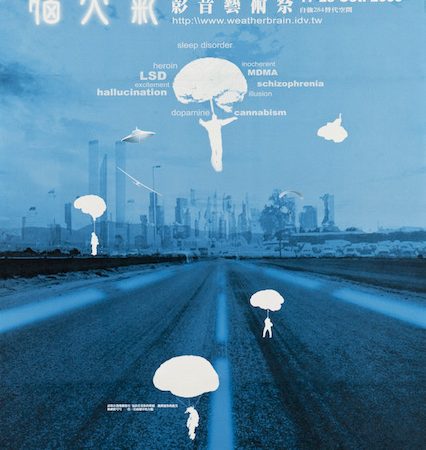
腦天氣音樂祭取其日本關東方言漢字,衍生其意為「大腦裡的天氣(WeatherinMyBrain)」,邀請全國影音、多媒體等不同領域之藝術團隊參與該次活動,自2003年起連續舉辦了三屆。 Brain Weather Music Festival takes its name from a Japanese Kanto dialect character compound, extended to mean 'Weather in My Brain.' It invited arts groups from across film, sound, and multimedia fields, and was held for three consecutive years from 2003.
在姚大鈞的催生下,「台北聲音小組」於2003年組成,成員為李岳凌(Rio)、陳立威(Wei)、謝仲其(Wolfenstein)。其創作形式以具象音樂為主,並使用田野錄音為素材。 Under the initiative of Yao Dajuin, the 'Taipei Sound Group' was formed in 2003, with members Li Yueh-ling (Rio), Chen Li-wei (Wei), and Hsieh Chung-chi (Wolfenstein). Their creative approach centered on musique concrète, using field recordings as raw material.
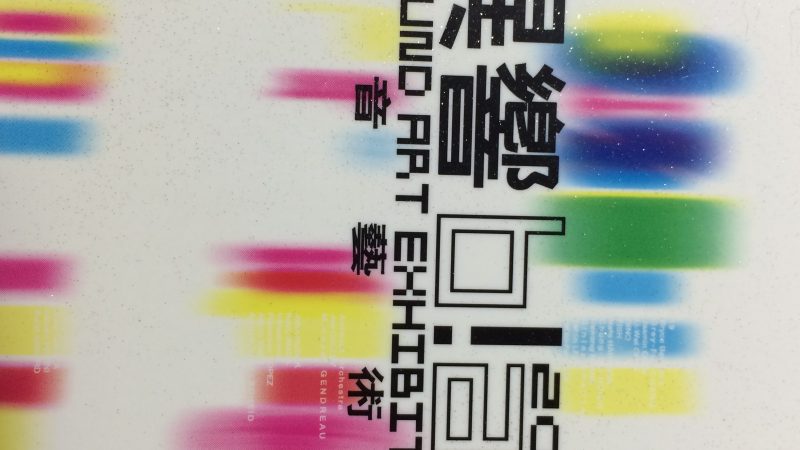
「在地實驗」於2003年舉辦了「異響∕Bias」聲音藝術展,向全世界徵選聲音藝術作品。這項台灣第一次的聲音藝術展為2000年代的聲音運動決定了方向。 Etat Lab organized the 'Bias (異響)' Sound Art Exhibition in 2003, calling for entries from around the world. As Taiwan's first dedicated sound art exhibition, it set the direction for the sound movement of the 2000s.
中研院資訊所在 2003 年成為Creative Commons在台灣的合作機構,並與其他機構及創作者合作推廣「創用授權」,希望能藉此推動的建立全球性公共資源庫的工作,改進著作權法阻礙創意的問題。 In 2003, Academia Sinica's Institute of Information Science became Taiwan's partner institution for Creative Commons, collaborating with other organizations and creators to promote CC licensing — aiming to build a global public resource commons and address copyright law's obstacles to creativity.
台北兩間主要的電音舞廳(或者說是夜店)2nd Floor與Texound,在台北舞吧燦爛多姿的2003年因為被視為毒品文化滋長的特殊場所,遭警方施壓而相繼於年底被迫停業。 Taipei's two major electronic dance clubs — 2nd Floor and TeXound — were forced to shut down by year-end 2003. Amid a vibrant nightlife scene, both were pressured by police who regarded them as hotbeds of drug culture.
這牆音樂藝文展演空間原由閃靈樂團主唱Freddy、春天吶喊主辦人Jimi(牟齊民)、董事長樂團阿吉於2003年11月13日所創立,是孕育台灣搖滾樂團、獨立樂團與創作歌手的重要音樂產演場所。 The Wall arts and performance venue was founded on November 13, 2003 by Freddy (vocalist of Chthonic), Jimi (Spring Scream organizer Mou Chi-min), and Agee of the Chairman. It became a vital live music venue nurturing Taiwan's rock, independent, and singer-songwriter acts.
2003年11月「淘兒音樂城」(Tower Records)在台灣僅存的兩家店面,展開全店出清特賣,準備退出台灣市場。 In November 2003, the last two remaining Tower Records stores in Taiwan held clearance sales in preparation for withdrawing from the Taiwanese market.
「和」Party出現在戶外瑞舞派對紛紛被迫停辦的時期,「和」倡導音樂的自主性,每個月一次就像是固定的儀式和觀禮。 The He Party emerged during a period when outdoor raves were being shut down one after another. Advocating for musical autonomy, it was held once a month as a recurring ritual and gathering.
KKBOX成立於2004年,是目前台灣線上數位音樂市場市佔率第一大的音樂串流平台,KKBOX提供使用者透過網路即可播放儲存在雲端的歌曲;並以技術加密使被儲存的檔案僅能夠以特定軟體播放。 KKBOX, founded in 2004, is currently Taiwan's leading music streaming platform by market share. It allows users to stream songs stored in the cloud via the internet, and uses encryption to ensure stored files can only be played through designated software.
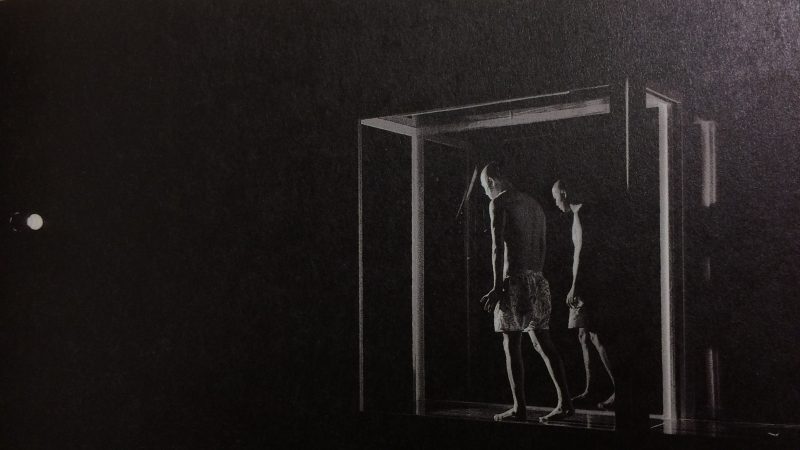
改編自真實事件的「軍史館殺人事件」,於2004年由差異劇團主演,王墨林擔任導演,劇場設計由藝術家陳界仁操刀,聲音設計則由林其蔚擔任,現場收音並製造「噪音」回應這樁「軍史館殺人事件」 Adapted from real events, Murder at the Military History Museum was staged in 2004 by Chaiyi Theatre, directed by Wang Mo-lin, with stage design by artist Chen Chieh-jen and sound design by Lin Chi-wei — recording live sound and generating 'noise' in response to the murder case.
野台開唱的第十年特別成立「獨立電音舞台」,由台灣獨立電音廠牌「默契音樂」負責規劃,邀請到介於實驗音樂、噪音、聲音藝術的創作者出。此活動為實驗聲響於搖滾音樂祭最盛大的一次集結。 In its tenth year, Formoz Festival established a special 'Independent Electronic Stage,' curated by Taiwanese independent electronic label Mojue Music. It invited artists working between experimental music, noise, and sound art — the most ambitious gathering of experimental sound at a rock festival in Taiwan.
「2004 國際科技藝術節」由姚大鈞擔任策劃,取「聲納」之本意,以探測性質強之先鋒作品打向社會,經由社會互動回饋而完成藝術生態結構。 The '2004 International Technology Arts Festival,' curated by Yao Dajuin, took its name from the concept of sonar — sending out pioneer works of penetrating, exploratory character into society, and completing an artistic ecosystem through social interaction and feedback.
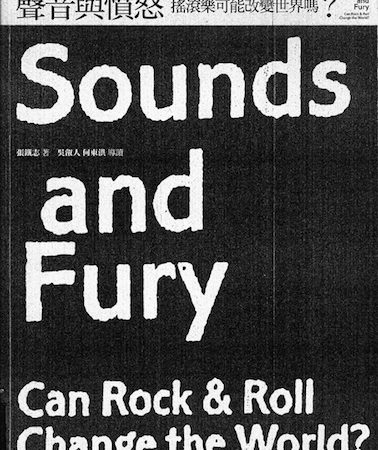
2004年在台灣出版的《聲音與憤怒:搖滾樂可能改變世界嗎?》回顧了歷史上搖滾樂與種種社會運動的關聯,提問反省音樂介入政治的可能與局限。作者張鐵志為台灣政治、文化與搖滾評論家。 Published in Taiwan in 2004, Sound and Fury: Can Rock Music Change the World? traces the historical relationship between rock music and various social movements, and questions the possibilities and limits of music's engagement with politics. The author, Chang Tieh-chih, is a Taiwanese critic of politics, culture, and rock music.
配合中央研究院推出新版本的智慧財產權,國內第一張採用CC「創作共享」(Creative Commons)的唱片專輯《搖滾主耶穌》於2004年十月初將正式發行。 In conjunction with Academia Sinica's rollout of a new intellectual property framework, Taiwan's first album released under a Creative Commons license — Rock the Lord — was officially published in early October 2004.
羅百吉談起紅極一時的戰鬥舞,幾乎也只能夠用舞曲〈FIRE〉、桃竹舞廳、桃園舞神和貓董俱樂部等等關鍵字來描述,但那幾乎是2006年間,除了舞廳被冠上「搖頭店」之外最為人記得的舞池裡的電音大會操。 When Lo Pai-chi discusses the once-wildly-popular Combat Dance, the story can only be told through keywords: the track FIRE, Taoyuan-Hsinchu dance clubs, the 'Taoyuan Dance God,' and Mao Dong Club. Around 2006, it was the most memorable thing happening on dance floors — besides the clubs being branded 'head-shaking drug…
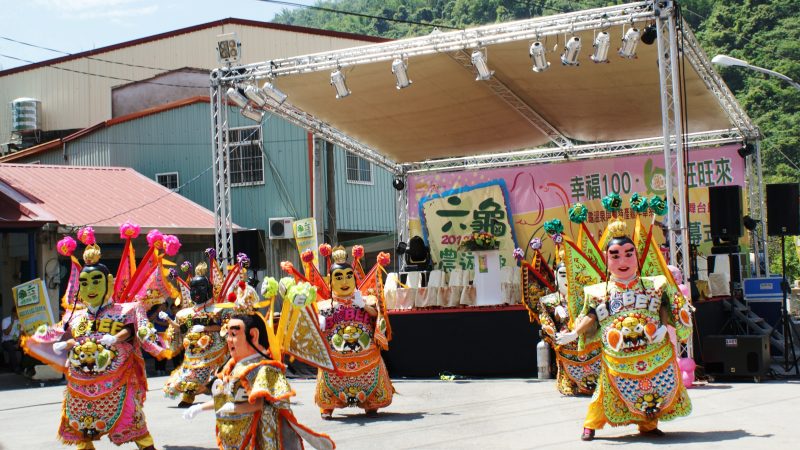
「電音三太子」源自台灣民間信仰中的「哪吒」,大約自2006年起,北港太子會、朴子太子團等團體將電子音樂、流行音樂搭配陣頭演出,親民又有活力的特色逐漸被視為台灣本土文化的重要象徵。 Electronic Nezha (電音三太子) is rooted in the folk deity Nezha. Beginning around 2006, groups like Beigang Taizi Hui and Puzih Taizi Tuan began pairing electronic and pop music with traditional temple parade performances. Their approachable, energetic style gradually became recognized as an important symbol of Taiwanese grassroots culture.
bit everysound 由2004年的表演組織post everything延續而來,自2005年起由林強、小吳(jjj)一起舉辦的音樂聚會,強調電子音樂不只是舞曲,不強調DJ個人魅力,而是整體氣氛感覺。 Bit Everysound grew out of the 2004 performance organization Post Everything. Beginning in 2005, Lim Giong and Xiao Wu (jjj) co-organized monthly music gatherings that emphasized electronic music beyond danceable tracks — prioritizing collective atmosphere over individual DJ celebrity.
兩大軟體業者ezPeer、Kuro皆因提供使用者下載未經授權的音樂檔案,被控違反著作權法,然而檢方的判決卻疑似根據軟體業者「是否教唆犯罪」裁定,凸顯數位科技的變革與現行法律間的灰色地帶。 Both ezPeer and Kuro were charged with copyright infringement for enabling users to download unlicensed music files. However, the prosecution's rulings appeared to hinge on whether the software operators had 'incited' infringement — exposing the gray area between digital technological change and existing law.
台語由滾歌手伍佰指出,台灣一直沒有超越語言、族群的文化,自2006首次舉辦的「台客搖滾嘉年華」演唱會就是由伍佰等眾多音樂人推動台客流行文化活動之一。 Taiwan rock musician Wu Bai has observed that Taiwan has never had a culture that transcends language and ethnicity. The Taikè Rock Carnival, first held in 2006, was one of the events promoted by Wu Bai and many other musicians to popularize taikè (台客) cultural identity.
2005年8月,由於電視媒體大量炒作「台客文化」一詞,引發學界與文化界的論戰,雙方爭執不下,甚至驚動當時的總統陳水扁出面緩頰。 In August 2005, television media's saturation coverage of 'taikè culture' ignited an intense debate between academics and cultural commentators. The controversy escalated to the point that then-President Chen Shui-bian personally intervened to try to defuse tensions.
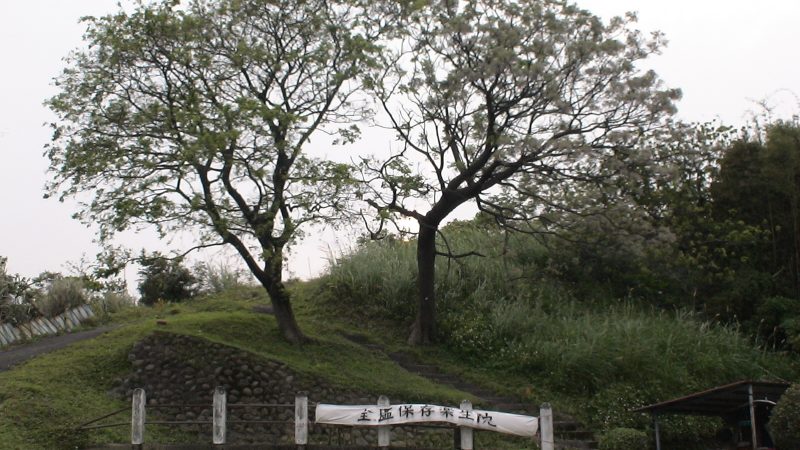
第一波的「音樂.生命.大樹下」音樂行動,透過結合關注樂生院議題的音樂界朋友,以現場音樂表演的力量來匯集愛好音樂、生命、自由的年輕族群們走進樂生院,來認識這裡的老樹、老屋和老人們。 The first wave of 'Music. Life. Under the Tree' music actions brought together musicians who cared about the Le Sheng Sanatorium issue. Using live musical performance as a force, it gathered young people who loved music, life, and freedom to enter the sanatorium and encounter its old trees, old buildings,…
《台灣音計畫》深入全台計畫性的聲音採集,以主題整合的方式、地域特殊性挑選全台八十至一百個定點,透過聲音採集循線將在地文化觀點與議題和自然、 環境、經濟、社會、人文等相關議題結合。 The Taiwan Sound Project conducted systematic field recordings across the island, selecting eighty to one hundred sites across Taiwan through thematic and regionally specific criteria, using sound to connect local cultural perspectives with issues in nature, environment, economics, society, and the humanities.
Youtube影音串連平台創立於2005年,創辦原意是為了方便朋友之間分享錄影片段,逐漸成為網民的回憶儲存庫、作品發布場所與各種影音資源分享平台,因此Youtube曾被不少機構和公司批評為侵犯版權。 YouTube was founded in 2005, originally conceived as a way for friends to share video clips. It gradually became a public memory archive, a platform for sharing creative work, and a resource hub for all kinds of video and audio content — which led numerous organizations and companies to criticize…
2005年起,這牆音樂藝文展演空間(THE WALL)及地下社會頻頻因為商業登記法規中沒有適合登記的項目遭罰,導致經營困難且無法表演。 Beginning in 2005, The Wall (THE WALL) and Di Xia She Hui (The Wall's sibling venue) were repeatedly fined because commercial registration regulations had no appropriate category for their type of business, making operations difficult and performances impossible.
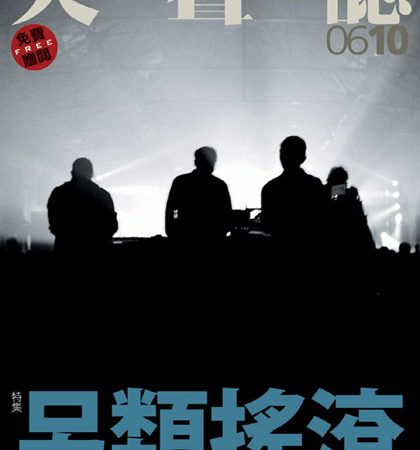
《大聲誌》是由一群音樂文化研究者、媒體行動者、音樂工作者於2005年創立的免費音樂文化期刊,強調無需妥協、立場穩固的態度,提供貼近時尚潮流的音樂、影像、藝文、與次文化訊息。 Loud (*BIGSOUND Magazine*) is a free music culture journal founded in 2005 by a group of music culture researchers, media activists, and music workers. It emphasizes an uncompromising, committed stance, delivering music, visual, arts, and subcultural content closely attuned to contemporary trends.
Co6台灣前衛文件展:度(Do)當中的跨領域策劃展「複音馬賽克」由粘利文、郭昭蘭、吳燦政組成的策展團隊「蜜糖藍激隊」希望藉著此展能對台灣的聲音藝術進行一個重新檢討與整理。 The interdisciplinary curatorial unit 'Polyphonic Mosaic' within the Co6 Taiwan Avant-Garde Documentation Exhibition: Do was organized by the curatorial team 'Honey Blue Passion Squad' — Zhan Li-wen, Kuo Chao-lan, and Wu Can-cheng — aiming to conduct a comprehensive review and reordering of sound art in Taiwan.
「噪動之夜 」 為展覽「疆界/Altered States」的開幕表演活動,演出地點則選在Live House「這牆」。表演選擇以工業搖滾、噪音與實驗聲響為主題,邀請台灣及加拿大前衛聲響藝術創作者, *Noise Magazine* Night was the opening performance for the exhibition 'Altered States,' staged at the live house The Wall. The performance focused on industrial rock, noise, and experimental sound, inviting avant-garde sonic artists from Taiwan and Canada.
「南海啥聲」由i/O SoundLab.主辦,自2006年起陸續在南海藝廊舉辦數「南海啥聲1」、「南海啥聲2」、「南海啥聲3」三場表演,主要成員包括蔡欣圜、張永達、王仲堃與姚仲涵等人。 Nanhai What Sound was organized by i/O SoundLab, presenting three consecutive performances — Nanhai What Sound 1, 2, and 3 — at the Nanhai Gallery from 2006. Core participants included Tsai Hsin-yuan, Chang Yung-ta, Wang Chung-kun, and Yao Chung-han.
2006年在THE WALL售票演出的「聲交:兩岸聲音藝術交流大匯演」由台灣與中國的聲音藝術家接連演出,包括蔡欣圜、謝仲其、立威、背信棄義的雙魚座人(顏峻+姚大鈞)、顏峻等人。 The 2006 ticketed event 'Sound Exchange: Cross-Strait Sound Art Exchange Concert' at THE WALL featured consecutive performances by sound artists from Taiwan and China, including Tsai Hsin-yuan, Hsieh Chung-chi, Li-wei, Treacherous Pisces (Yan Jun + Yao Dajuin), and Yan Jun.
從2000年開始舉辦的海洋音樂祭最早由台北縣政府與獨立的地下音樂製作公司角頭音樂合作發起,2006年活動轉發民事承包,此舉引起「角頭音樂」的不滿,計畫在福隆舉辦「海洋人民音樂祭」作為對峙與抗議。 A dispute between the New Taipei City Government and Corner Music led to two competing 'Ho-Hai-Yan' rock festivals being held simultaneously in 2006, confusing audiences and highlighting the tensions between official sponsorship and independent music organizing.
2005年10月25日,立法院第6屆第2會期第7次會議通過《國家通訊傳播委員會組織法》後於2006 年2 月22 日成立國家通訊傳播委員會(NCC)。 Following the passage of the National Communications Commission Organization Act on October 25, 2005 during the sixth legislative session, the National Communications Commission (NCC) was formally established on February 22, 2006.
以「做喜歡的事,讓喜歡的事有價值」為中心思考出發,簡單生活節(Simply Life)是由李宗盛、張培仁等人策劃發起,自2006年12月開始,每兩年一屆的售票型生活節活動 。 Built around the idea of 'doing what you love and giving what you love value,' the Simple Life Festival was conceived by Jonathan Lee, Chang Pei-jen, and others. Beginning in December 2006, it is held every two years as a ticketed lifestyle festival.
2006年桃園縣縣長朱立倫要求當時的桃園縣政府警察局長林德華「三個月內殲滅搖頭店,做不好就下台。」警察局因此大舉掃蕩各大酒吧、舞廳,取締在夜裡狂歌勁舞的青年和男女。 In 2006, Taoyuan County Commissioner Chu Li-luan ordered Police Chief Lin Teh-hua to 'eliminate drug-rave establishments within three months, or resign.' Police subsequently raided bars and dance clubs across the county, arresting young people dancing and singing through the night.
由台北數位藝術基金會主辦的台北數位藝術節,最早自2006年開始舉辦,為台灣眾多商業數位展演中,少數以藝術為出發點的數位展覽,自2009年起發展為國際型的數位藝術節。 The Taipei Digital Arts Festival, organized by the Taipei Digital Arts Foundation, was first held in 2006. Among Taiwan's many commercial digital showcases, it was one of the few with an arts-centered mandate, and developed into an international digital arts festival from 2009 onward.
2006年爭議多時的寶藏巖共生聚落,在民間與市府達成「藝術與原弱勢住戶共存」共識後,由於部分建物老舊有公共危險之虞,市府計畫安排現住戶搬離,進行全區整建,為此數位藝術家到場聲援。 In 2006, after years of controversy, the Treasure Hill community reached a consensus between civil society and the city government on 'coexistence of art and original vulnerable residents.' Due to unsafe older structures, the city planned to relocate residents and undertake full renovation — prompting several artists to show up…
自蘋果ipod之後,蘋果公司在2007年發表新產品iphone,將網路溝通、行動電話以及音樂聆聽的功能成功的整合在一隻智慧型手機設備中,根本的改變了人類與訊息的關係。 Following the iPod, Apple in 2007 introduced the iPhone — successfully integrating internet communication, mobile telephony, and music listening into a single smart device. It fundamentally transformed humanity's relationship with information.
為達成扶植臺灣流行音樂產業,協助優秀樂團錄製有聲出版品之目標,自96年起開辦「補助樂團錄製有聲出版品」案,甄選具原創性、富創意及音樂價值、且未發行的樂團作品錄製出版。 To support Taiwan's popular music industry and assist outstanding bands in recording and publishing albums, the Government Information Office launched a 'Band Recording Subsidy Program' in 2007, selecting original, creative, musically valuable, and unreleased band works for production and release.
2007 年第一個登上台北小巨蛋的獨立團體「蘇打綠」過於忘情,演唱超過 5 小時並且跨日,使得台北小巨蛋官方不得不訂定超時條款,凡演出超過晚上 11 點都必須罰款,又被稱為「蘇打綠條款」。 In 2007, the first independent band to perform at Taipei Arena, Sodagreen, played with such passion that their set ran over five hours and crossed into the next calendar day. Taipei Arena was forced to institute an overtime policy — any performance exceeding 11 PM would be fined. It became…
iNDIEVOX成立於2007年,由獨立樂團ECHO主唱吳柏蒼所創立,是台灣最早成立的合法mp3下載平台之一(更早的是「滾石可樂」),致力於發揚獨立音樂創作、建立完整的音樂資料庫並持續精進網站功能。 iNDIEVOX was founded in 2007 by Wu Po-tsang, lead vocalist of the independent band ECHO. One of Taiwan's earliest legal MP3 download platforms (predated only by Rock Cola), it dedicated itself to promoting independent music creativity, building a comprehensive music database, and continuously improving the platform.
2007年誠品音樂敦南館主辦第一屆「黑膠文藝復興運動」,除了舉辦黑膠唱片是市集,活痛還包括了唱片封面設計展、音樂人與文化人的個人收藏展以及唱盤或其他相關設備的陳列與買賣。 In 2007, Eslite Music's Dunnan branch organized the first 'Vinyl Renaissance Movement,' which included a vinyl record market, a record cover design exhibition, personal collection showcases by musicians and cultural figures, and displays and sales of turntables and related equipment.
「失聲祭」是由i/O Lab所主辦的常態性聲音藝術表演,從2007年起,每月舉辦一場。i/O Lab 為王仲堃、姚仲涵、張永達等年輕聲音藝術家,之後陸續加入了葉廷皓、王連晟與黃鐘瑩等。 Lacking Sound Festival (失聲祭) is a regular sound art performance series organized by i/O Lab, held monthly from 2007. i/O Lab consists of young sound artists Wang Chung-kun, Yao Chung-han, and Chang Yung-ta, later joined by Yeh Ting-hao, Wang Lien-sheng, and Huang Chung-ying.
2008年藝術家王福瑞在任教於台北藝術大學藝術與科技中心時,策劃連續三年的「超響」聲音大型活動,專注在聲音媒材的演出呈現,在許多小型表演活動定位為「實驗中」的同時,也須使作品提出更精緻的展現可能。 In 2008, artist Wang Fu-jui, while teaching at the Arts and Technology Center of Taipei National University of the Arts, organized the 'Ultra Sound' (超響) series over three consecutive years — focused on the performance presentation of sound media, demanding more refined possibilities from works at a time when many…
始於2007年的次貸風暴;2008年3月全美第5大銀行貝爾斯登被摩根大通收購;2008年7月印地麥克銀行倒閉;2008年9月「二房」危機;2008年9月15日雷曼兄弟宣告破產,重創美國及世界各國經濟。 Beginning with the subprime mortgage crisis of 2007: in March 2008, Bear Stearns — the fifth-largest U.S. bank — was acquired by JPMorgan Chase; in July 2008, IndyMac Bank failed; in September 2008, the 'two housing giants' crisis erupted; on September 15, 2008, Lehman Brothers declared bankruptcy, devastating the American…
繼2004年完成台灣第一次的政黨輪替,2008年國民黨候選人馬英九的當選,則是第二次的政黨輪替,被視為台灣民主發展歷程中重要的里程碑。 Following Taiwan's first democratic transfer of power in 2004, the KMT candidate Ma Ying-jeou's election in 2008 constituted the second transfer of power — regarded as an important milestone in Taiwan's democratic development.
國片《海角七號》上映於2008年,其中對於日本殖民時代的情感得到廣大迴響,而其中以樂團為主題的劇情也掀起一波樂團電影、電視劇風潮。 The Taiwanese film Cape No. 7 was released in 2008. Its treatment of emotions from the Japanese colonial era resonated widely with audiences, while its band-centered storyline sparked a wave of band-themed films and television dramas.
澎葉生 (Yannick Dauby)和許雁婷在嘉義縣共同合作建置聲音資料庫─嘉義聲音計畫,他們走訪田野、採集嘉義縣地方之聲,並建置聲音資料庫。 Yannick Dauby and Hsu Yen-ting collaborated in Chiayi County to build a sound database — the Chiayi Sound Project. They traveled through the countryside recording the local sounds of Chiayi County and constructing an archive.
2008年11月3日中國海協會會長陳雲林來台進行江陳會,因警方強奪國旗及維安措施侵犯基本人權,加上集會遊行法對於集會遊行的種種限制,台大社會學系助理教授李明璁透過網路發動野草莓運動。 On November 3, 2008, when Association for Relations Across the Taiwan Straits Chairman Chen Yun-lin visited Taiwan for the Chiang-Chen talks, police actions — including the seizure of ROC flags — and security measures that infringed on basic civil liberties, combined with restrictions in the Assembly and Parade Act, prompted…
「旃陀羅公社」(簡稱K社)於2009由當時就讀政大政研所博士班的張又升創辦,「旃陀羅」是印度教中對賤民的稱呼,是指稱在種姓制度的四個階層之外,一個徹底的他者或異類。 Kandala Commune (K Society) was founded in 2009 by Chang Yu-sheng, then a doctoral candidate in political science at National Chengchi University. 'Kandala' is the Hindu term for the untouchable caste — those who are completely other or alien, beyond the four rungs of the caste hierarchy.
「旃陀羅公社」(簡稱K社)於2009由當時就讀政大政研所博士班的張又升創辦,「旃陀羅」是印度教中對賤民的稱呼,是指稱在種姓制度的四個階層之外,一個徹底的他者或異類。 Chandala Commune (K Society) was founded in 2009 by Chang Yu-sheng, then a doctoral candidate in political science at National Chengchi University. 'Chandala' is the Hindu term for the untouchable caste — those who are completely other or alien, beyond the four rungs of the caste hierarchy.
台北數位藝術中心自2009年起由數位藝術基金會負責營運,是台灣少數以數位藝術為設立宗旨的藝術機構,其中由王仲堃策畫的「噪咖」咖啡廳也是失聲祭等聲音藝術表演的主要演出場地之一。 The Taipei Digital Arts Center, operated by the Digital Art Foundation beginning in 2009, is one of the few arts institutions in Taiwan explicitly dedicated to digital art. The '*Noise Magazine* Café' within it, curated by Wang Chung-kun, is also one of the main performance venues for Lacking Sound Festival…
2009年北縣光觀局決定,當年的海洋音樂季要走「清新、健康、專業」路線,因此除衛生局首度不發送保險套,現場甚至禁止販賣、飲用菸酒。 In 2009, the Taipei County Tourism Bureau decided that the Ocean Music Festival would adopt a 'fresh, healthy, professional' approach — for the first time, the Health Bureau did not distribute condoms at the event, and the sale and consumption of tobacco and alcohol on-site were prohibited.
2009年五月天在高雄市運場地舉辦的演唱會「DNA無限放大版」以55555人一舉破下台灣演唱會人數最多紀錄,並以連唱9首閩南歌曲為三度的安可橋段做結。 In 2009, Mayday's concert 'DNA Unlimited Edition' at the Kaohsiung Municipal Stadium drew 55,555 attendees — breaking Taiwan's concert attendance record. The set concluded with three encore performances, including nine consecutive Hokkien-language songs.
地下電台,其實就是非法電台,從1989年誕生直到今天,台灣地下電台雖然從不曾合法過,但卻屢禁不絕,背後的原因除了其中涉及的利益鏈條盤根錯節,還跟台灣的民粹風氣有關。 Underground radio stations — in essence, illegal broadcasters — have existed since 1989. Though never legal, Taiwan's underground radio scene has proven impossible to suppress. The reasons include entangled webs of commercial interests as well as Taiwan's populist political culture.
Live House的營業項目過去多登記為「冷熱飲食及果汁咖啡菸酒之經營」,但卻遭主管單位以有音樂表演為由禁止演出,2010年後由文建會頒發一紙證書將live house列為「重要藝文展演空間」。 Live houses had long registered their business under the category of 'hot and cold beverages, juice, coffee, tobacco and alcohol retail,' but were prohibited from holding performances by regulators citing the music element. After 2010, the Council for Cultural Affairs issued certificates classifying live houses as 'important arts and performance…
台灣音樂書寫團隊,召集人為自由樂評人蔡政忠馬瓜。團隊成立目的乃希望藉由大家的寫作,刺激聽眾產生聆聽、書寫與討論的風氣,透過彼此的串聯及未經媒體曝光的熱血痕跡,用文字紀錄下來。 The Taiwan Music Writing Collective was convened by independent music critic Tsai Cheng-chung (Magua). Founded to cultivate a culture of listening, writing, and discussion among audiences, it sought to document music through writing, connecting individuals whose passion for music had never received media attention.
台中市阿拉酒吧(傑克丹尼夜店)火災發生於2011年3月6日凌晨,當晚由於舞者煙火使用不當,火勢從酒吧內貼滿吸音海綿的天花板開始蔓延,是繼1995年台中市衛爾康餐廳大火後最嚴重的火災事故。 A fire broke out at Taichung's Alara Bar (Jack Daniel's Nightclub) in the early hours of March 6, 2011. When a performer misused pyrotechnics, the fire spread from the soundproofing foam covering the ceiling throughout the bar. It was the deadliest fire since the 1995 Welfore Restaurant disaster in Taichung.
2011年的「430向日葵廢核遊行」除了公民團體,其中最引人注目的是以電音、搖滾樂為前進節奏的遊行隊伍,以年輕人的方式表達反核訴求。 The '430 Sunflower Anti-Nuclear March' of 2011 attracted not only civil society groups but was most visibly defined by parade contingents moving to the rhythms of electronic and rock music — a young-generation approach to expressing the anti-nuclear message.
王虹凱「咱的工作進行曲」作品邀請雲林虎尾糖廠退休員工和其配偶,回到工廠錄製現任員工勞動的聲音,回顧台灣工業時代典型的工廠勞動形態,共嗚了屬於一個特有社群的每日生活韻律。 Wang Hung-kai's work Our Daily Chant invited retired workers and their spouses from Yunlin Huwei Sugar Refinery back to the factory to record the sounds of current workers' labor — revisiting a typical industrial-era factory work rhythm and resonating with the daily cadence of a specific community.
藝術家吳燦政自2010年起,啟動為期六年的台灣聲音地圖計畫。他將台灣分為五大區塊,逐一採集錄製全台灣各地的聲音。 Artist Wu Can-cheng launched a six-year Taiwan Sound Map Project beginning in 2010, dividing Taiwan into five regions and systematically collecting and recording sounds from every corner of the island.
「民國百年」是一個為期一年的聲音考察計畫,成員為張又升、黃大旺與陳藝堂。 Republic Centennial (民國百年) was a year-long sound survey project with members Chang Yu-sheng, Huang Ta-wang, and Chen Yi-tang.
師大夜市一帶的「社區內戰」起因於居民自救會認為遊走於法律邊緣的「住商合一」區域發展模式,嚴重破壞當地居住環境與治安,因而發起自救活動要求政府單位執法並開罰,波及長期隱身於師大一帶的音樂展演空間。 The 'community civil war' around Shida Night Market was triggered by a residents' self-help association that argued mixed-use development in the legally ambiguous residential-commercial zone had severely degraded the neighborhood's living environment and security. Their campaign to demand government enforcement swept up music performance venues that had long operated quietly…
配合中央政府組織改造的啟動,2012年5月20日文建會改制為文化部,任務在於解決文化業務長久以來面臨人力及資源的困境,將政府組織中原本分散的文化事務予以整合為文化部。 As part of central government reorganization, the Council for Cultural Affairs was restructured into the Ministry of Culture on May 20, 2012 — consolidating previously dispersed cultural affairs under a single ministry to address long-standing challenges of insufficient staffing and resources.
2012年6月30日台北市都發局與商業處以安全疑慮及違反營業登記項目,不能賣酒為由對地下社會開了勸導單,樂界人士與聲援群眾於7月9日聚集於立法院像文化部喊話,但地下社會仍舊於7月15日宣布歇業。 On June 30, 2012, Taipei's Urban Development Bureau and Commercial Office issued a warning to Di Xia She Hui citing safety concerns and violation of its registered business category — it could not sell alcohol. Musicians and supporters gathered at the Legislative Yuan on July 9, lobbying the Ministry of…
2012年「財團法人台灣唱片出版事業基金會」認為NOW.in未與相關單位簽約獲得上傳歌曲與公開傳輸歌曲的版權,因此對Now.in提出「侵犯著作權」與「疑獲取不法商業利益」等控訴。 In 2012, the Taiwan Recording Industry Foundation filed charges against Now.in, asserting that it had uploaded and publicly transmitted songs without obtaining proper licensing agreements, and accused the platform of copyright infringement and potentially unlawful commercial gain.
自2012年起由台北市文化基金會藝術村營運部主辦的「混種現場」,以現場音樂與聲響演出為主體,台北國際藝術村與寶藏巖國際藝術村兩地進行每年一度的藝術祭。 Hybrid Live, organized by the Taipei Culture Foundation's Artist Village division beginning in 2012, is an annual festival centered on live music and sound performance, held concurrently at Taipei Artist Village and Treasure Hill Artist Village.
據臉書(facebook)官方於2013年首度公布的台灣用戶數據,每天至少1千萬人上臉書,以台灣2335萬人口估算,等同每10人中有逾4人每天用臉書,比任何國家的民眾對臉書還「黏踢踢」。 According to Facebook's first official Taiwan user data released in 2013, at least 10 million people accessed Facebook daily. Based on Taiwan's population of 23.35 million, more than 4 in 10 Taiwanese used Facebook every day — a level of engagement exceeding that of any other country.
2012年7月樂界人士在立法院舉辦音樂人搶救地下社會等Live house記者會,並表示將持續堅持Live House 正名運動與法案推動。最後地社仍在短暫的歇業與復業後於2013年6月正式關閉。 In July 2012, musicians held a press conference at the Legislative Yuan to campaign for saving Di Xia She Hui and other live houses, pledging to continue the Live House rights movement and legislation. After a brief closure and reopening, Di Xia She Hui officially closed permanently in June 2013.
除了服務模式不同於傳統的付費下載邏輯,強大的社群平台與音樂挖掘功能也是Spotify的一大特色,Spotify強調自己的服務可以讓使用者更容易分享與挖掘喜歡的音樂。 Beyond its subscription model that differs from traditional download-to-own logic, Spotify's powerful social platform and music discovery features are key assets. Spotify emphasizes that its service makes it easier for users to share and discover music they love.
2014年3月17日國民黨立委張慶忠抓住發言機會,利用30秒的時間自行宣佈服貿協議已超過3個月審查期,應視為「已通過」,學運團體「黑色島國青年陣線」與學生們為此震驚,隔天襲擊式得翻牆進入立法院佔領。 On March 17, 2014, KMT legislator Chang Ching-chung seized the podium and within 30 seconds declared the Cross-Strait Service Trade Agreement had exceeded its three-month review period and should be considered 'passed.' The student movement group Black Island Youth Front and fellow students were stunned — the following day, they…
創立自1999年,致力於經營獨立音樂、搖滾表演策展的小白兔唱片,自2014年起基於顛覆硬派搖滾現場的概念,籌辦出了「P Festival」音樂節。 White Rabbit Records, dedicated to independent music and rock performance curation since 1999, organized the inaugural P Festival from 2014 — founded on a concept of upending the conventions of hard rock live performance.
Gangnam Style這首歌除了榮獲2012年Youtube最佳歌曲、熱門歌曲外,更是史上第一支突破10 億點閱率的音樂影片。並在2年後因為點擊率突破21億大關,讓Youtube特地到PSY的官方頻道發表聲明。 Gangnam Style won YouTube's Best Song and most popular song of 2012, and was the first music video in history to surpass one billion views. Two years later, when it crossed 2.1 billion views, YouTube issued a special statement on PSY's official channel.
《破報》為全台灣第一份「自由偏左派」的免費報,創刊於1994年,資金由世新大學資助,採取預算制,設備和印刷也由學校提供。2014年由校方及董事會以「經費減少」為由宣布《破報》停刊。 Pots was Taiwan's first free, left-leaning newspaper, founded in 1994 and funded by Shih Hsin University, which also provided equipment and printing. In 2014, the university and board of directors announced the cessation of Pots, citing 'reduced funding.'
台灣聲景協會成立於2015年,創辦人范欽慧嘗試透過錄音、教育、出版以及創辦台灣聲協會等方式去改變、推動台灣的聲響文化。 The Taiwan Soundscape Association was established in 2015. Its founder, Fan Chin-hui, has sought to transform and advance Taiwan's sonic culture through field recording, education, publication, and the founding of the Association.
自2015年起,台北捷運局藉「捷運聲音地景」計劃的熱行,陸續完成了柔化驗票閘口警示聲、廣播提示旋律、及邀請音樂人創作進站音樂三方案。 Beginning in 2015, the Taipei Metro Bureau implemented a 'Metro Soundscape' project, successively completing three initiatives: softening the alert tones at fare gates, composing broadcast notification melodies, and commissioning musicians to create station entry music.
1898年,年輕的路得維希·科霍(Ludwig Koch)使用父親的蠟筒留聲機錄下了長尾四喜鳥的叫聲,成為最早開始野外錄音的奠定者之一。進入20世紀以後,錄音的主題擴展至更廣泛的人類活動,從音樂廳進入田野,多位民族音樂學家紀錄了許多音樂傳統及語言,和研究者與檔案學者的工作密不可分。 In 1898, young Ludwig Koch used his father's wax cylinder phonograph to record the song of an Indian shama thrush — one of the earliest pioneers of wildlife recording. Into the twentieth century, recording subjects expanded to a wider range of human activities, moving from the concert hall into the…
從一九二○年代開始,臺灣進入了嶄新的一個階段,那便是新文化運動的開展。蔣渭水成立的臺灣文化協會為其一重要開端,而這個新文化運動其實是抗日民族解放為底的政治運動。 Beginning in the 1920s, Taiwan entered a new phase with the development of the New Culture Movement. The Taiwan Cultural Association, founded by Chiang Wei-shui, was a key starting point. This new cultural movement was rooted in an anti-Japanese national liberation political movement.
「失聲祭」是由i/O Lab所主辦的常態性聲音藝術表演,從2007年起,每月舉辦一場,內容包括實驗聲響、數位影音及互動影音裝置,是台灣聲音藝術數重要的發表平台。 Lacking Sound Festival (失聲祭) is a regular sound art performance series organized by i/O Lab, held monthly since 2007. Programming includes experimental sound, digital audio-visual work, and interactive audio-visual installations — an important platform for sound art in Taiwan.
王福瑞,1993年成立台灣第一個實驗音樂廠牌和刊物Noise,現為藝術與科技中心 (Center of Art and Technology)未來聲響實驗室主持人,近十多年來一直致力於聲音藝術、數位藝術的創作與推廣。 Wang Fu-jui founded Taiwan's first experimental music label and journal, NOISE, in 1993. He currently directs the Future Sound Lab at the Arts and Technology Center, and has dedicated over a decade to the creation and promotion of sound art and digital art.
鈴鈴唱片成立之初以發行原住民歌曲為主,60年代開始,先後發行出版了「台灣山地同胞跳舞歌集」、「四奇士合唱團第一集」閩南語流行歌曲專輯,而後也發行客語歌曲,在國民黨主政期培養許多方言歌手。 Líng Líng Records initially focused on releasing indigenous music. Beginning in the 1960s, it published albums including the Taiwan Indigenous Dance Songs series and Taiwanese pop music albums in Hokkien, later adding Hakka-language songs. The label cultivated many dialect-language performers during the KMT era.