Colonial Government Intensifies the Kominka Movement
日殖政府加強皇民化運動
- Source:
- Kōminka Movement
From: Encyclopedia of Taiwan
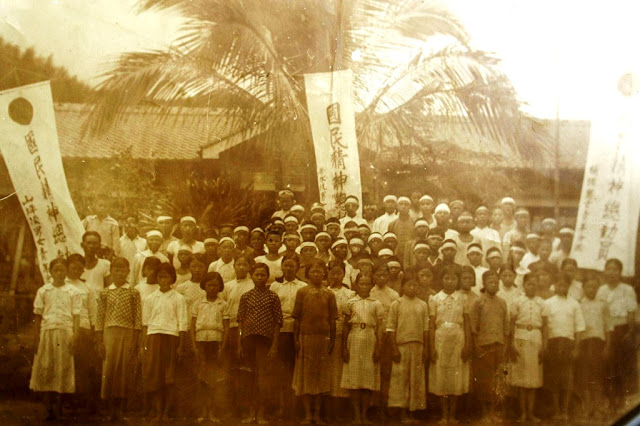
Date: Last modified September 24, 2009 Author: Cai Jing-tangIn September 1936, the 17th Governor-General of Taiwan, Kobayashi Seizō, put forward the “Kōminka” (皇民化, Japanization) governance policy. This signified two things: first, the return of the Governor-General position to military officers; and second, building upon the “domestic extension” policy of previous governors, a new focus on how to more effectively make Taiwanese people “become” Japanese.
As the Second Sino-Japanese War began in 1937, the Kōminka movement accelerated. Characteristic measures included intensified promotion of the “national language” (Japanese), bans on Chinese-language columns in newspapers, abolition of Classical Chinese courses in schools, replacement of local religions with Japanese Shinto, and the implementation of voluntary military service and the Kōmin Hōkōkai (Imperial Subjects’ Service Association).
After the Kōmin Hōkōkai was founded in 1941, the Kōminka movement transformed into the Kōmin Hōkō movement. Its emphasis shifted from cultivating national spiritual discipline (the “Kōminka” dimension) to the active, loyal practice of service to the emperor (the “Hōkō” dimension).
Tags
- WWII
- Japan
- Japanese Colonial Rule
External Links
- An Exploration of Questions Concerning the Kōminka Movement in Japanese-Occupied Taiwan (Meiri Toutiao)
- During Japanese Rule, Those “Patriotic” Boys and Girls Written into the Textbooks (Story | History for Everyone)
- Kōminka Movement (Wikipedia)
- List of Shrines in Taiwan (Wikipedia)